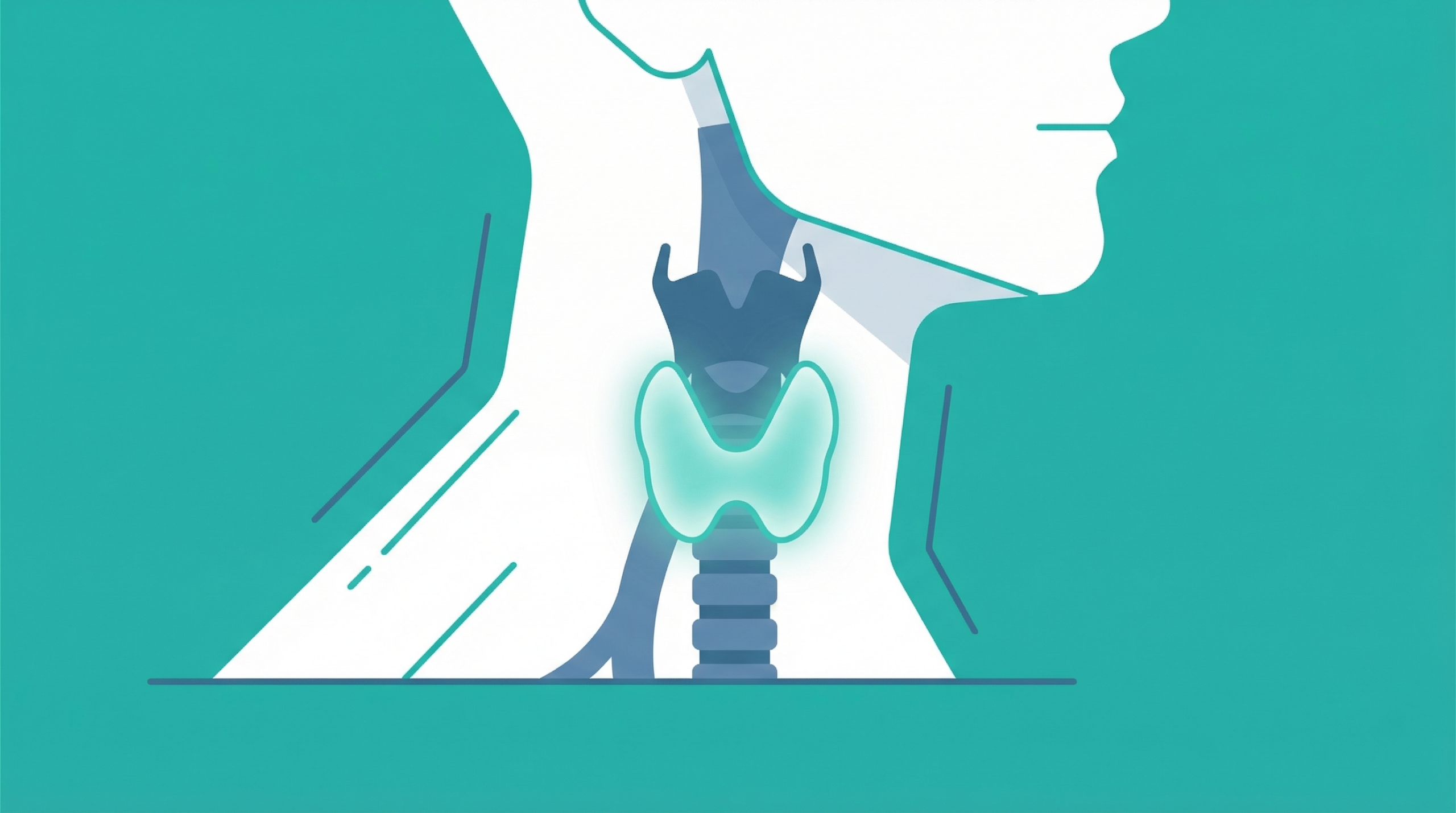

Graves’ disease is an autoimmune condition that causes your thyroid gland to produce too much thyroid hormone — a state called hyperthyroidism. It is the most common cause of hyperthyroidism in the United States, affecting roughly 1 in 200 people. The condition is 7 to 8 times more common in women than in men, and it most often appears between the ages of 30 and 50.
Graves’ disease is named after Robert Graves, an Irish physician who first described the condition in the 1830s. While it can feel alarming — especially when symptoms like a racing heart, weight loss, or bulging eyes appear — the good news is that Graves’ disease is treatable and manageable with the right medical care.
Where Is the Thyroid and What Does It Do?
Your thyroid gland is a small, butterfly-shaped organ located at the front of your neck, just below your Adam’s apple. Despite its small size, the thyroid plays a major role in how your body functions. It produces hormones — primarily thyroxine (T4) and triiodothyronine (T3) — that regulate:
- Metabolism — how fast your body burns calories and uses energy
- Heart rate — how quickly your heart beats
- Body temperature — how warm or cold you feel
- Digestion — how efficiently your gut processes food
- Brain function — concentration, mood, and mental clarity
- Muscle strength — physical energy and endurance
When the thyroid works normally, you don’t notice it. But when it produces too much or too little hormone, nearly every system in your body is affected. In Graves’ disease, the thyroid is pushed into overdrive — producing far more hormone than your body needs.
What Causes Graves’ Disease?
Graves’ disease is an autoimmune disorder. Normally, your immune system protects you from bacteria, viruses, and other foreign invaders. In Graves’ disease, the immune system mistakenly produces antibodies called thyroid-stimulating immunoglobulins (TSI) that attach to thyroid cells and force them to overproduce thyroid hormones.
Think of it like a thermostat stuck on high — even though your body doesn’t need more thyroid hormone, the antibodies keep telling the thyroid to make more.
Researchers believe that both genetics and environmental factors play a role. A study published in the Journal of Clinical Endocrinology & Metabolism estimated that genetics account for roughly 79% of the risk for developing Graves’ disease. The remaining 21% comes from environmental triggers.
Risk Factors for Graves’ Disease
You may be at higher risk if you have:
- Family history — a parent, sibling, or close relative with Graves’ disease or another thyroid condition
- Other autoimmune conditions — such as type 1 diabetes, rheumatoid arthritis, or pernicious anemia
- Sex — women are 7-8 times more likely to develop Graves’ disease than men
- Age — most commonly diagnosed between ages 30 and 50
- Smoking — smokers have a significantly higher risk, especially for Graves’ eye disease
- Stress — severe emotional or physical stress may trigger the immune response
- Vitamin D or selenium deficiency — both are linked to increased autoimmune thyroid risk
Symptoms of Graves’ Disease
Graves’ disease symptoms develop gradually — often over weeks or months. Because the thyroid affects so many body systems, symptoms can be wide-ranging and easy to confuse with other conditions like anxiety or stress.
Common Symptoms

| Symptom | What It Feels Like |
|---|---|
| Rapid or irregular heartbeat | Heart racing even at rest, palpitations |
| Unexplained weight loss | Losing weight despite eating normally or more |
| Heat intolerance | Feeling hot when others are comfortable, excessive sweating |
| Tremors | Shaking in your hands or fingers |
| Anxiety and irritability | Nervousness, restlessness, difficulty relaxing |
| Fatigue | Feeling tired despite the body being in overdrive |
| Muscle weakness | Especially in the upper arms and thighs |
| Insomnia | Difficulty falling or staying asleep |
| Frequent bowel movements | Diarrhea or more frequent trips to the bathroom |
| Menstrual changes | Lighter, less frequent, or absent periods |
| Enlarged thyroid (goiter) | Visible swelling at the base of the neck |
Graves’ Eye Disease (Graves’ Ophthalmopathy)
About 1 in 3 people with Graves’ disease develop eye symptoms. This happens because the same antibodies that attack the thyroid also inflame the tissues and muscles behind the eyes. Symptoms include:
- Bulging eyes (exophthalmos) — the most recognizable sign
- Gritty, irritated eyes — a feeling of sand or pressure
- Redness and swelling around the eyes
- Light sensitivity
- Double vision in more severe cases
- Vision loss — rare, but possible without treatment
Smoking significantly increases the risk and severity of Graves’ eye disease. If you smoke and have Graves’ disease, quitting is one of the most important things you can do.
Graves’ Dermopathy (Skin Changes)
In rare cases (about 1-4% of patients), Graves’ disease causes pretibial myxedema — a lumpy, reddish thickening of the skin, usually on the shins and tops of the feet. This skin condition is typically mild and painless.
How Is Graves’ Disease Diagnosed?
Diagnosis starts with a physical exam and blood tests. Your doctor will look for an enlarged thyroid, eye changes, and other physical signs, then confirm with lab work.
Diagnostic Tests
- TSH blood test — thyroid-stimulating hormone will be very low in Graves’ disease because the thyroid is already overproducing on its own
- Free T4 and T3 — these thyroid hormone levels will be elevated
- Thyroid antibody tests — thyroid-stimulating immunoglobulin (TSI) or thyrotropin receptor antibodies (TRAb) confirm the autoimmune cause
- Radioactive iodine uptake (RAIU) — measures how much iodine the thyroid absorbs, which is high in Graves’ disease
- Thyroid ultrasound — sometimes used to check the size and blood flow of the thyroid
If your primary care doctor suspects Graves’ disease, they may refer you to an endocrinologist — a specialist in hormone-related conditions. Blood work including TSH and thyroid hormone levels can be done at CityHealth San Leandro as a first step.
Treatment Options for Graves’ Disease
There is no cure for Graves’ disease, but there are effective treatments to control thyroid hormone levels and manage symptoms. Treatment choice depends on your age, overall health, severity of symptoms, and personal preference.
1. Anti-Thyroid Medications
Methimazole (Tapazole) is the most commonly prescribed anti-thyroid drug. It works by blocking the thyroid from using iodine to produce hormones. Propylthiouracil (PTU) is an alternative, used primarily during the first trimester of pregnancy.
Anti-thyroid medications can bring thyroid levels back to normal within weeks to months. Some patients achieve remission and can stop medication, while others need long-term treatment.
2. Radioactive Iodine Therapy (RAI)
Radioactive iodine is taken as a capsule or liquid. The thyroid absorbs the iodine, and the radiation gradually destroys overactive thyroid cells. This is one of the most common treatments in the United States.
Most patients who undergo RAI develop hypothyroidism (underactive thyroid) afterward and need daily thyroid hormone replacement medication for life. This is considered a manageable trade-off — hypothyroidism is easier to treat than hyperthyroidism.
3. Thyroid Surgery (Thyroidectomy)
In some cases, part or all of the thyroid is surgically removed. Surgery may be recommended when:
- Anti-thyroid medications cause severe side effects
- The patient has a very large goiter
- The patient is pregnant and cannot take anti-thyroid drugs
- Thyroid cancer is suspected alongside Graves’ disease
Like RAI, surgery typically results in hypothyroidism requiring lifelong thyroid hormone replacement.
4. Beta-Blockers (Symptom Relief)
Beta-blockers like propranolol don’t treat the underlying thyroid problem, but they quickly relieve symptoms like rapid heartbeat, tremors, and anxiety while other treatments take effect. They are often the first medication prescribed.
Complications of Untreated Graves’ Disease
Without treatment, Graves’ disease can lead to serious health problems:
- Heart problems — including atrial fibrillation, heart failure, and increased stroke risk
- Osteoporosis — excess thyroid hormone accelerates bone loss
- Thyroid storm — a rare, life-threatening surge of thyroid hormones that requires emergency care
- Pregnancy complications — including miscarriage, preterm birth, and fetal thyroid dysfunction
If you experience sudden, severe symptoms — high fever, very rapid heartbeat, confusion, or vomiting — go to the emergency room immediately. Thyroid storm is a medical emergency.
Living with Graves’ Disease
With proper treatment, most people with Graves’ disease live normal, active lives. Here are practical steps to manage the condition long-term:
- Take your medication consistently — skipping doses can cause thyroid levels to swing
- Get regular blood work — thyroid levels need monitoring every few months, especially after treatment changes
- Quit smoking — if you smoke, stopping is critical for reducing eye disease risk
- Manage stress — yoga, meditation, and regular exercise can help
- Eat a balanced diet — no special thyroid diet is needed, but adequate selenium and vitamin D may support thyroid health
- Protect your eyes — use sunglasses, lubricating eye drops, and elevate your head while sleeping if you have eye symptoms
- See your endocrinologist regularly — Graves’ disease is a lifelong condition that requires ongoing monitoring
When to See a Doctor
Make an appointment if you notice:
- Unexplained weight loss with increased appetite
- A rapid or irregular heartbeat that doesn’t go away
- Excessive sweating or heat intolerance
- Visible swelling in your neck
- Eye changes — redness, bulging, or double vision
- Persistent anxiety or tremors you can’t explain
A simple blood test can check your thyroid hormone levels and determine if further evaluation is needed. CityHealth San Leandro offers same-day walk-in care including lab work — no appointment necessary.
Book an Appointment at CityHealth
Frequently Asked Questions About Graves’ Disease
Is Graves’ disease serious?
It can be if left untreated — complications include heart problems, osteoporosis, and thyroid storm. But with treatment, most people manage it well and live normal lives.
Can Graves’ disease go away on its own?
Rarely. Some patients on anti-thyroid medication achieve remission, but most need ongoing treatment. Graves’ disease does not typically resolve without medical intervention.
Is Graves’ disease hereditary?
Genetics play a significant role — about 79% of risk is genetic. If a close family member has Graves’ disease or another autoimmune thyroid condition, your risk is higher.
Can you live a normal life with Graves’ disease?
Yes. With proper treatment and regular monitoring, most people with Graves’ disease live full, active lives. The key is getting diagnosed early and sticking with your treatment plan.
What triggers a Graves’ disease flare-up?
Stress, illness, smoking, and stopping medication can all trigger flare-ups. Consistent treatment and stress management help keep the condition stable.
Medical sources: American Thyroid Association, Cleveland Clinic, National Institute of Diabetes and Digestive and Kidney Diseases (NIDDK)

