

Your child just threw up for the third time tonight, and you are standing in the kitchen wondering if this is serious. Because every parent has been in this moment, you are not alone. However, knowing about child vomiting when to see doctor versus when to stay home can make the difference between a calm night and a necessary medical visit. So let’s walk through exactly what to watch for, when to act, and when it is safe to wait.
Medically reviewed by Susana Quezada, NP — Nurse Practitioner, Pediatrics
Why Kids Throw Up: Common Causes of Child Vomiting
First, it helps to know why your child is vomiting in the first place. Most of the time, the cause is not dangerous. Still, understanding the trigger can help you decide what to do next.
Stomach bugs (viral gastroenteritis) are the most common cause of vomiting in children. According to the American Academy of Pediatrics, these infections typically last 1 to 3 days. Also, they often come with diarrhea, low-grade fever, and stomach cramps.
Food reactions can also trigger sudden vomiting. For example, food poisoning from undercooked meat or spoiled dairy often causes vomiting within 2 to 6 hours of eating. In addition, food allergies may cause vomiting alongside hives or swelling.
Motion sickness is another frequent culprit, especially in kids ages 2 to 12. Similarly, fever-related vomiting happens when a child’s body temperature spikes quickly. Furthermore, stress, overeating, and even strong coughs can make a child throw up.
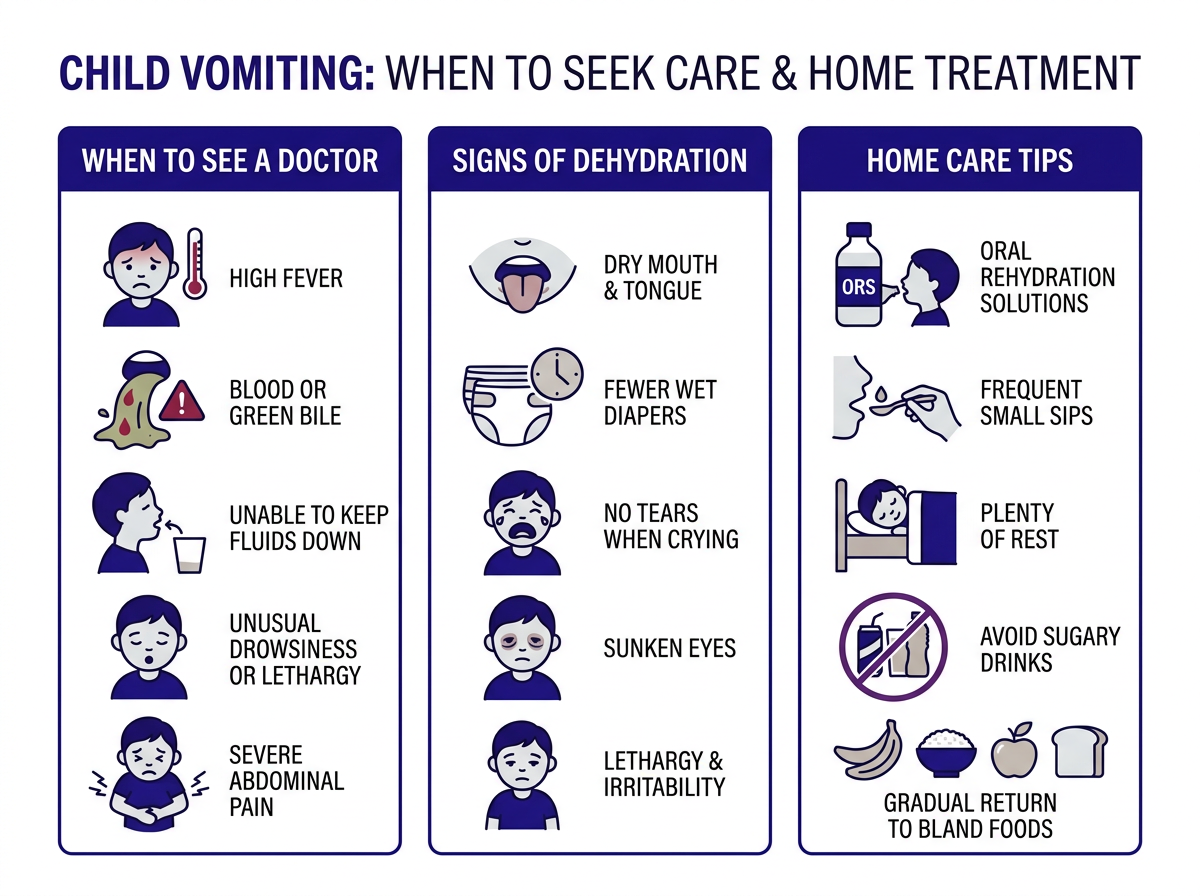
Child Vomiting When to See Doctor: Age-Specific Red Flags
Your child’s age matters when deciding how serious the vomiting is. Because younger children dehydrate faster, infants and toddlers need closer watching than older kids.
Infants Under 3 Months
For babies under 3 months, any vomiting beyond normal spit-up needs medical attention. Specifically, projectile vomiting in a newborn could signal pyloric stenosis, a condition that requires treatment. Therefore, you should contact your pediatrician right away or visit urgent care for babies if your infant vomits forcefully after feedings.
Babies 3 to 12 Months
Babies in this age range can handle a mild stomach bug, but they dehydrate quickly. Consequently, you should watch for fewer than 4 wet diapers in 24 hours. Also, look for a sunken soft spot on the head, which signals fluid loss.
Toddlers 1 to 3 Years
Toddlers are more resilient, yet they still need monitoring. Because they cannot always tell you how they feel, watch their behavior closely. Indeed, a toddler who stops playing and becomes limp or unresponsive needs immediate care.
Children Over 3 Years
Older kids can usually handle a day of vomiting at home. However, vomiting that lasts more than 24 hours or comes with severe stomach pain should prompt a visit. Especially if your child complains of pain in the lower right side, this could indicate appendicitis.
Signs of Dehydration Every Parent Should Know
Dehydration is the biggest risk when a child keeps vomiting. Because kids lose fluids fast, recognizing the warning signs early is critical. Here are the key signals to watch for.
Mild dehydration signs include a dry or sticky mouth, fewer tears when crying, and slightly less urine than normal. Although these signs are concerning, you can usually manage mild dehydration at home with small, frequent sips of fluid.
Moderate to severe dehydration is more serious. Specifically, look for these red flags:
- No urine for 8 or more hours
- Sunken eyes or a sunken soft spot in infants
- No tears when your child cries
- Dry, cracked lips and very dry mouth
- Cool, blotchy hands and feet
- Extreme fussiness or unusual sleepiness
Importantly, severe dehydration is a medical emergency. Therefore, if your child shows several of these signs at once, seek care immediately. To learn more about when to take your child to urgent care, read our detailed guide.
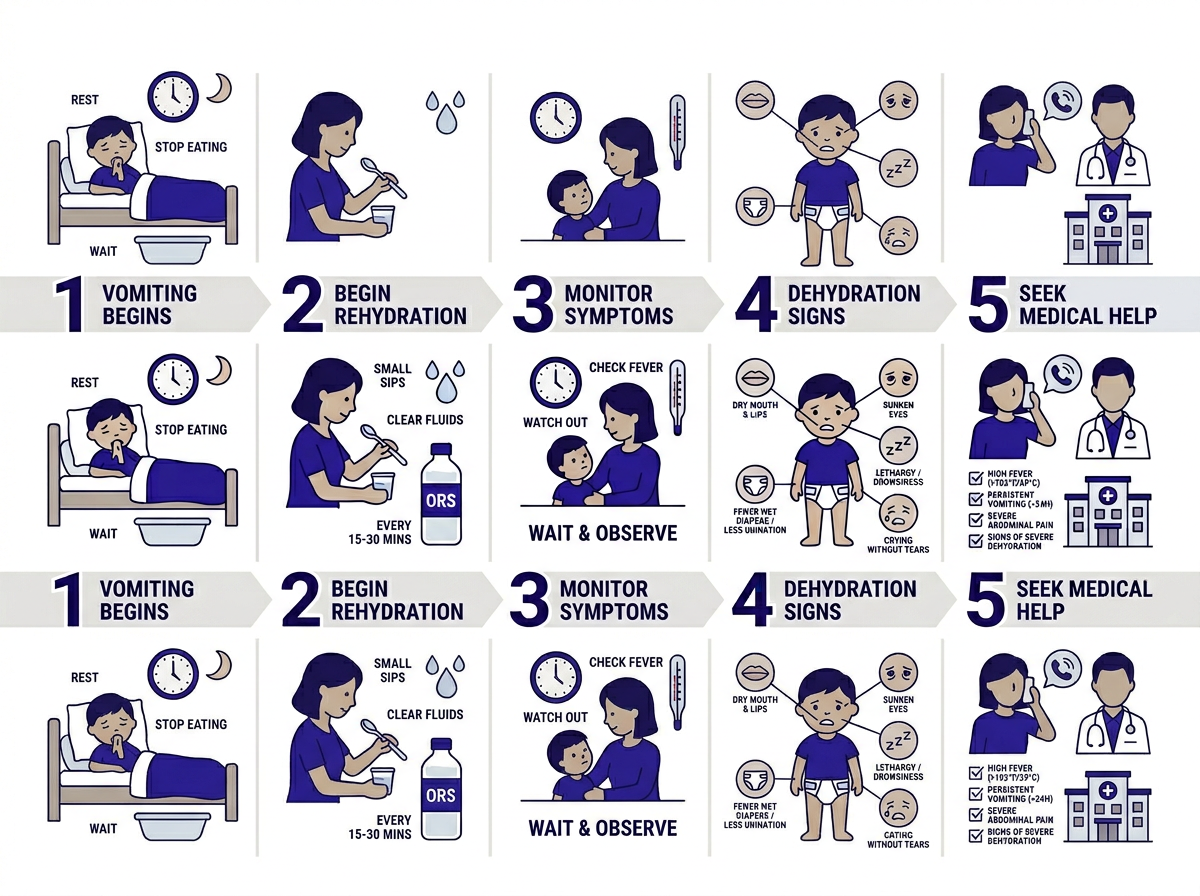
When to Call 911 for a Vomiting Child
Most vomiting in kids is not an emergency. However, certain warning signs mean you should call 911 right away.
Call 911 immediately if your child:
- Vomits blood or a substance that looks like coffee grounds
- Shows extreme lethargy and is difficult to wake
- Vomits after a head injury or fall
- Has a stiff neck with fever and vomiting
- Shows signs of poisoning (found near chemicals or medications)
- Has trouble breathing between vomiting episodes
Although these situations are rare, they require emergency care. Because time matters in these cases, do not wait to see if symptoms improve on their own.
Child Vomiting When to See Doctor at Urgent Care
Sometimes vomiting is too much for home care but does not require an ER visit. Instead, an urgent care clinic is the right choice. Here is when you should bring your child in.
Visit urgent care when your child:
- Has been vomiting for more than 24 hours
- Cannot keep any fluids down for 8 or more hours
- Has a fever over 102 F along with vomiting
- Shows signs of mild to moderate dehydration
- Has stomach pain that does not go away after vomiting
- Has vomiting with a rash or joint pain
At CityHealth, we regularly treat urgent care for nausea and vomiting cases in children. Also, our providers can assess dehydration levels, offer anti-nausea medication when appropriate, and rule out more serious conditions.
Moreover, you do not need an appointment. Because we are a walk-in clinic, you can bring your child in whenever symptoms become concerning.
Home Care Tips for a Vomiting Child
For mild cases, you can help your child recover at home. Here are proven strategies that work.
Start With Clear Fluids
First, wait 15 to 30 minutes after your child vomits before offering anything. Then give small sips of clear fluids every 5 to 10 minutes. Specifically, try water, an oral rehydration solution like Pedialyte, clear broth, or diluted apple juice. Because large gulps can trigger more vomiting, keep the sips small.
Follow the BRAT Diet
Once your child keeps fluids down for 4 to 6 hours, you can start solid foods. Specifically, try the BRAT diet: bananas, rice, applesauce, and toast. Also, plain crackers and boiled potatoes work well. However, avoid dairy, fatty foods, and sugary snacks for 24 to 48 hours.
Rest and Comfort
Next, keep your child resting in a comfortable position. For younger kids, prop them on their side to prevent choking if they vomit in their sleep. Also, keep a bucket or bowl nearby so they feel less anxious about getting sick.
Track the Pattern
Meanwhile, keep a simple log of when your child vomits and how much fluid they keep down. Because this information helps your doctor make decisions, it is valuable to have ready. Similarly, note any other symptoms like fever, diarrhea, or stomach pain.
When It Is OK to Wait It Out
Not every vomiting episode needs medical attention. In fact, after learning about child vomiting when to see doctor, many parents realize most kids recover on their own within 12 to 24 hours. Here are signs that things are manageable at home.
You can likely wait if your child:
- Vomits once or twice but seems fine between episodes
- Keeps sipping fluids and produces regular wet diapers
- Remains playful and alert after vomiting
- Has no fever, or only a low-grade fever under 100.4 F
- Shows no signs of dehydration
Essentially, trust your instincts. Although a single vomiting episode can be alarming, it is often just a passing stomach bug. However, if you feel something is off, it is always better to get your child checked.
Frequently Asked Questions About Child Vomiting
How many times does a child need to vomit before I should worry?
There is no magic number. However, understanding child vomiting when to see doctor guidelines helps. If your child vomits more than 3 to 4 times in a few hours or cannot keep fluids down for 8 hours, you should seek medical attention. Also, even a single episode of vomiting with blood or after a head injury needs immediate care. For younger children, especially babies under 12 months, even 2 to 3 episodes should prompt a call to your doctor.
Should I give my child anti-nausea medicine at home?
Generally, you should not give over-the-counter anti-nausea medications to children without consulting a healthcare provider. Because some medications are not safe for young kids, always check first. Instead, focus on keeping your child hydrated with small sips of clear fluids. Importantly, never give Pepto-Bismol to children under 12 due to the risk of Reye’s syndrome.
Can my child go to school after vomiting?
Most schools require children to be vomit-free for at least 24 hours before returning. Therefore, keep your child home until they have gone a full day without throwing up. Also, make sure they can eat a normal meal and keep it down before sending them back.
When does vomiting with fever become dangerous?
A low-grade fever with occasional vomiting usually indicates a stomach virus. However, you should seek care if the fever rises above 102 F, lasts more than 3 days, or comes with a stiff neck, rash, or severe headache. Consequently, vomiting paired with a high fever in a baby under 3 months is always an emergency.
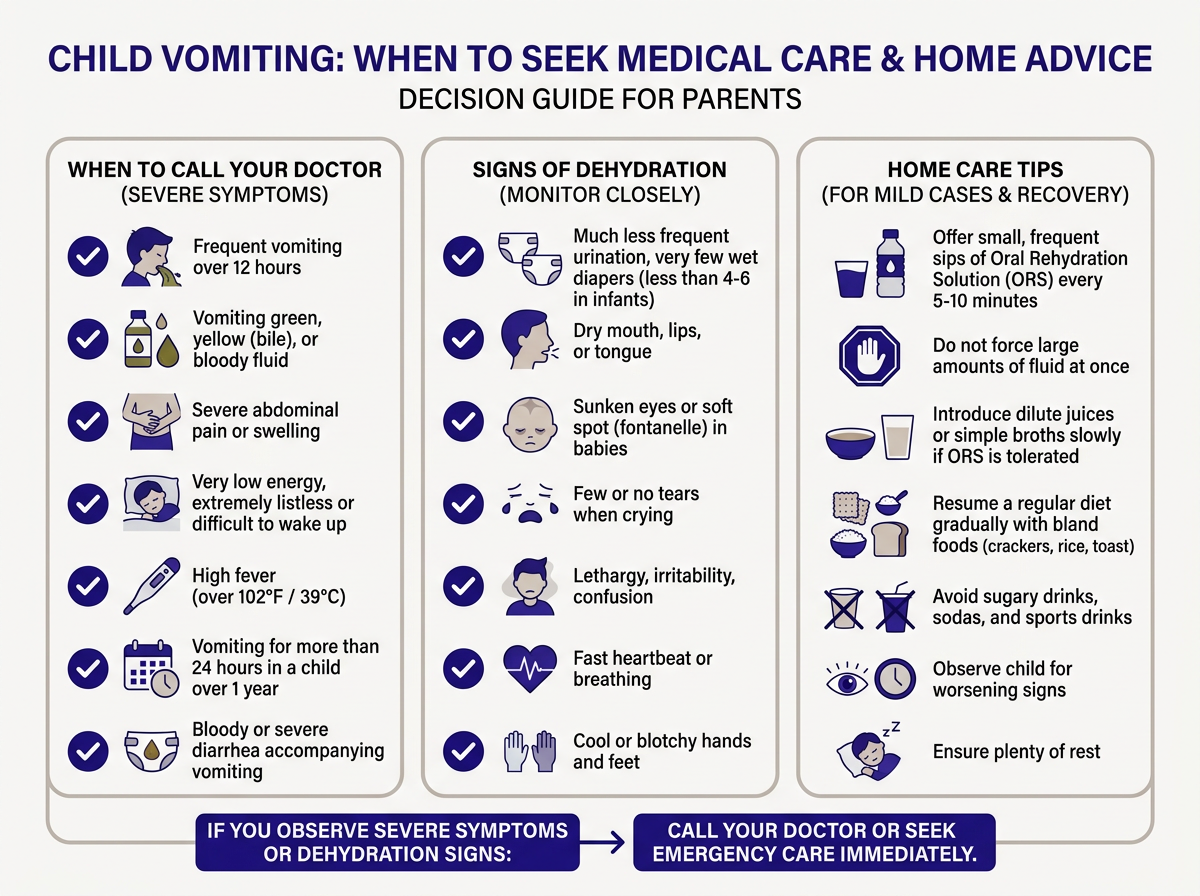
Your Child Deserves Fast, Friendly Care
Still unsure whether your child needs to be seen? Because we know how stressful a sick child can be, CityHealth is here to help. Our providers see kids for vomiting, dehydration, fevers, and other urgent symptoms every day.
CityHealth Urgent Care Locations:
- San Leandro: 15000 Hesperian Blvd, San Leandro, CA
- Oakland: 2693 International Blvd, Oakland, CA
Hours: Monday through Friday, 8 AM to 8 PM. Saturday and Sunday, 9 AM to 5 PM.
No appointment needed. Just walk in. Visit CityHealth Urgent Care today and get the answers you need.