Baby Doctor Near Me: A New Parent’s Guide to Infant Medical Care
You just brought your baby home. Now you need a baby doctor near me who can check on your newborn, answer your questions, and treat the fevers and sniffles ahead. In fact, choosing the right provider is one of the first big decisions you’ll make as a parent. This guide breaks down every type of baby doctor and the visit schedule for your baby’s first year. It also covers costs in California and when a same-day walk-in visit at urgent care is your best move.
Medically reviewed by Susana Quezada, NP — Nurse Practitioner

What Is a Baby Doctor Called?
Most people use “baby doctor” to mean a pediatrician. A pediatrician is a doctor who focuses on the health of infants, children, and teens. They complete four years of medical school plus three years of training. As a result, they handle everything from routine well-baby checkups to chronic childhood conditions.
However, pediatricians aren’t the only providers who care for babies. In fact, several types of providers treat infants. Also, each one plays a different role in your baby’s health.
Types of Baby Doctors and Providers
Pediatrician (MD or DO)
A pediatrician is the gold standard for ongoing primary care for babies and children. They track your baby’s growth, give vaccines on schedule, screen for milestones, and manage conditions like asthma or eczema. Because of this, you’ll see your pediatrician often during the first year. Indeed, the American Academy of Pediatrics (AAP) recommends choosing a pediatrician before your baby arrives.
Family Medicine Doctor (MD or DO)
A family medicine doctor treats patients of every age, from newborns to grandparents. For instance, some parents prefer this route because the whole family sees one provider. Furthermore, family doctors handle well-baby visits, vaccines, and sick visits. Then, they refer to pediatric specialists when a condition falls outside their scope.
Nurse Practitioner (NP) or Physician Assistant (PA)
Nurse practitioners and physician assistants provide primary care and urgent care for babies. For example, many pediatric offices employ NPs and PAs alongside physicians. At urgent care clinics like CityHealth, NPs examine babies, diagnose common illnesses, prescribe medicines, and order tests. Most importantly, they bring years of clinical training and hands-on time with infants.
Pediatric Specialists
If your baby has a specific medical condition, your pediatrician may refer you to a specialist. These include heart doctors, brain doctors, allergy doctors, and stomach doctors. Often, you won’t search for these providers on your own. Instead, your baby’s primary doctor sets up the referral.
What Happens at a Baby Doctor Visit?
Whether you see a pediatrician, family doctor, or NP, baby doctor visits follow a clear pattern. Here’s what to expect:
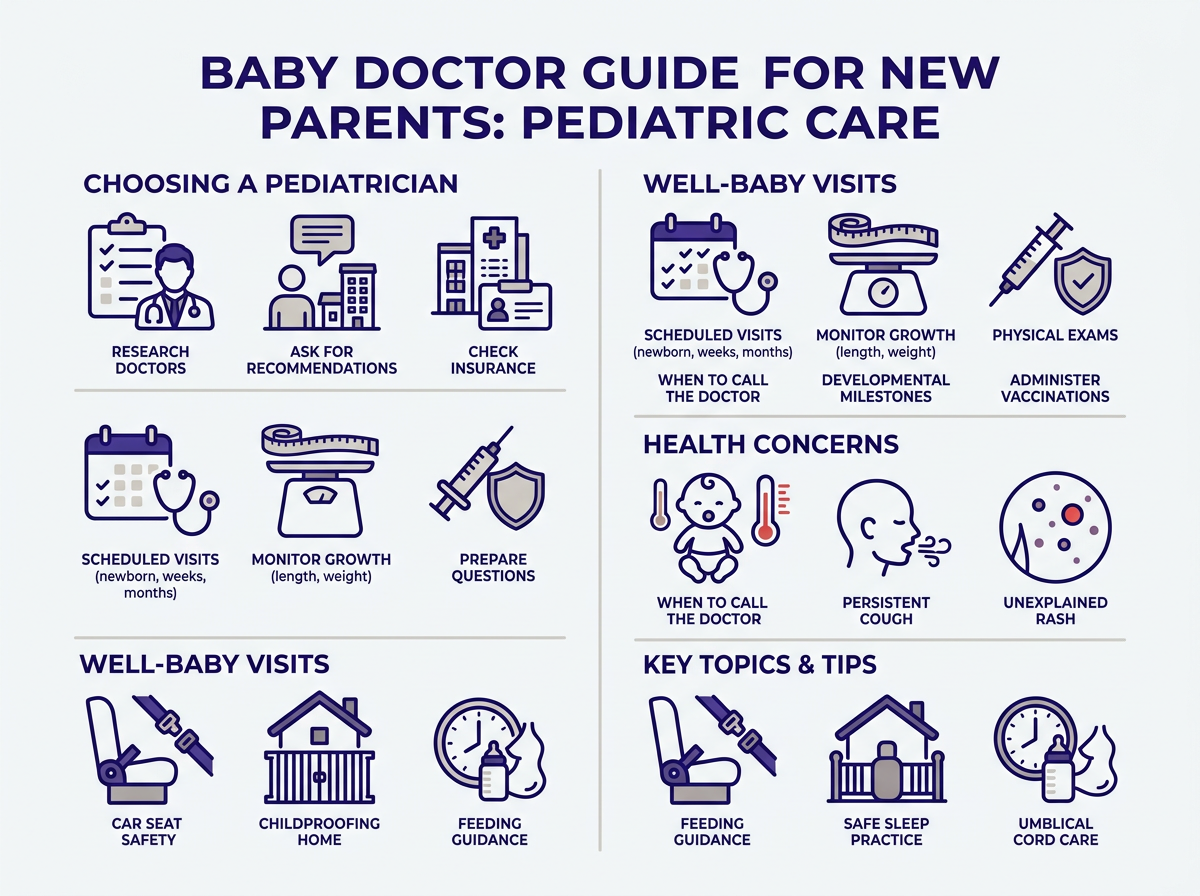
- Measurements: First, the provider weighs your baby, measures length, and checks head size. These numbers get plotted on growth charts to track healthy growth over time.
- Physical exam: Next, the provider checks your baby’s eyes, ears, mouth, heart, lungs, belly, hips, and reflexes. They look for anything abnormal.
- Growth screening: At key ages, the provider checks motor skills, language, and social behavior. For example, they want to know if your baby tracks objects, responds to sounds, and hits milestones on time.
- Shots: Most well-baby visits also include scheduled shots. Your provider follows the CDC vaccine schedule.
- Parent questions: Finally, this is your time. Ask about feeding, sleep, diaper output, behavior, and anything else on your mind. After all, good baby doctors welcome questions.
Well-Baby Visit Schedule: When Your Baby Needs Checkups
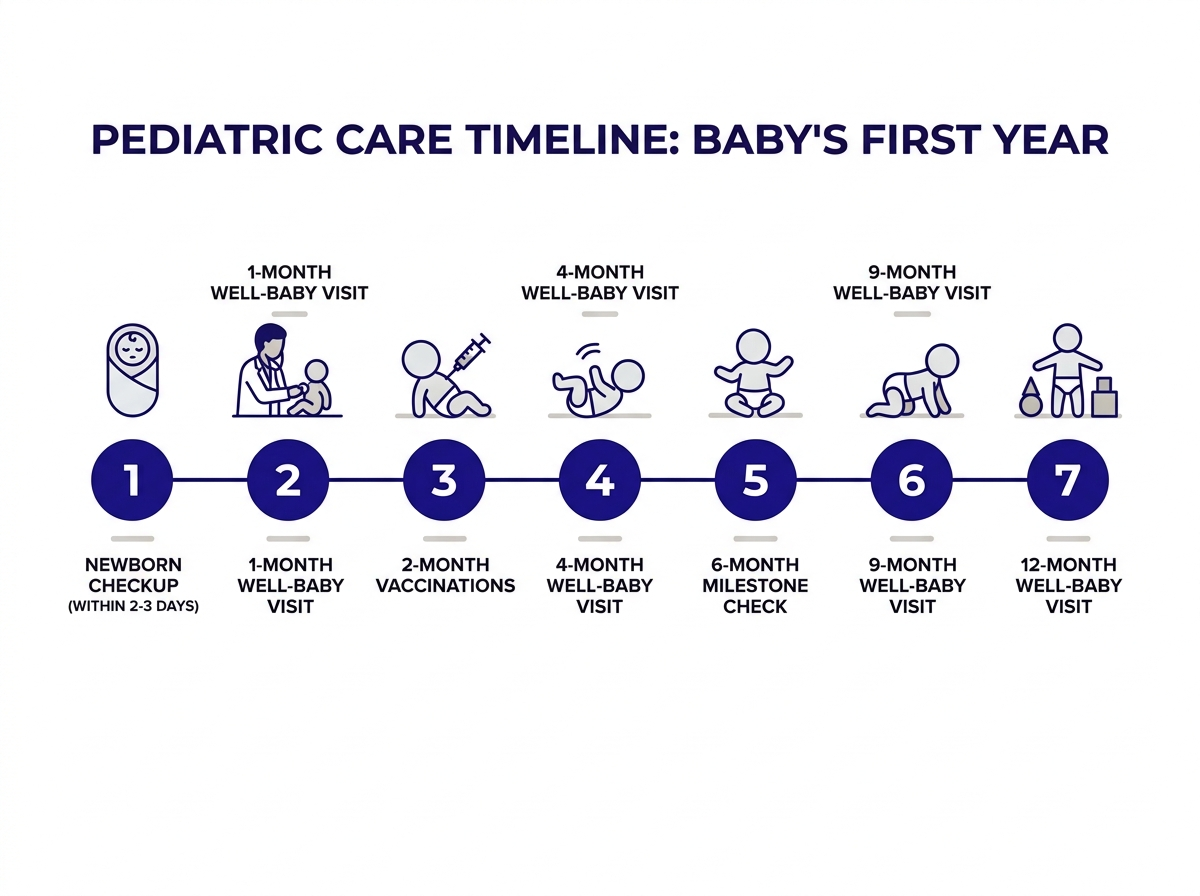
The AAP recommends a specific schedule of well-baby visits during the first two years. Notably, each visit has a purpose: growth tracking, growth screening, and vaccines.
| Age | What Happens |
|---|---|
| 3 to 5 days | First visit after hospital discharge. Weight check, jaundice screening, feeding check. |
| 1 month | Growth check, reflexes, Hepatitis B vaccine (second dose). |
| 2 months | First round of major vaccines (DTaP, IPV, Hib, PCV13, Rotavirus). Also, growth check. |
| 4 months | Second round of vaccines. Also, growth tracking. |
| 6 months | Third round of vaccines. In addition, solid foods talk and flu shot season begins. |
| 9 months | Growth screening (fine motor, language). Also, lead and anemia screening. |
| 12 months | MMR, Varicella, and Hepatitis A vaccines. Also, growth milestone review. |
| 15 months | Catch-up vaccines. Then, walking and language check. |
| 18 months | Autism screening (M-CHAT). Also, Hepatitis A second dose and language check. |
| 24 months | Autism screening follow-up. Also, full growth check and dental referral. |
That adds up to ten visits in the first two years. After age two, the AAP recommends yearly checkups. Most importantly, most insurance plans cover these visits at no cost to you. They count as preventive care.
Common Reasons Babies See a Doctor
Beyond well-baby checkups, babies get sick. Often. In fact, infants catch six to eight colds in their first year alone. Here are the most common reasons parents bring babies in for medical care:
Fever
A fever in a baby under three months old (100.4°F or higher) requires immediate medical attention. Young infants can’t fight infections the way older babies can. For babies over three months, a fever under 102°F is often fine to treat at home with Tylenol and fluids. However, if the fever goes above 102°F or lasts more than 24 hours, call your doctor or see when to see a doctor for your baby’s fever.
Ear Infections
Ear infections rank among the most common reasons babies visit a doctor. Symptoms include tugging at ears, fussiness, trouble sleeping, and fever. Babies between six months and two years get ear infections most often. Their ear tubes are short and flat. If your pediatrician can’t see your baby today, baby ear infection treatment at urgent care gets you same-day answers.
Colds and Upper Respiratory Infections
Runny noses, coughs, and stuffiness are normal in babies. Most colds clear up in seven to ten days. However, see a doctor if your baby has trouble breathing or refuses to eat. Also, watch for dry mouth and fewer than three wet diapers in 24 hours.
Rashes
Baby skin reacts to everything. For instance, diaper rash, cradle cap, eczema, baby acne, and heat rash are all very common. Most are harmless. However, a rash with fever, blisters, or spreading redness needs a medical check right away.
Vomiting and Diarrhea
Stomach bugs hit babies hard because they dry out fast. So watch for dry mouth, no tears when crying, and fewer wet diapers. If your baby vomits over and over or has watery diarrhea for more than 12 hours, get medical care that day.
Croup and RSV
Croup causes a barking cough and noisy breathing. Meanwhile, RSV causes wheezing and trouble breathing in babies under one. Both peak in fall and winter. If your baby’s breathing looks hard or you hear whistling sounds, bring them in right away.
Baby Doctor Near Me: When Urgent Care Beats Waiting for the Pediatrician
Your pediatrician handles well-baby visits, vaccines, and ongoing care. However, pediatricians work on set schedules. As a result, when your baby gets sick at 5 p.m. on a Friday, that schedule doesn’t help you.
Walk-in urgent care fills that gap. Here are times when urgent care is the faster, smarter choice for your baby:
- Your pediatrician is booked for days. Your baby has a fever and ear pain now, not Thursday.
- It’s evening or weekend. Most pediatric offices close by 5 p.m. and stay closed on weekends. In contrast, CityHealth is open seven days a week.
- Your baby has a new rash, bug bite, or skin concern that you want checked today.
- Your baby has a minor injury like a scrape, bump, or possible sprain.
- You need a quick test. For example, rapid strep, flu, COVID, or RSV testing with same-day results.
- You’re traveling or new to the area and haven’t found a pediatrician yet.
CityHealth Urgent Care in San Leandro sees babies and children for sick visits, fevers, ear infections, rashes, and minor injuries. No appointment needed. Simply walk in and get your baby treated the same day.
For help choosing a good pediatrician for your baby’s long-term care, we put together a separate guide. Indeed, urgent care and pediatric primary care work best as a team.
How Much Does a Baby Doctor Visit Cost?
The cost of a baby doctor visit depends on the type of visit, your insurance, and the provider. Here is a breakdown of what to expect.
Well-Baby Visit Costs
Well-baby checkups fall under preventive care. Because of the Affordable Care Act, most insurance plans cover these visits at 100% with no copay. This includes all visits on the AAP schedule, vaccines, and growth screenings. Furthermore, if you have Medi-Cal (California’s Medicaid), well-baby visits are fully covered.
Sick Visit Costs
When your baby is sick and you bring them in outside the well-visit schedule, that counts as a sick visit. In California, a baby sick visit at a doctor’s office often costs $103 to $145 without insurance. However, with insurance, you’ll pay your standard copay. For most plans, that ranges from $20 to $50.
Urgent Care Costs
Urgent care visits for babies usually cost less than half of an ER visit. At CityHealth, we accept most major insurance plans, Medi-Cal, and Medicare. For self-pay patients, our rates are clear and match primary care office visits. In contrast, an average ER visit in California runs $2,000 or more.
If cost is a factor, here is the rule of thumb. First, use your pediatrician for scheduled well-baby visits (covered at 100%). Second, use urgent care for same-day sick visits. Finally, reserve the ER for true emergencies.
What Age Should a Baby Start Seeing a Doctor?
Your baby’s first doctor visit happens three to five days after birth. The AAP recommends this timeline because the first week is critical. Providers check for jaundice, assess feeding, and confirm that your baby is gaining weight after the normal post-birth dip.
Try to choose your baby’s doctor before delivery. For instance, many parents schedule a prenatal visit during the third trimester. During that visit, you can ask about the office hours, after-hours coverage, and approach to vaccines.
Of course, if you haven’t chosen a baby doctor by delivery, the hospital will connect you with a pediatrician for the newborn exam. Then, you can always switch providers later.
How to Find a Good Baby Doctor Near Me
Finding the right baby doctor comes down to a few key factors. Here’s what to look for:
- Location: First, choose a provider within 15 to 20 minutes of your home. After all, you’ll visit often in year one.
- Office hours: Next, check if the office offers same-day sick visits. Also ask about Saturday hours or after-hours calls.
- Insurance: Then, verify that the provider takes your plan before your first visit.
- Talking style: Above all, you want a baby doctor who listens, explains clearly, and doesn’t rush you.
- Hospital link: Finally, ask where the doctor can admit patients if your baby needs hospital care.
Online reviews help, but nothing beats a prenatal visit. Notably, most practices offer these for free.
Pediatrician vs. Urgent Care: Knowing Which to Use
New parents often wonder whether to call the pediatrician or head to urgent care. The answer depends on what’s going on.
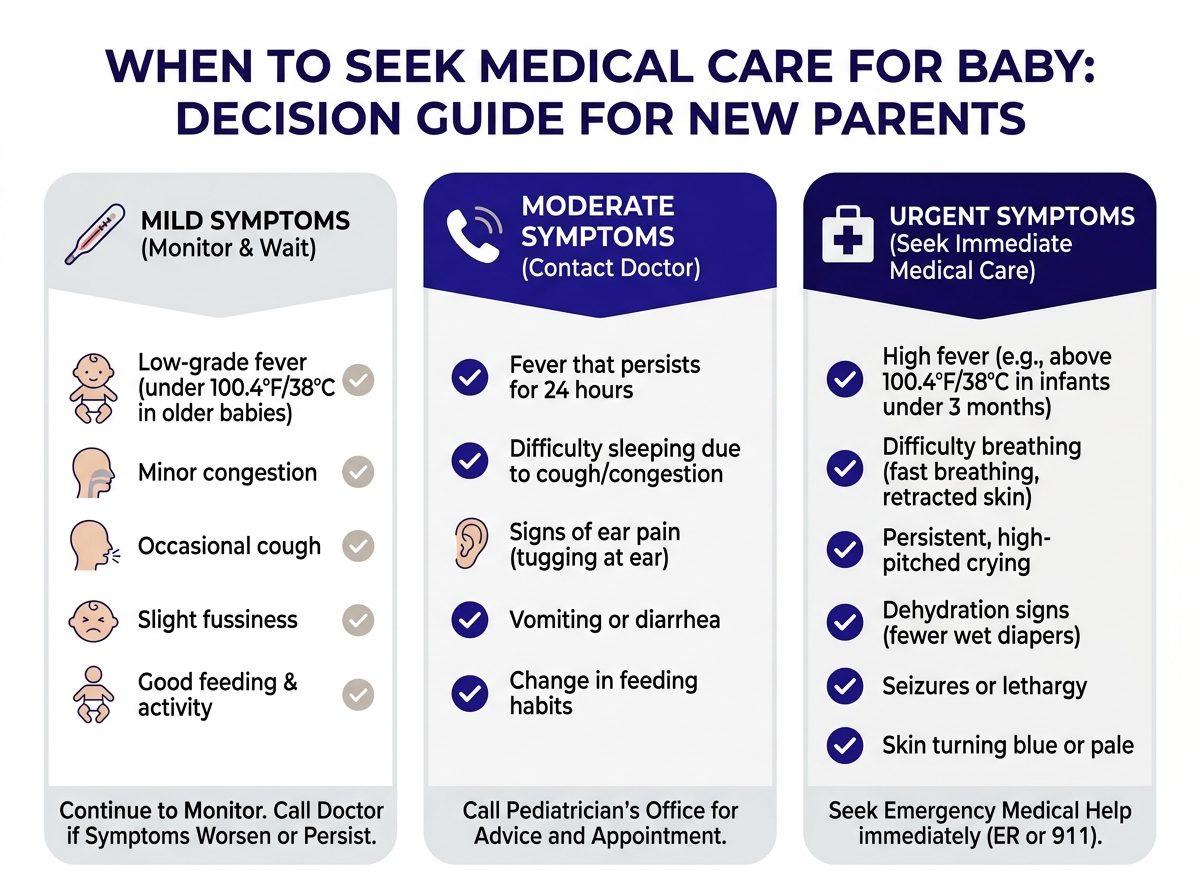
Call your pediatrician for:
- Well-baby checkups and vaccines
- Growth concerns and milestone tracking
- Chronic conditions (eczema, reflux, food allergies)
- Behavior or feeding questions
- Referrals to specialists
Go to a pediatric walk-in clinic or urgent care for:
- Fevers, colds, and flu that need same-day treatment
- Ear infections when the pediatrician is booked
- Rashes that showed up suddenly
- Vomiting, diarrhea, or signs of dehydration
- Minor injuries, cuts, or bug bites
- After-hours and weekend sick visits
Go to the ER for:
- Fever over 100.4°F in a baby under three months old
- Trouble breathing, blue lips, or severe wheezing
- Seizures
- Not waking up or extreme tiredness
- Severe bleeding or head trauma
When in doubt, call your pediatrician’s nurse line first. They’ll direct you to the right level of care.
Need a Baby Doctor Today? CityHealth Sees Infants Same-Day.
Your baby won’t wait for an open appointment. When your infant is sick, fussy, or running a fever, you want answers now. CityHealth Urgent Care in San Leandro sees babies and children for same-day sick visits, no appointment needed.
We treat fevers, ear infections, rashes, coughs, stomach bugs, and minor injuries. Furthermore, our providers have hands-on time with infants and young children. We also accept most insurance plans and Medi-Cal.
For well-baby checkups and vaccines, your pediatrician is your home base. However, for everything else that can’t wait, simply walk in.
CityHealth Urgent Care
San Leandro, CA
Open 7 days a week. No appointment needed.