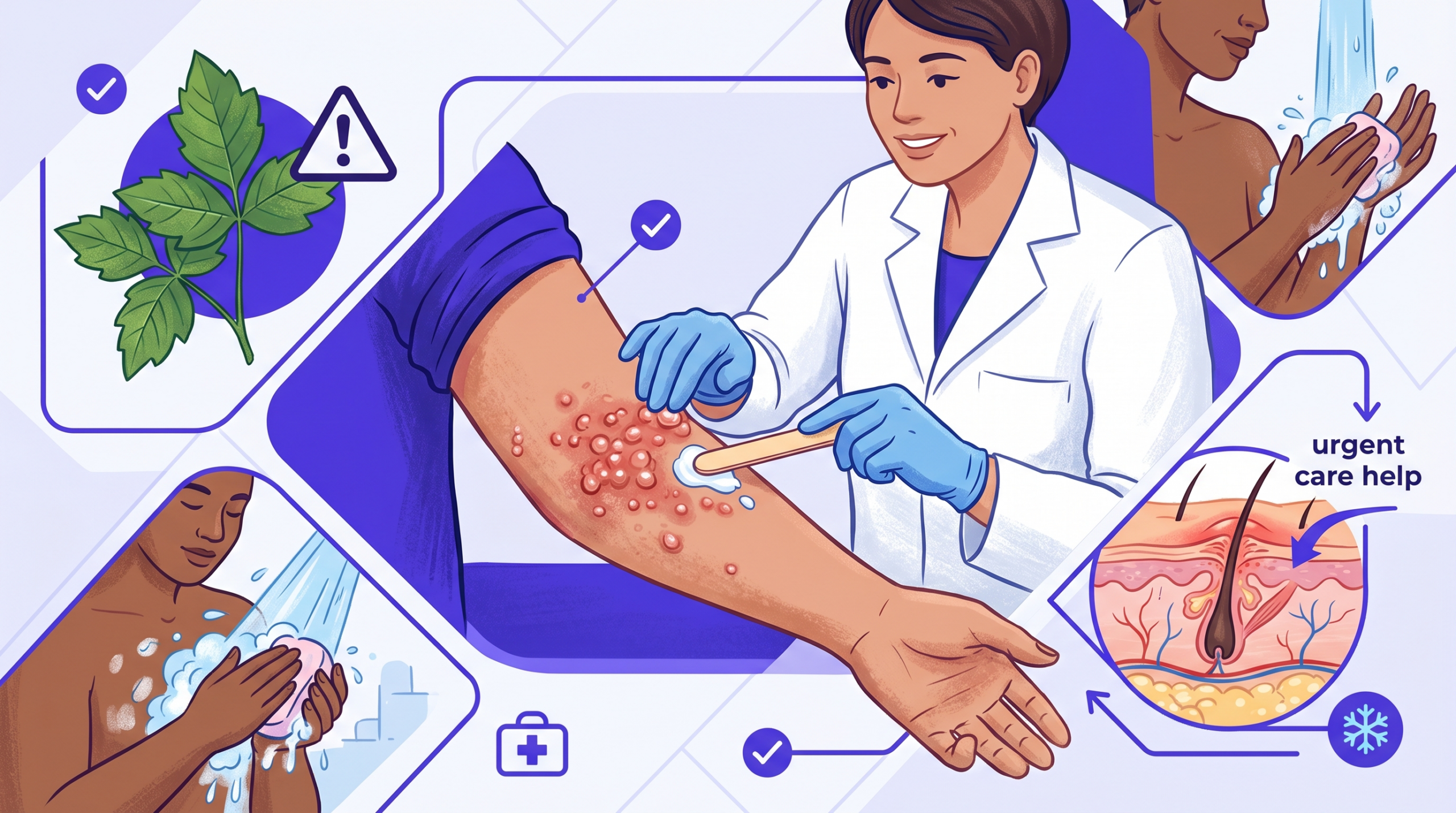

Urgent Care for Poison Oak: When a Rash Needs Same-Day Treatment
You brushed against something on the trail two days ago. Now your forearm is a red, streaky mess. The itch won’t quit, and calamine lotion isn’t helping much. Poison oak is common throughout California. In fact, it can turn a minor annoyance into a widespread rash within days. So knowing when urgent care for poison oak is the right call really matters. Getting same-day help can spare you a week of misery and prevent a skin infection.

Poison Oak and Your Skin
Poison oak contains urushiol, a sticky, colorless oil. It lives in the leaves, stems, roots, and berries. Once urushiol touches your skin, your immune system treats it as a threat. So the result is allergic contact dermatitis — a delayed immune overreaction.
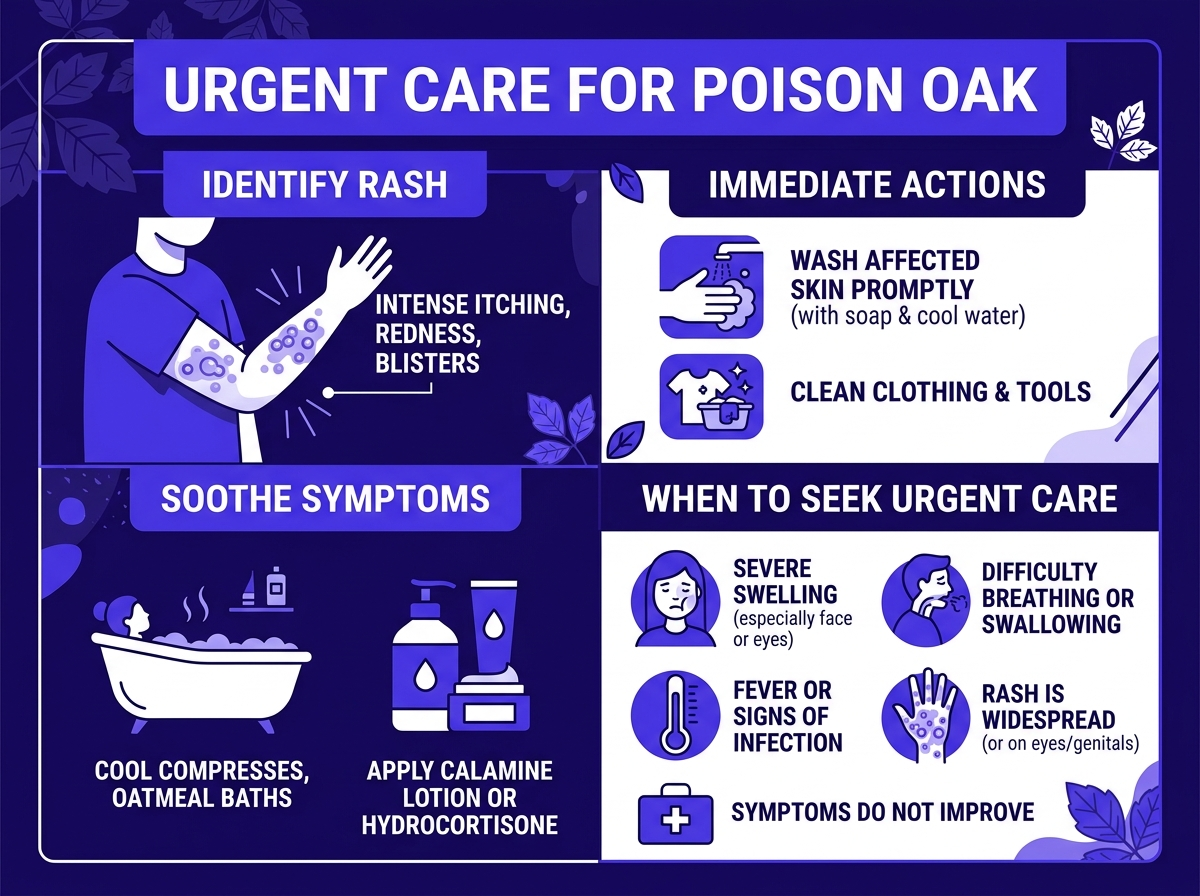
Symptoms usually appear 12 to 72 hours after exposure. They include:
- A red, streaky rash that follows the path of skin contact
- Intense itching, often worse at night
- Fluid-filled blisters, small or large
- Swelling, especially around the eyelids
- Weeping or crusting as blisters break
The rash itself is not contagious. However, urushiol can linger on skin, clothing, tools, or pet fur. If another person contacts that oil, they can develop their own reaction. Also, scratching does not spread the rash to new areas of your body. Still, broken blisters do raise your risk of bacterial infection.
First-time exposures often cause a mild reaction. However, repeated exposures tend to produce worse reactions over time. The immune system grows more sensitive to urushiol with each contact. In fact, some people have a severe reaction on their very first exposure, with no way to predict it in advance.
According to MedlinePlus, most poison oak rashes clear up in one to three weeks. Still, severe reactions respond much better to prescription treatment than to watchful waiting.

Signs You Need Urgent Care for Poison Oak
Mild reactions — a small patch of rash with manageable itching — often respond to cool compresses, calamine lotion, and over-the-counter hydrocortisone cream. But several situations call for same-day professional care.
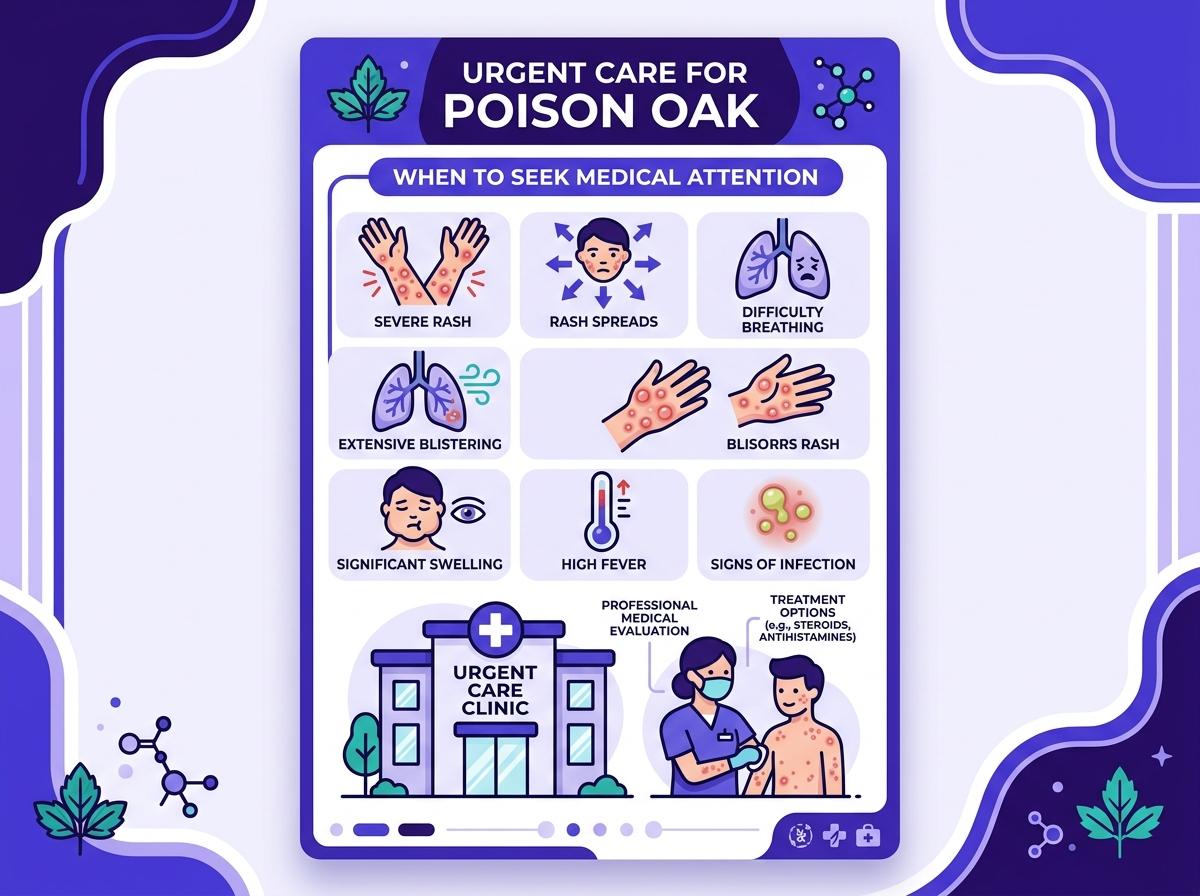
Seek poison oak urgent care if you have any of these:
- A rash covering a large portion of your body
- Facial swelling, especially around the eyes or lips
- Rash on or near your genitals
- Blisters that look infected: warm, red-bordered, pus-filled, or increasingly painful
- Itching so severe you cannot sleep or concentrate
- A rash that keeps spreading after several days of home treatment
- Exposure to smoke from burning poison oak plants
Over-the-counter hydrocortisone is only 1% strength. In contrast, prescription corticosteroids like oral prednisone suppress the immune response throughout the body. Still, that distinction matters most when the reaction is severe. Also, a provider can assess whether blisters have become infected and prescribe antibiotics if needed.
Smoke exposure is especially serious. Burning poison oak releases urushiol particles into the air. In fact, inhaling those particles can irritate your airway and lungs. Because of this, anyone who breathed smoke from a burning poison oak plant should seek care right away. Do not wait to see how symptoms develop.
Symptoms That Require Emergency Care
Urgent care handles the vast majority of poison oak cases well. However, some symptoms point to a more serious reaction that needs emergency treatment.
Go directly to an emergency room or call 911 if you experience:
- Difficulty breathing or swallowing
- Severe throat tightness or swelling
- Dizziness, fainting, or confusion
- Rapid rash spreading combined with high fever
These signs can mean a systemic allergic reaction or a serious secondary infection. Both go beyond what urgent care is equipped to treat. So do not drive yourself if breathing is impaired.
Dealing with a spreading poison oak rash? CityHealth San Leandro can see you today.
Book an AppointmentTreatment Options at Urgent Care
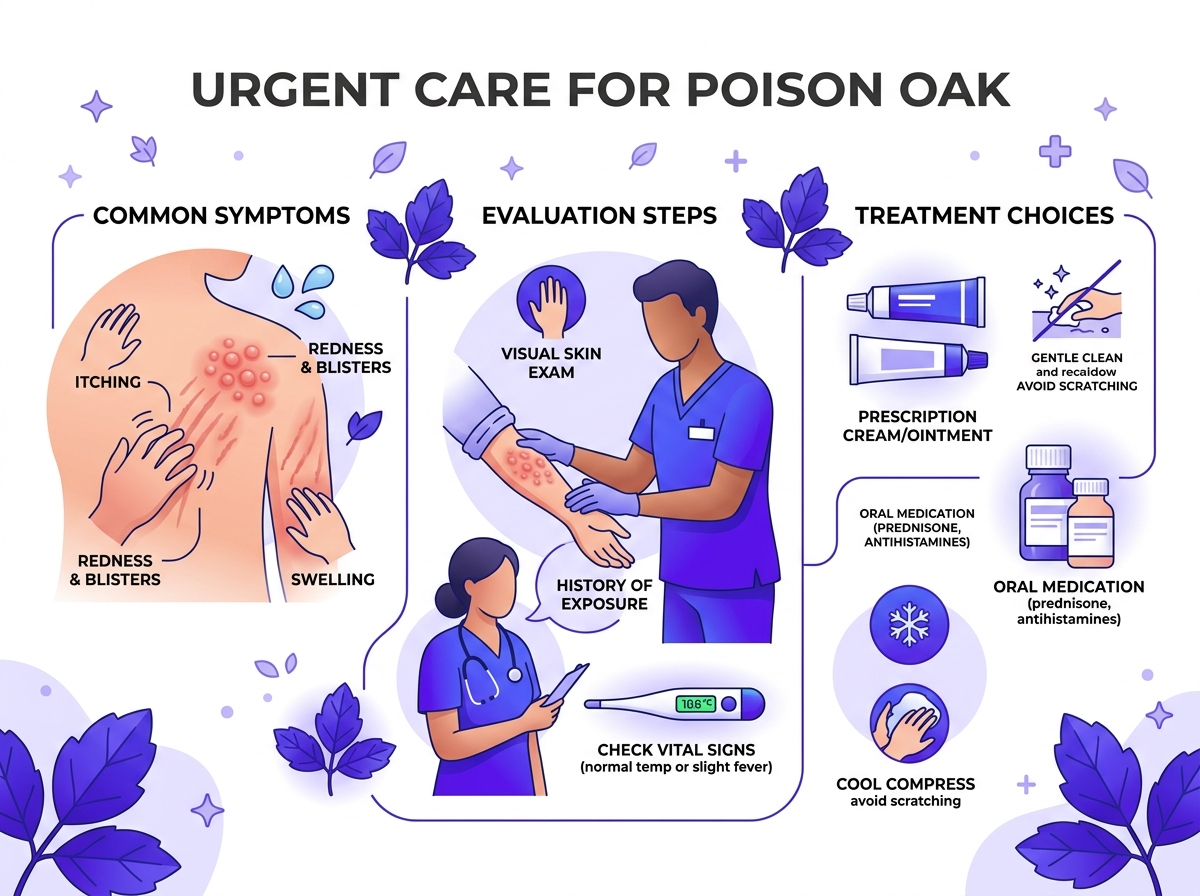
At your visit, a provider will examine the rash and ask about your exposure. Also, they will assess how severe the reaction is. Because poison oak dermatitis is allergic rather than infectious, treatment focuses on calming the immune response and easing symptoms.
Treatment options may include:
- Oral corticosteroids: A short course of prednisone or a similar steroid taken by mouth. This is the most effective treatment for moderate to severe reactions.
- Prescription-strength topical steroids: Applied directly to a contained rash to cut local swelling and itching.
- Antihistamines: To reduce itching and help you sleep while the rash heals.
- Wound care guidance: For blisters that have broken and show signs of infection.
- Antibiotics: Prescribed when a secondary bacterial infection is present.
Most people notice real improvement within 24 to 48 hours of starting oral steroids. For more on how urgent care handles broken or infected skin, see our article on urgent care for infected wounds.
Also, finish your full prescription even if the rash looks better after a couple of days. Stopping steroids too early can cause symptoms to return. In fact, the second course of treatment is often harder to manage.

Steps to Take Before Your Visit
If you know you touched poison oak, wash the area with soap and water right away. Removing urushiol within the first few minutes can reduce how severe the reaction becomes. A thorough wash — not just a rinse — is what matters most.
Also, wash any clothing, gloves, boots, or tools that contacted the plant. Urushiol stays active on surfaces for months. So it can trigger a fresh reaction long after the original exposure.
While you wait for your appointment:
- Apply cool, wet compresses for 15 to 20 minutes at a time
- Use calamine lotion or 1% hydrocortisone cream on small patches
- Avoid scratching, which breaks blisters and raises infection risk
- Keep blistered skin clean and dry between compress sessions
- Trim your fingernails short to limit skin damage from scratching during sleep
Overall, these steps will not stop the reaction. But they reduce discomfort and protect the skin until prescription treatment begins.
Poison Oak vs. Poison Ivy
Both plants contain urushiol and cause the same allergic contact dermatitis. Treatment is identical regardless of which plant caused the rash. So if you are unsure which one you touched, that uncertainty will not change how your visit goes.
Poison oak is far more common than poison ivy in California. It grows on dry hillsides, in wooded areas, and along hiking trails throughout the Bay Area. For more on ivy-related reactions, see our article on urgent care for poison ivy.
Same-Day Care in San Leandro
CityHealth provides urgent care in San Leandro for poison oak rashes, skin infections, and other same-day concerns. Walk-ins are welcome. Also, booking online cuts your wait time. No referral is needed.
If your rash is spreading, your eyes are swelling, or the itch is unmanageable, do not wait another day. A short urgent care visit gets you prescription treatment that makes a real difference by the next morning.
Book an appointment at CityHealth San Leandro or walk in today. Same-day care is available.
Frequently Asked Questions
Can urgent care treat poison oak?
Yes. Urgent care providers diagnose the rash, assess its severity, and prescribe oral corticosteroids, prescription-strength topical steroids, and antihistamines. These treatments reduce inflammation and itching far faster than over-the-counter options. Also, CityHealth in San Leandro handles poison oak visits on a same-day basis, with or without a prior appointment.
How long does a poison oak rash last?
Without treatment, a poison oak rash typically lasts one to three weeks. However, with prescription oral steroids, most people notice significant improvement within one to two days. The full rash may still take a week or more to clear completely. Still, prescription treatment reduces both the severity and total duration.
Is poison oak contagious?
No. The rash does not spread from person to person. However, urushiol oil can stay active on skin, clothing, gear, and pet fur for an extended period. If another person contacts that oil, they will develop their own reaction. So thorough washing with soap and water is essential to stop further transfer.
Is poison oak ever a medical emergency?
Go to the ER or call 911 if you develop difficulty breathing, throat tightness, or severe facial swelling after exposure. These symptoms can mean the reaction has become systemic and affected your airway. Also, seek emergency care if you notice a rapid rash spreading combined with high fever, dizziness, or confusion. For reactions without those red flags, urgent care is the right level of care.