
Your child wakes up at 2 a.m. with a fever of 102. They cry, cling to you, and refuse water. So you stand in the hallway asking: ride this out until morning or load everyone into the car right now? Knowing when to take child to urgent care saves you hours of worry and gets your kid treated at the right time.
This guide breaks down the specific symptoms, fever numbers, and red flags that tell you it’s time to go. Also, it covers what can safely wait at home and when the ER is the better call.
Medically reviewed by Susana Quezada, NP — Nurse Practitioner
Fever: The Numbers That Matter by Age
Fever is the top reason parents bring kids to urgent care. However, the number on the thermometer means different things at different ages.
Infants under 2 months: Any fever of 100.4°F (38°C) or higher needs immediate attention. However, skip urgent care and go straight to the ER for newborns. Because their immune systems are still developing, even a low-grade fever can signal a serious infection.
Babies 2 to 6 months: Similarly, a fever of 101°F or higher warrants a same-day visit. If your pediatrician’s office is closed, a pediatric walk-in clinic can evaluate your baby quickly.
Children 6 months and older: Visit urgent care if the fever hits 102°F and lasts more than 24 hours, or if it climbs above 104°F at any point. Also, bring them in if fever comes with a rash, repeated vomiting, or obvious lethargy.
Additionally, a fever that keeps returning after medication wears off for more than three days signals the need for evaluation.
When to Take Child to Urgent Care for Breathing Problems
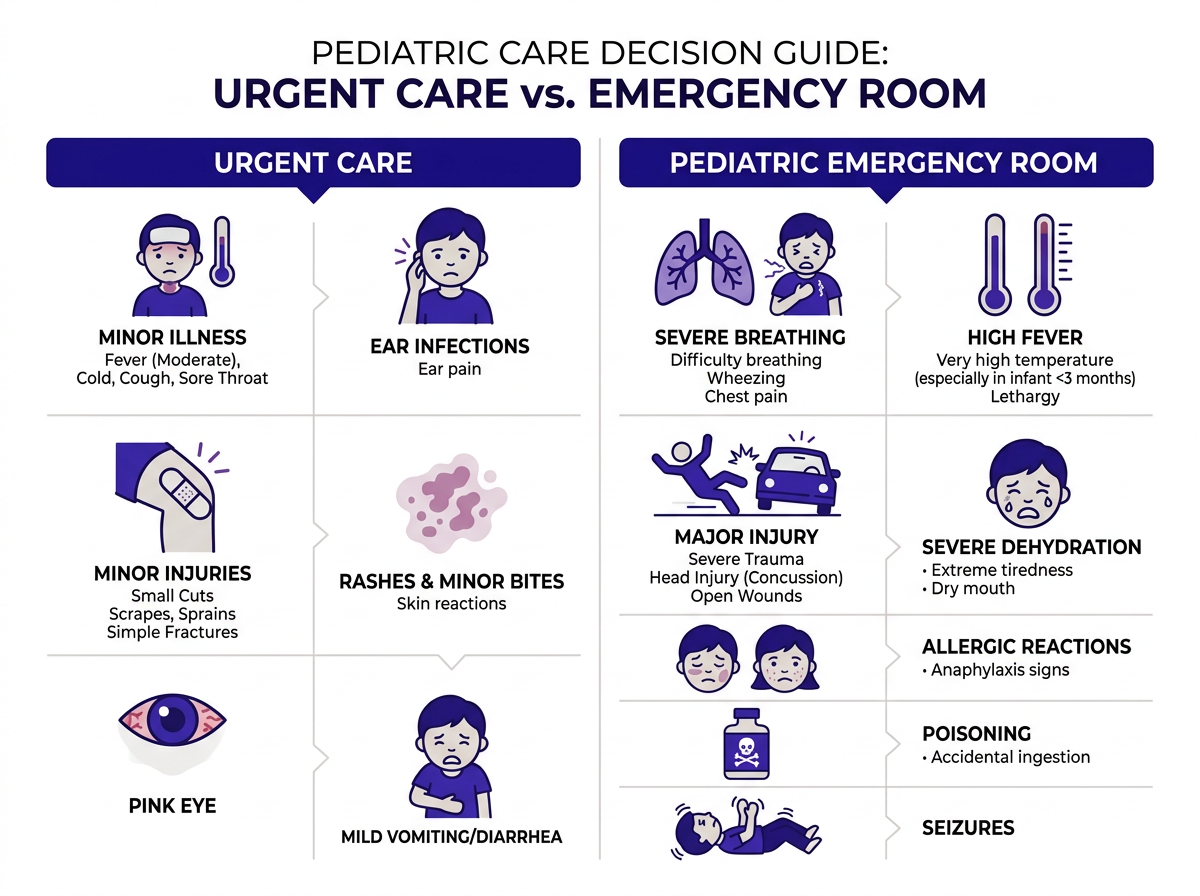
Breathing issues always deserve quick attention. Specifically, some respond well to urgent care treatment, while others need the ER.
Urgent care is right for:
- Mild wheezing without severe distress
- Croup with a barking cough but no stridor (high-pitched sound) at rest
- A cough lasting more than 10 days
- Mild asthma flares that respond partly to a home inhaler
- Congestion that blocks sleep or feeding
In contrast, go to the ER if your child:
- Struggles to breathe, with visible rib pulls or nostril flaring
- Has bluish lips, nails, or skin
- Breathes fast (more than 60 breaths per minute in infants, more than 40 in toddlers)
- Cannot speak in full sentences because of breathlessness
For a deeper comparison, see our guide on urgent care vs. the emergency room.
Injuries and Falls: Sprains, Cuts, and Possible Fractures
Kids fall constantly. Indeed, they crash bikes, tumble off playground bars, and collide during recess. Fortunately, most injuries look scarier than they are.
Bring your child to urgent care for:
- Cuts that won’t stop bleeding after 10 minutes of direct pressure, or wounds that gape open and need stitches
- Possible sprains or fractures with swelling and trouble bearing weight (as long as the bone is not visibly displaced or poking through skin)
- Minor head bumps where the child cries but stays alert and responsive
- Animal scratches or bites that break the skin
- Jammed or swollen fingers and toes
Notably, urgent care clinics have on-site X-ray gear to check for fractures. Consequently, this saves you a longer wait and higher cost at the ER.
Head to the ER if: your child blacks out after a fall, vomits over and over after a head hit, has a clearly bent limb, or has deep cuts with heavy bleeding.
Vomiting, Diarrhea, and Signs of Dehydration
Stomach bugs are common in kids, especially during school months. Generally, most clear up within 24 to 48 hours with rest and fluids. However, dehydration can set in fast in small children.
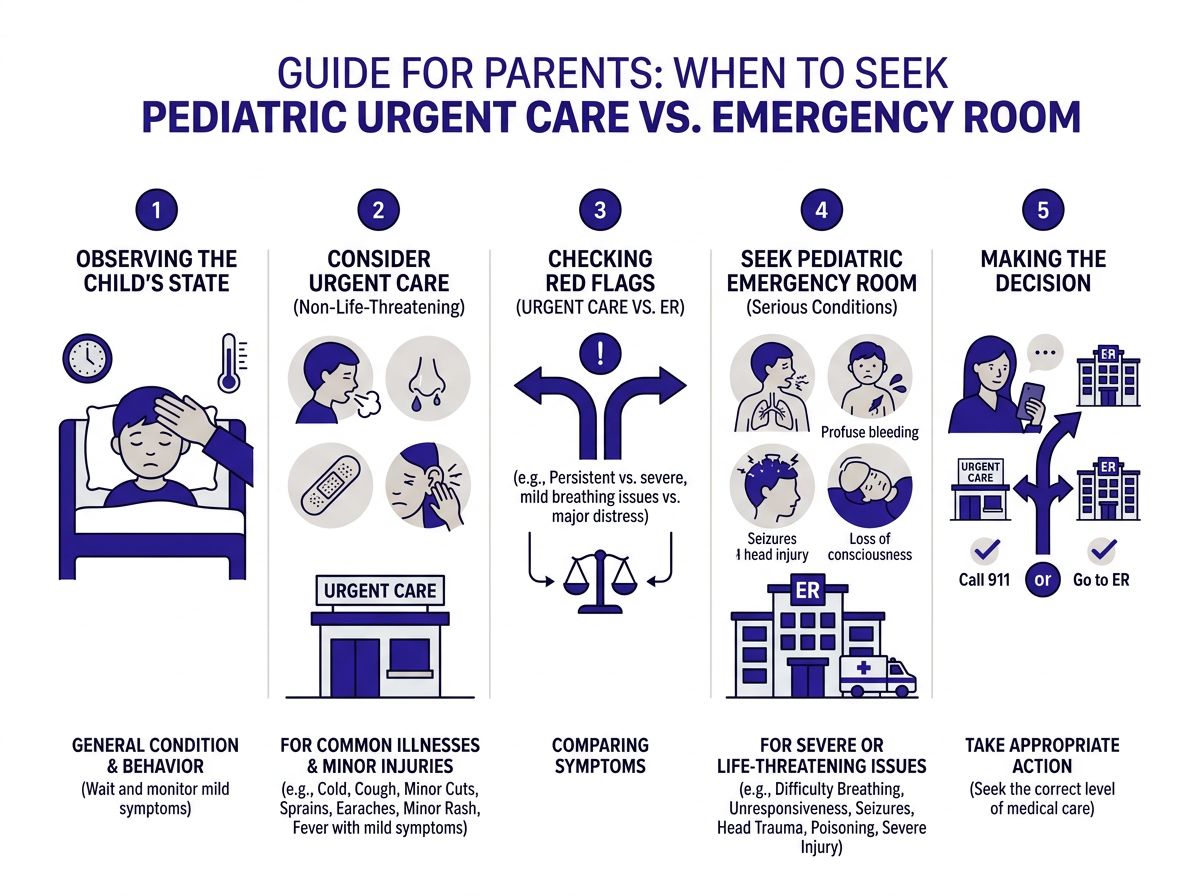
Visit urgent care if your child:
- Vomits more than 3 to 4 times in a few hours and cannot keep fluids down
- Has diarrhea lasting longer than 48 hours
- Shows early dehydration signs: fewer wet diapers, dark urine, dry mouth, crying with few tears
- Has blood in vomit or stool
- Complains of sharp belly pain (not just a general stomachache)
For infants, dehydration builds faster. Specifically, if a baby under 12 months has not had a wet diaper in 6 hours, bring them in. The American Academy of Pediatrics suggests small sips of Pedialyte rather than water or juice for young children.
Ear Pain, Sore Throats, and Eye Infections
These common childhood complaints are standard urgent care visits. Similarly, if your pediatrician cannot see your child that day, urgent care handles ear infections regularly.
Bring your child in for:
- Ear pain with fever, drainage, or tugging in babies who can’t describe pain yet
- Sore throat lasting more than 48 hours, especially with white patches, fever above 101°F, or trouble swallowing
- Pink eye with green or yellow discharge, crusty eyelids, or eye pain
Importantly, strep throat needs to be caught early. Because untreated strep can lead to rheumatic fever, urgent care clinics run rapid strep tests that return results in about 10 minutes.
Rashes and Skin Reactions Worth a Visit
Most childhood rashes are harmless and fade on their own. Still, certain rashes need a provider’s eye.
Visit urgent care for:
- A rash that spreads fast over hours
- Hives covering a large body area, especially after a new food or new medication
- A rash paired with fever above 101°F
- Bug bites with growing redness, warmth, and pus
- Blistering from poison oak or contact reactions
However, call 911 or go to the ER if: your child gets hives along with swelling of the lips, tongue, or throat, trouble breathing, or sudden dizziness. These are signs of anaphylaxis.
When to Take Child to Urgent Care vs. Staying Home
Not every symptom demands a visit. Essentially, knowing the difference saves you time and keeps your child resting at home.
You can safely monitor at home if your child:
- Has a low-grade fever (under 101°F) and still plays, eats, and drinks normally
- Has a runny nose and mild cough without breathing trouble
- Has a minor scrape or bruise that doesn’t need stitches
- Threw up once but now keeps fluids down
- Has mild diarrhea without dehydration signs
On the other hand, head to urgent care if:
- Home remedies and OTC medication fail to improve symptoms after 24 to 48 hours
- Your child’s behavior shifts: too much sleep, too cranky, or refusing food and drink
- Symptoms worsen rather than slowly improving
- Your gut says something is off, even if you can’t pinpoint what
Ultimately, trust your instincts. Pediatric providers would rather check a child who turns out fine than miss something real.
Age-Specific Quick Reference
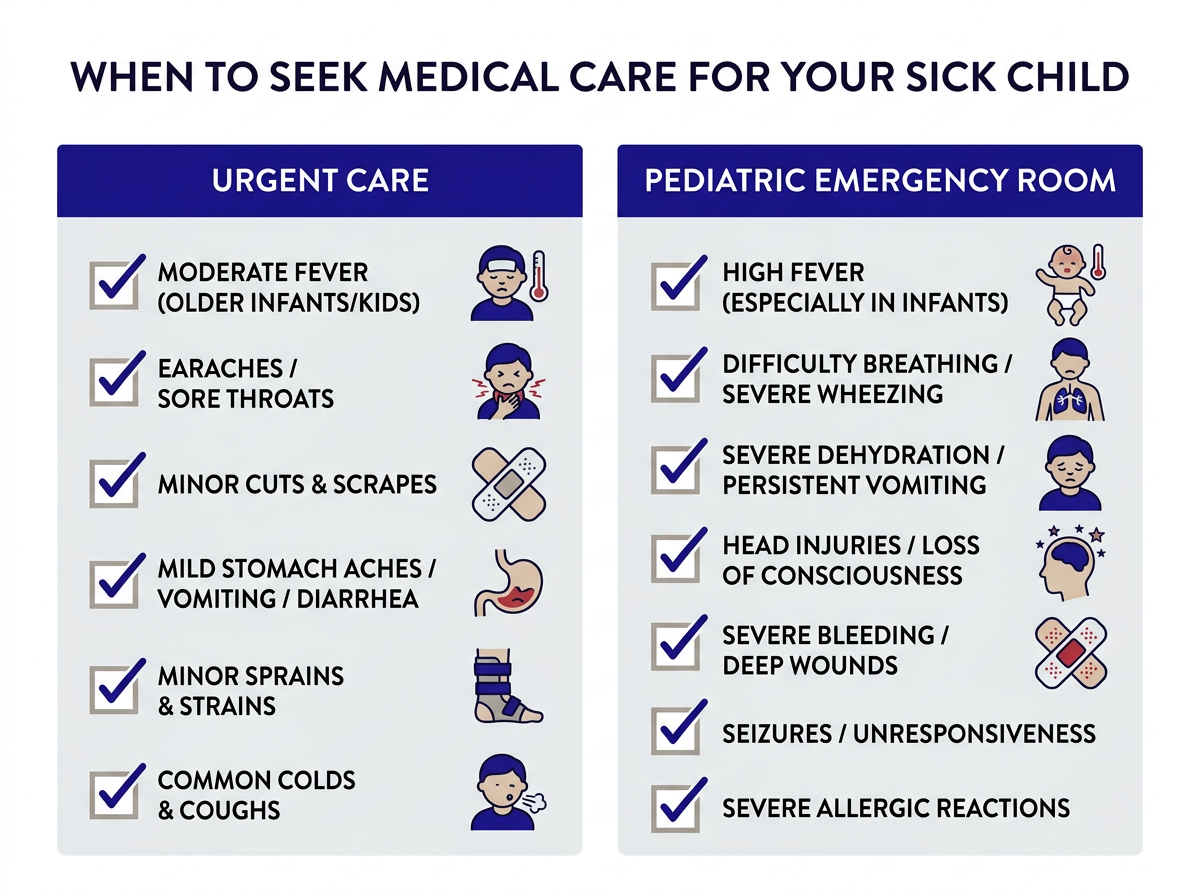
Infants (0 to 12 months): Have the lowest bar for seeking care. Indeed, any fever in a newborn under 2 months is an emergency. Also, refusal to feed, nonstop crying, or unusual drowsiness all warrant a same-day visit. Because infants can’t describe symptoms, behavior changes are your main signal.
Toddlers (1 to 3 years): Watch for dehydration during illness, since toddlers lose fluids quickly. Croup is most common in this age group and often peaks at night. Specifically, a barking cough with mild stridor often responds to cool night air. Nevertheless, visit urgent care if stridor stays at rest.
School-age children (4 to 12 years): Can describe symptoms more clearly. Consequently, assessment is easier. Plus, frequent sore throats may point to recurring strep. Meanwhile, sports injuries, sprains, and possible concussions become more common in this group.
Why Choose Urgent Care Over the ER
Emergency rooms handle life-threatening situations. For everything else, urgent care offers clear advantages for families.
- Shorter wait times: Most visits take 30 to 60 minutes versus 2 to 4 hours in many ERs
- Lower cost: Typically a fraction of an ER visit, even with insurance
- On-site tests: X-rays, rapid strep, flu tests, and urinalysis without hospital-level pricing
- Extended hours: Open evenings and weekends when pediatrician offices close
At CityHealth Urgent Care in San Leandro, we see kids of all ages for the conditions listed above. Furthermore, walk-ins are always welcome. You can also learn about our pediatric urgent care services.
What to Bring to Your Child’s Urgent Care Visit
A little prep makes the visit smoother for everyone.
- Insurance card and photo ID
- List of current medications with doses
- Symptom timeline: when it started, what you tried, any changes
- Shot records if handy (especially for infants)
- Comfort items: a favorite toy or blanket to cut anxiety
Furthermore, write down your questions before you leave the house. Otherwise, it’s easy to forget what you wanted to ask in the moment.
Get Your Child Seen Today at CityHealth Urgent Care
If your child’s symptoms match any of the urgent care signs above, don’t wait. CityHealth Urgent Care in San Leandro treats children of all ages for fevers, ear infections, injuries, breathing issues, and more. No appointment is needed, but you can also reserve your spot online to cut wait time.
Book your child’s visit online now or walk in today.