
What Will Urgent Care Do for Hives? Treatment, Red Flags, and What to Expect
Quick Answer: Urgent care can diagnose hives, find likely triggers, and prescribe antihistamines or corticosteroids for same-day relief. Most mild to moderate cases do not need an ER visit. But if you have throat tightening, trouble breathing, or sudden dizziness with hives, call 911 or go to the ER at once.
Hives appear without warning. One moment your skin is clear. The next, raised, itchy welts cover your arms, chest, or face. So if you are wondering what urgent care will do for hives, the short answer is: quite a lot. Knowing your options helps you act fast and get relief the same day.
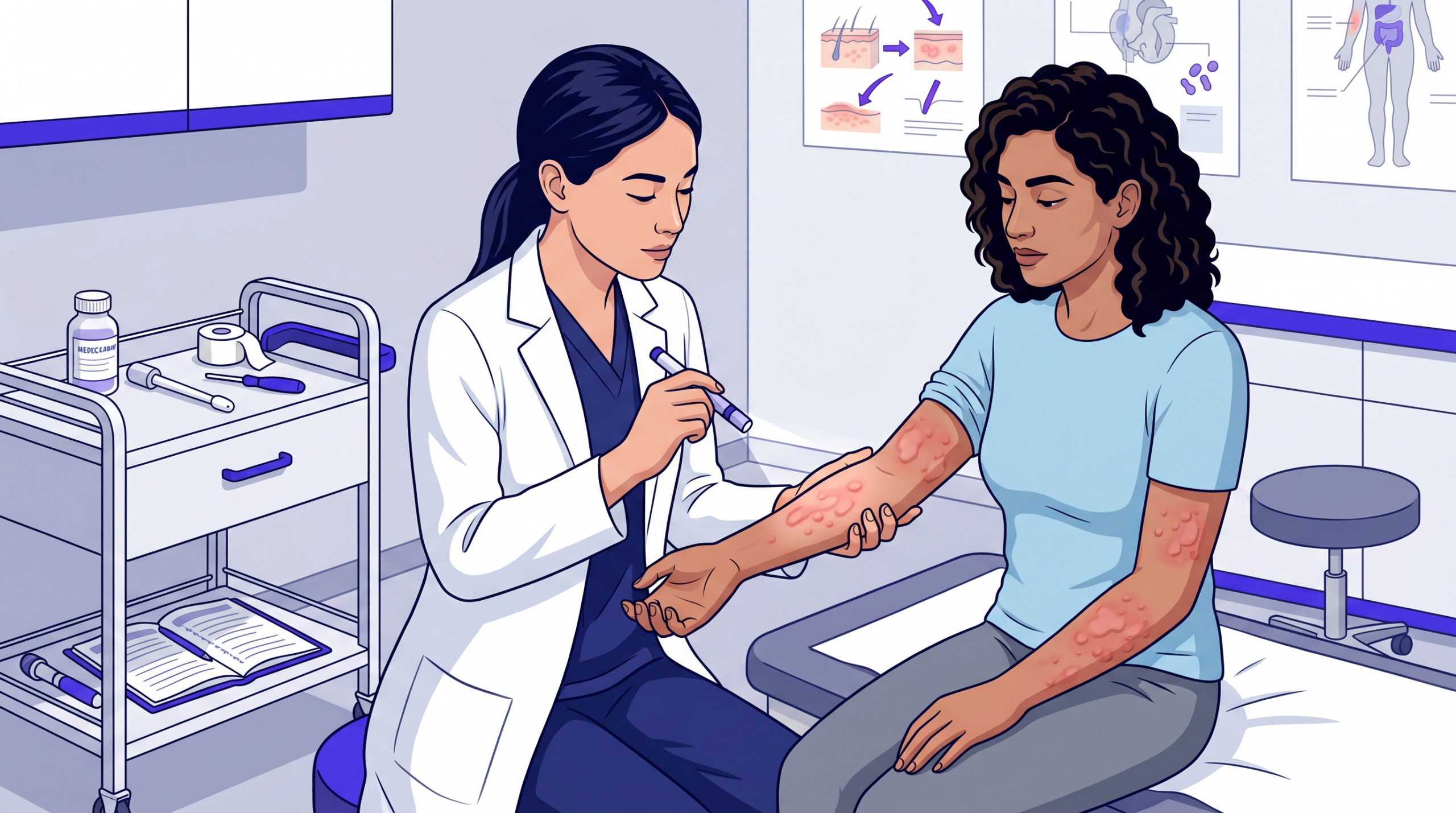
A CityHealth provider examines hive symptoms and discusses treatment options.
What Will Urgent Care Do for Hives?
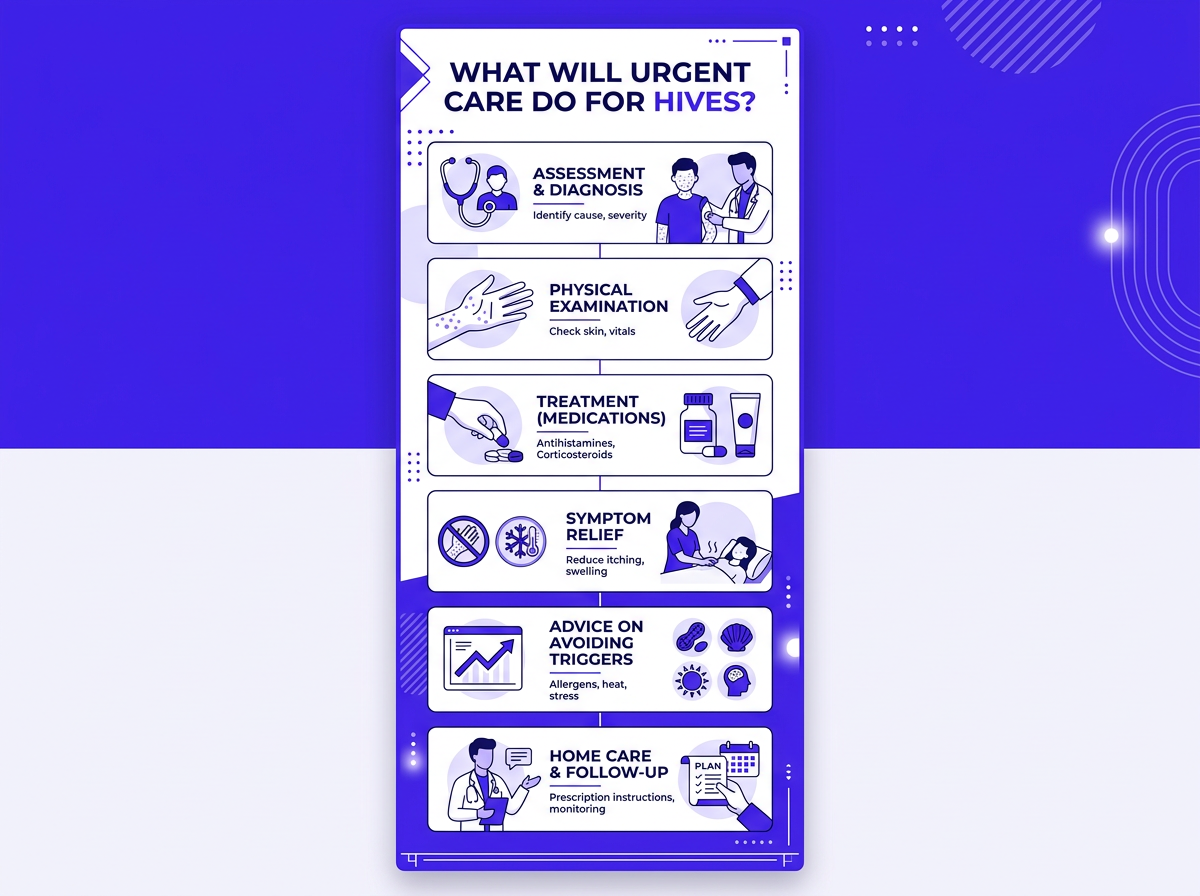
At urgent care, the provider starts with a focused exam. They look at the rash, note how it has spread, and ask about when the welts appeared. They also ask about recent foods, medications, and any changes in your environment.
Here is what the visit covers:
- Confirms the diagnosis. Hives have a clear raised, blotchy look. Still, the provider rules out other rashes like contact dermatitis that need different treatment.
- Checks severity. The provider looks for signs the reaction has moved past the skin. They check breathing, listen to the lungs, and look for swelling of the face or throat.
- Prescribes antihistamines. First-line treatment includes an oral antihistamine. Cetirizine, loratadine, and hydroxyzine are common choices. The provider picks based on the severity of the reaction.
- Adds corticosteroids if needed. For moderate hives that do not respond to antihistamines, a short prednisone course cuts inflammation faster and prevents rebound flares.
- Gives epinephrine on site if symptoms are escalating. Urgent care keeps epinephrine on hand. If your reaction is getting worse on arrival, the provider can give an injection and watch you before arranging a transfer.
- Finds possible triggers. The provider goes through recent foods, medications, insect exposures, and new products to find the likely cause.
- Sends you home with a clear plan. You leave with a medication schedule, a list of warning signs, and guidance on follow-up or emergency care.
In addition, the provider may suggest continuing an over-the-counter antihistamine for several days after the prescription ends. This is common when the trigger has not been confirmed. It helps prevent a second wave of welts as the irritant clears your system.
For more detail, see our full guide to hives: causes, symptoms, and treatment at urgent care.
Can Urgent Care Treat Hives? Who It Works For
Yes, urgent care can treat hives in most cases. The visits that go smoothly share a few things in common.
Urgent care is a good fit when:
- The welts are itchy but not spreading to the throat or mouth
- Breathing feels normal
- You have no history of severe anaphylaxis to the same trigger
- Symptoms started within the past 24 to 48 hours
- Over-the-counter antihistamines gave little or no relief
- You want a professional diagnosis before the rash clears on its own
The visit itself is straightforward. Most hive cases take under an hour from check-in to discharge. First, the provider examines the rash. Next, they decide whether bloodwork is needed. Then they review the treatment plan with you before you leave.
Children with hives also do well at urgent care when symptoms stay mild to moderate. Because young children cannot always describe how they feel, the provider watches breathing rate, skin color, and behavior in addition to the rash itself.
For a broader look at allergic reactions, see allergic reaction: when urgent care is the right call.
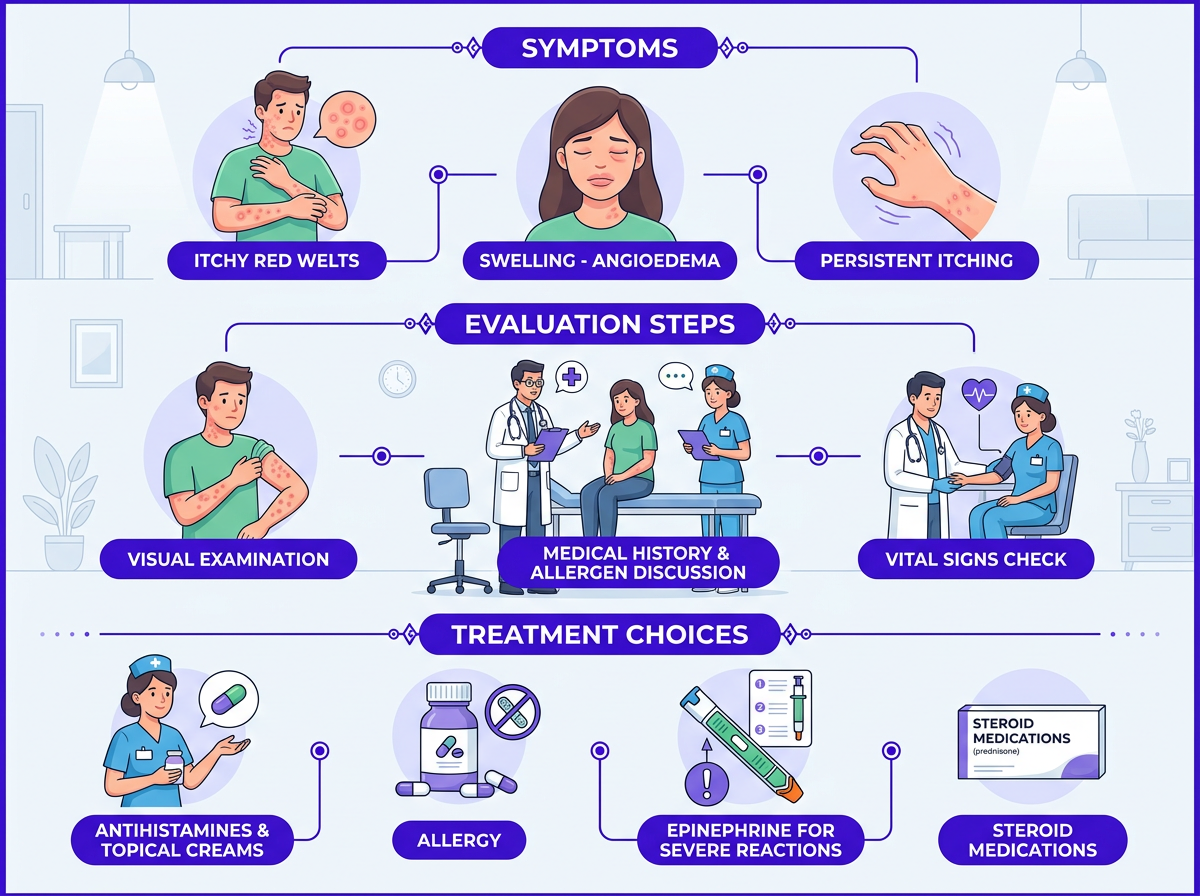
Raised, blotchy welts are the hallmark of hives.
Red Flags That Require the ER, Not Urgent Care
Some hive reactions escalate into anaphylaxis. That is a life-threatening emergency. Do not drive yourself. Call 911 or go to the nearest ER at once if you notice any of these signs:
- Throat tightening or a feeling that your airway is closing
- Trouble breathing, wheezing, or shortness of breath
- Swelling of the lips, tongue, or face
- Sudden dizziness, lightheadedness, or fainting
- A rapid or irregular heartbeat alongside hives
- Nausea, vomiting, or stomach cramps combined with the rash
- Hives spreading fast across the body with any of the symptoms above
According to the Mayo Clinic, anaphylaxis can progress within minutes. Every second counts.
Still unsure if your symptoms are mild or severe? Err toward caution. A confirmed non-emergency ER visit costs more time than an urgent care visit. But a delayed anaphylaxis response can be fatal. So if the airway feels involved or you feel faint, the ER is the right call.
Dealing with hives in San Leandro?
CityHealth urgent care sees hive cases the same day. Get examined, diagnosed, and treated without an ER wait.
Book an AppointmentCommon Hive Triggers the Provider Will Ask About
Hives develop when the immune system releases histamine. It does this in response to something it sees as a threat. Triggers vary from person to person. So the provider asks detailed questions to find the most likely cause. Knowing the trigger helps you avoid the next reaction.
Common triggers include:
- Foods: Shellfish, peanuts, tree nuts, eggs, dairy, and wheat are among the most frequent food causes
- Medications: Antibiotics, NSAIDs such as ibuprofen, aspirin, and some blood pressure medications
- Insect stings or bites
- Contact allergens: Latex, certain metals, cosmetics, perfumes, and cleaning products
- Viral infections: A common trigger in children, who often develop hives during or after a viral illness
- Physical factors: Extreme heat, cold, pressure on the skin, water contact, or exercise
- Stress: A recognized but hard-to-confirm trigger in some adults
In many cases, no clear trigger is found. The provider may then label the reaction idiopathic. That is normal and does not change the treatment. Antihistamines work the same regardless of the cause.
Hives That Keep Coming Back
Hives that return for six weeks or longer fall into a category called chronic urticaria. Urgent care handles acute flares well. However, recurring hives need follow-up with an allergist or dermatologist for long-term control.
During a visit for a chronic flare, the urgent care provider may:
- Order basic bloodwork to screen for thyroid disease, autoimmune conditions, or infections
- Prescribe a longer antihistamine course rather than a short three-day supply
- Discuss daily antihistamine use as a preventive strategy between flares
- Write a referral to an allergist or dermatologist for further testing
For same-day relief during a flare, start at CityHealth urgent care in San Leandro. From there, the provider can write a referral if chronic management is the next step.

CityHealth San Leandro offers same-day care for hive flare-ups.
Preparing for Your Urgent Care Visit
A clear history helps the provider work faster and reach a better assessment. Before your visit, try to note the following:
- When the hives first appeared and how fast they spread or changed
- Any new foods, medications, supplements, vitamins, or skin products used in the 24 to 48 hours before the reaction
- Recent illness, insect stings, contact with animals, or unusual physical activity
- Your current medications and any known drug or food allergies
- Whether you have had hives before and what resolved them
Also, take a photo on your phone before you leave home if the welts are visible. Hives can fade within hours. A photo lets the provider see the full rash even if it has changed by the time you arrive. In fact, the shape and spread of hives carry real diagnostic value that words alone can miss.
So documenting them early gives the provider more complete information. As a result, you get a sharper diagnosis and a treatment plan that fits your actual reaction.
Get Same-Day Hive Treatment at CityHealth San Leandro
You do not have to wait in an ER to get relief from hives. CityHealth urgent care in San Leandro treats mild to moderate hives the same day. The team checks your reaction, prescribes the right medication, and makes sure you leave with a clear plan.
If you are unsure whether your symptoms call for urgent care or the ER, use the red flags listed above. When breathing or swallowing feels affected, go straight to the ER. For everything else, same-day urgent care is faster and just as effective.
Visit our urgent care page to see what CityHealth treats, or book an appointment online and get seen today.
Frequently Asked Questions
Can urgent care treat hives the same day?
Yes. Urgent care is built for same-day visits. A provider can examine the rash, confirm the diagnosis, and prescribe antihistamines or a short corticosteroid course during a single appointment. Most hive visits wrap up in under an hour. Plus, you avoid the long waits of an emergency room.
Which medications does urgent care prescribe for hives?
The most common first step is an oral antihistamine such as cetirizine, loratadine, or hydroxyzine. For more severe or ongoing reactions, the provider may add a short course of oral prednisone to cut inflammation faster. If a severe allergic reaction is present on arrival, epinephrine is given on site before further monitoring or transfer to the ER.
How long do hives last after urgent care treatment?
Acute hives often begin to improve within a few hours of taking antihistamines. Most cases clear within 24 to 72 hours. However, hives that return after the medication wears off may need a longer treatment course or follow-up with a specialist to rule out an underlying cause.
Should I go to urgent care or the ER for hives?
Go to urgent care for hives that are itchy and uncomfortable but not affecting your breathing or causing throat, tongue, or face swelling. Go to the ER at once if you have trouble breathing, throat tightening, facial swelling, dizziness, or a racing heart along with the rash. Those symptoms point to anaphylaxis. That is a medical emergency that requires epinephrine and close monitoring.