

When to Go to Urgent Care for Flu-Like Symptoms: Red Flags and Same-Day Treatment
Quick answer: Go to urgent care when flu like symptoms go beyond what home treatment can handle: a high fever that won’t come down, signs of dehydration, or labored breathing that isn’t yet severe. CityHealth in San Leandro can test for flu and prescribe antivirals the same day. If you have chest pain, confusion, blue lips, or extreme difficulty breathing, go to the ER or call 911 instead.
Knowing when to go to urgent care for flu like symptoms can get you the right care faster and keep you out of the ER when you don’t need to be there. You wake up with a fever, body aches, and a cough that rattles your chest. You’re not sure whether to rest at home or head to a same-day clinic. A few clear signs make that decision easier.
What Flu-Like Symptoms Actually Cover
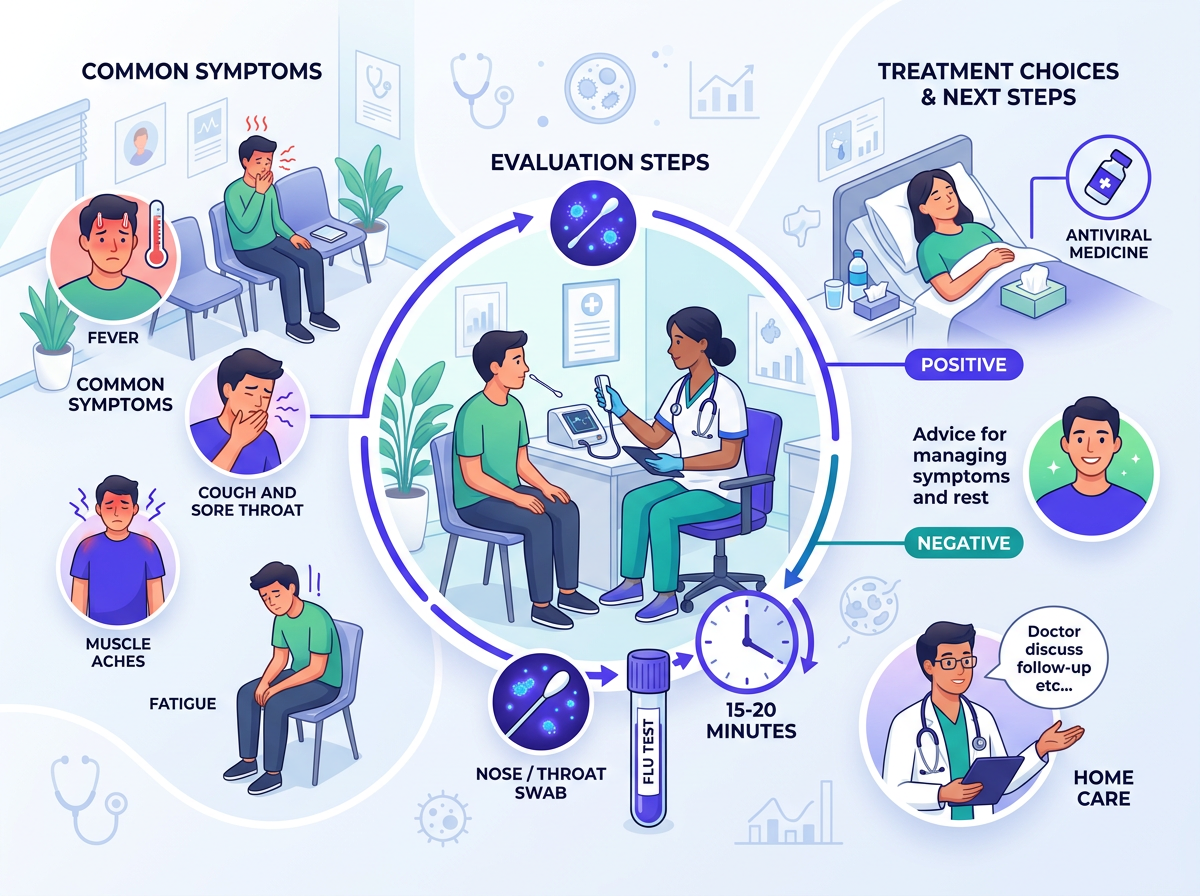
Influenza and flu-like illness share a core set of symptoms. These include:
- Fever above 100.4°F
- Chills and body aches
- Fatigue that hits fast
- Headache
- Dry cough and sore throat
- Nausea, vomiting, or diarrhea in some cases
COVID-19 and RSV can produce the same picture. That matters because treatment differs for each virus. Rapid testing at urgent care can tell you which one you have before you leave.
Also worth noting: flu hits fast. It tends to come on hard within a few hours. So if your symptoms built up over several days, something else may be at work.
When to Go to Urgent Care for Flu Like Symptoms: Key Warning Signs
Most flu cases resolve at home with rest and fluids. Some situations, though, call for same-day urgent care. Here are the signs that it’s time to go in.
A high fever that won’t come down
A fever above 103°F that doesn’t respond to acetaminophen or ibuprofen needs evaluation. For children, a fever above 104°F, or any fever in an infant under 3 months, is reason to be seen the same day. Don’t wait to see if it drops on its own.
Signs of dehydration
Fever, sweating, vomiting, and diarrhea drain fluids fast. Watch for dry mouth, dark urine, dizziness, or hours without urinating. Urgent care can assess and treat dehydration before it becomes a serious problem. Going in sooner makes a real difference.
Breathing that feels off but isn’t severe
Mild shortness of breath or chest tightness can come with flu. If you notice it but can still speak in full sentences, urgent care is the right level of care. If you can’t catch your breath at rest or your lips are turning blue, go to the ER instead.
Symptoms that improve and then get worse
Flu tends to improve after 3 to 5 days. If you feel better and then relapse with new fever, worsening cough, or chest pain, that pattern can signal a secondary infection like pneumonia or sinusitis. Both conditions need treatment beyond rest and fluids.
You’re in a high-risk group
Adults 65 and older, pregnant women, young children, and people with asthma, diabetes, or heart disease face higher risk of serious flu complications, according to the CDC. For these groups, urgent care can start antivirals on the first visit, even with mild symptoms. Starting treatment early can prevent a hospital stay.
It’s been more than 48 hours and symptoms aren’t improving
Antiviral medications work best when started within 48 hours of symptom onset. Still, they can help high-risk patients beyond that window. So don’t wait until day five to seek care. Urgent care can prescribe Tamiflu if you qualify, and your clinician will explain whether it makes sense for your situation.
Flu-Like Symptoms: Should You Go to Urgent Care or the ER?
This is where people most often make the wrong call in both directions. The ER is for emergencies. Urgent care handles serious but stable conditions. Understanding that difference saves time and money.
Go to the ER or call 911 if you have any of these:
- Chest pain or pressure
- Severe shortness of breath or trouble breathing at rest
- Confusion, disorientation, or altered mental status
- Lips or fingernails turning blue or gray
- Vomiting you cannot stop
- A seizure
- A child who is limp, unresponsive, or breathing very fast
Also go to the ER if flu symptoms combine with a serious condition like heart failure, COPD, or a compromised immune system, and you cannot reach your care provider.
For everything else, urgent care is faster, costs less, and has the tools to evaluate and treat flu-related illness. CityHealth in San Leandro handles same-day flu visits for adults and children, with no appointment required.
What to Expect at Urgent Care for Flu Like Symptoms
A same-day visit moves fast. At CityHealth San Leandro, the care team can:
- Run a rapid flu test for influenza A and B
- Test for COVID-19, strep, and RSV where appropriate
- Evaluate your hydration status and treat dehydration
- Prescribe Tamiflu or other antivirals when indicated
- Check for signs of secondary infection, including pneumonia
- Recommend over-the-counter options for symptom relief
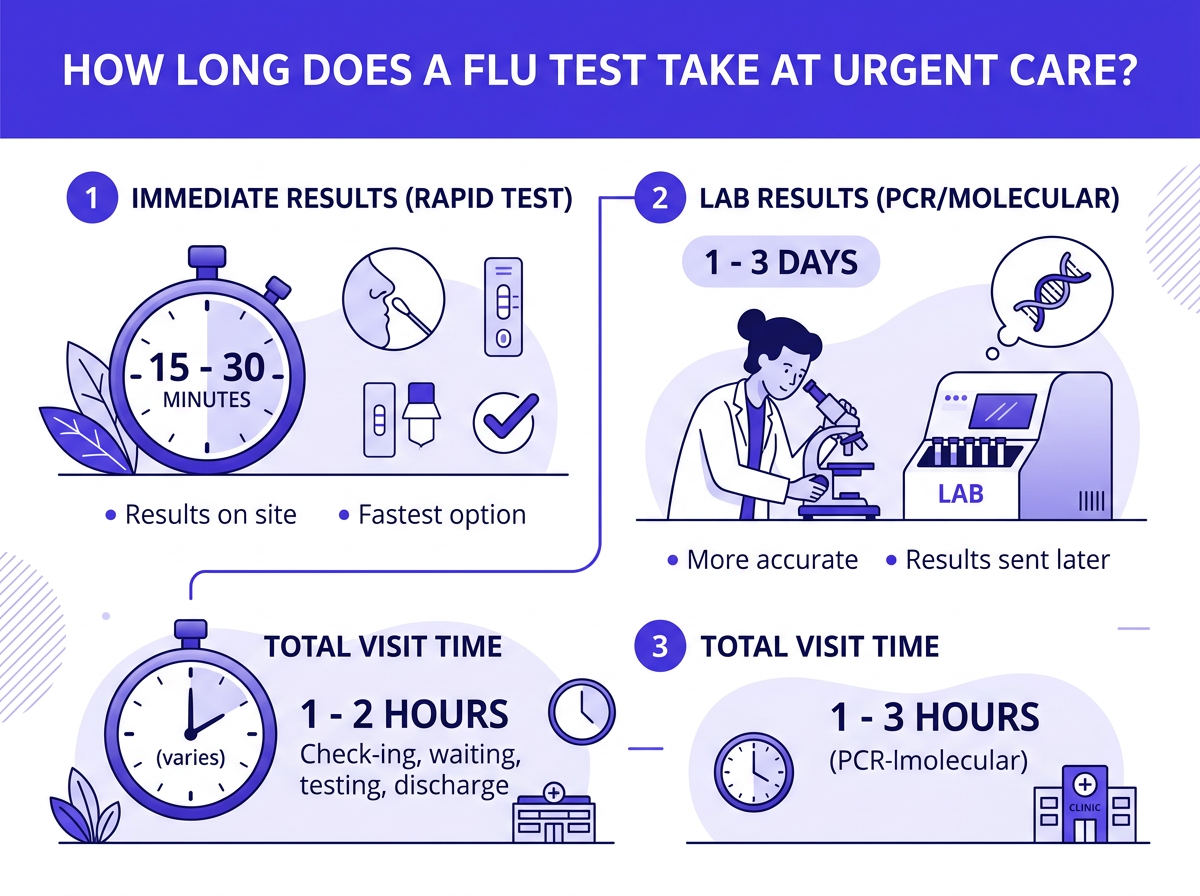
Rapid flu test results come back in minutes. So you leave with clear answers and, if needed, a prescription in hand.
Feeling sick and not sure what you need? Get seen today.
Book a Same-Day Appointment at CityHealth San Leandro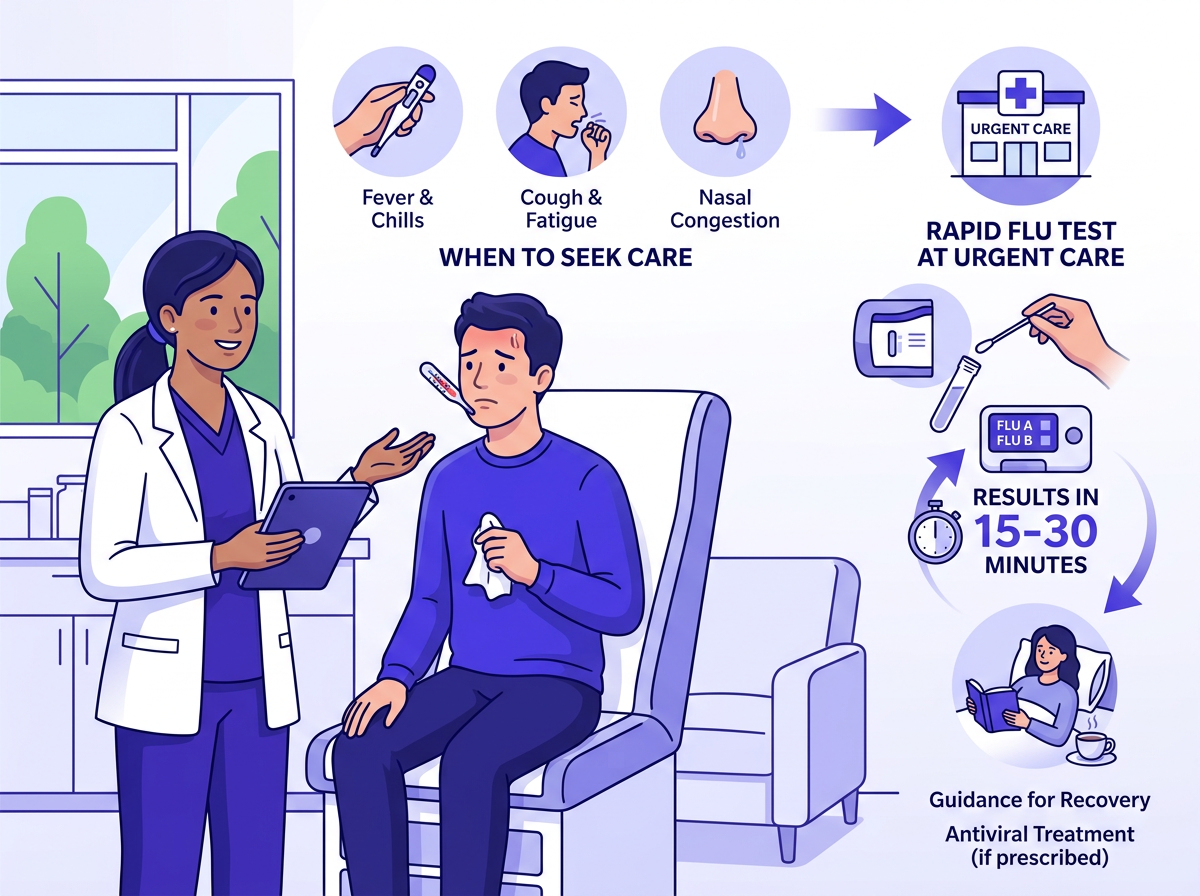
When to Stay Home and Treat Flu Yourself
Urgent care is not always the right move. In fact, home treatment works well for many people with flu-like illness. Stay home if:
- Your fever stays below 103°F and responds to medication
- You can drink fluids and keep them down
- Your breathing feels normal
- You are not in a high-risk group
- Symptoms are improving after 3 to 4 days
Rest and fluids remain the foundation of flu recovery. Acetaminophen or ibuprofen can reduce fever and ease aches. Avoid aspirin for children and teenagers with flu-like illness, as it carries a serious risk of Reye’s syndrome.
Even so, watch for changes. Symptoms can shift from manageable to concerning fast. Don’t wait overnight if something suddenly feels wrong.
Flu-Like Symptoms in Kids: When to Act Quickly
Children dehydrate faster than adults, and they can’t always describe what they’re feeling. Take a child to urgent care if they:
- Have a fever above 104°F or a fever lasting more than 3 days
- Refuse all fluids for more than 8 hours
- Seem hard to wake or very sleepy
- Develop new ear pain, a rash, or a stiff neck
- Are breathing harder than normal
Take a child to the ER right away if they have blue lips, a seizure, extreme difficulty breathing, or won’t respond to you.
Frequently Asked Questions: When to Go to Urgent Care for Flu Like Symptoms
Can urgent care treat the flu?
Yes. Urgent care can test for flu, prescribe antivirals like Tamiflu, treat dehydration, and check for complications like pneumonia. CityHealth San Leandro offers same-day flu visits for adults and children. See our full overview of urgent care for flu for more detail on what to expect during your visit.
When should I go to the ER instead of urgent care for flu symptoms?
Go to the ER for chest pain, severe difficulty breathing, confusion, blue lips, or vomiting you cannot control. These symptoms need emergency evaluation right away. For serious but stable flu-like symptoms, urgent care handles the visit faster and at lower cost.
Can urgent care prescribe Tamiflu?
Yes. Urgent care providers can prescribe Tamiflu when it fits your situation. It works best within the first 48 hours of symptoms. High-risk patients may benefit even after that window closes. Your clinician will review your symptoms and health history before prescribing.
How do I know if I have flu or something else?
Flu tends to start fast, with sudden fever, muscle aches, and fatigue. In contrast, COVID-19 and RSV can look similar but may develop more gradually. A rapid test at urgent care can tell the difference in minutes. Getting the right diagnosis matters because treatment options differ for each virus.
CityHealth provides urgent care in San Leandro for flu-like illness, respiratory symptoms, dehydration, and related concerns. Visit our urgent care page to learn what we treat, or book a same-day appointment online to be seen today.