A new skin rash can be alarming — and confusing. Should you wait it out at home, book an appointment with your dermatologist next week, or head to urgent care for a rash today? The answer depends on what the rash looks like, how fast it’s spreading, and whether you have other symptoms alongside it. This guide walks you through exactly when urgent care is the right call, what types of rashes we treat, and what to expect at your visit.
When Should You Go to Urgent Care for a Rash?
Most rashes are not medical emergencies, but many do need prompt evaluation — especially if you’re not sure what caused them or the rash is worsening fast. Urgent care for a rash is the right choice when you need same-day care but your symptoms don’t rise to the level of a true emergency room visit.
Go to urgent care for a skin rash if you notice any of the following:
- The rash appeared suddenly and you have no idea why
- It’s spreading quickly — covering more skin within hours
- The rash is painful or blistering, not just itchy
- You have a fever along with the rash — this combination often signals infection
- Over-the-counter remedies haven’t helped after 48 hours
- You recently started a new medication and a rash appeared shortly after
- The rash looks infected — meaning it’s warm to the touch, oozing, or crusting
- You suspect an allergic reaction to food, latex, or an insect sting
- You’ve been outdoors in areas with poison oak — common in Oakland’s hills
Urgent care is particularly well-suited for rashes because providers can diagnose the cause, prescribe medications (including topical steroids, antihistamines, or antibiotics), and order follow-up care — all in a single walk-in visit, usually without a weeks-long wait.
Common Types of Rashes Treated at Urgent Care
Our providers see a wide range of skin rashes every week. Here are the most common conditions we evaluate and treat:
Not sure about your rash?
CityHealth’s San Leandro clinic offers same-day care for skin conditions, rashes, and infections. Walk-in or book online.
Book Same-Day Care →
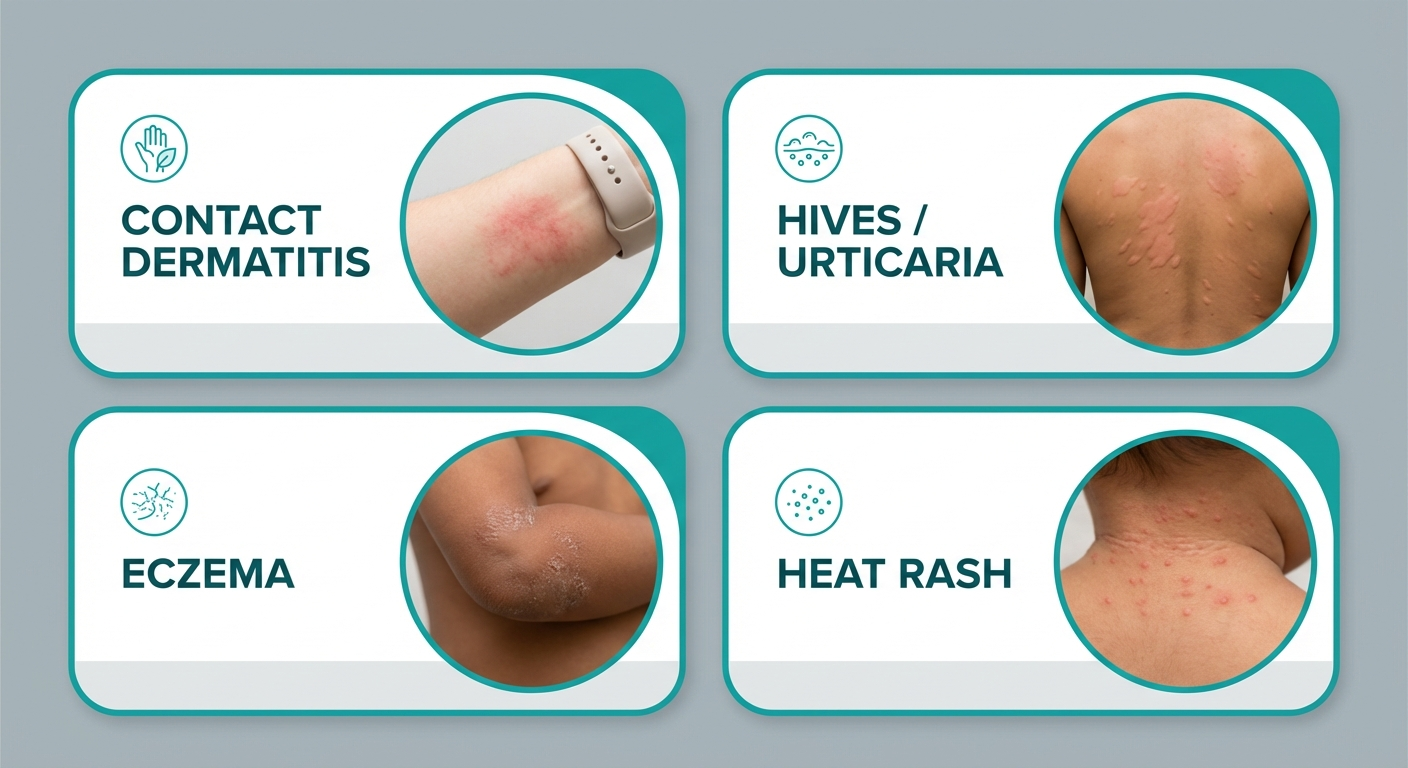
Contact Dermatitis
Contact dermatitis is one of the most frequent rash diagnoses at urgent care. It occurs when your skin reacts to an irritant or allergen — think laundry detergents, fragrances, nickel in jewelry, latex gloves, or plants like poison oak. The rash typically appears as red, itchy, sometimes blistered skin in the exact area that touched the offending substance. Treatment usually includes a topical corticosteroid cream and identifying the trigger to avoid future flare-ups.
Hives (Urticaria)
Hives are raised, red or skin-colored welts that appear suddenly and are intensely itchy. They can develop in response to an allergic reaction, a viral infection, stress, or even temperature changes. Hives often come and go within hours, but a new outbreak warrants urgent care evaluation — especially if they’re widespread or accompanied by swelling of the lips, tongue, or throat (see emergency warning signs below). Antihistamines and, in some cases, a short course of oral steroids are the typical treatment.
Eczema (Atopic Dermatitis) Flares
Eczema causes dry, red, intensely itchy patches of skin that can crack and weep fluid during a flare-up. According to the National Eczema Association, more than 31 million Americans live with some form of eczema. While chronic eczema is best managed long-term with a dermatologist, urgent care is a great option when a flare-up is severe, you’ve run out of your prescription cream, or you’re dealing with a secondary skin infection from scratching.
Impetigo and Bacterial Skin Infections
Impetigo is a highly contagious bacterial infection that causes honey-colored, crusted sores — often around the nose, mouth, or on the extremities. It’s common in children but affects adults too, especially in warm, humid months. Because impetigo spreads easily and is caused by bacteria (usually Staphylococcus aureus or Streptococcus), it requires antibiotic treatment. Urgent care can confirm the diagnosis and prescribe the right antibiotic, either topical or oral depending on severity.
For same-day treatment, visit urgent care in San Leandro at CityHealth — walk-ins welcome 7 days a week.
Ringworm (Tinea)
Despite its name, ringworm has nothing to do with worms — it’s a fungal infection that creates a circular, scaly, red ring on the skin. It’s contagious and can spread through direct skin contact, shared towels, or contact with infected pets. Treatment is an antifungal cream or oral antifungal medication for stubborn cases. Our providers can differentiate ringworm from other circular rashes (like granuloma annulare or Lyme disease) and prescribe the correct treatment.
Shingles (Herpes Zoster)
Shingles is caused by the reactivation of the varicella-zoster virus — the same virus that causes chickenpox. It typically causes a painful, blistering rash on one side of the body that follows a nerve pathway. If you suspect shingles, time matters. Antiviral medications (acyclovir, valacyclovir) are most effective when started within 72 hours of the rash appearing. Urgent care can confirm the diagnosis and get you started on treatment the same day.
Poison Oak Rash
If you’ve hiked the Oakland Hills, Redwood Regional Park, or Tilden Regional Park, you know poison oak is everywhere. The urushiol oil in poison oak leaves causes a classic allergic contact dermatitis: red, streaky, blistering rash that develops 12–72 hours after exposure. It’s intensely itchy and can spread if the oil isn’t washed off completely. Urgent care can prescribe prescription-strength topical or oral steroids when over-the-counter hydrocortisone isn’t cutting it.
Rashes That Need Emergency Care Instead
While urgent care handles the vast majority of rash cases, some situations require an emergency room visit — or calling 911 immediately. Go to the ER (or call 911) if a rash is accompanied by:
- Difficulty breathing, swallowing, or swelling of the throat — these are signs of anaphylaxis, a life-threatening allergic reaction that requires epinephrine immediately
- A rash covering most of your body combined with fever, chills, and feeling very ill — this may indicate a serious systemic infection
- Purple or dark red spots that don’t fade when pressed (non-blanching rash) — this can signal meningococcemia or another serious blood infection
- Skin that is peeling in sheets — this may be Stevens-Johnson syndrome, a rare but life-threatening drug reaction
- A rash combined with stiff neck, severe headache, and high fever — classic signs of meningitis
- Any rash in a newborn under 3 months old — always warrants immediate medical evaluation
These scenarios are serious and move faster than urgent care is designed to handle. When in doubt about life-threatening symptoms, always err on the side of the emergency room.
What to Expect at Your Urgent Care Rash Visit
Visiting CityHealth urgent care for a skin rash is straightforward. Here’s how the visit typically unfolds:
- Walk in or save your spot online. No appointment needed — you can also check in ahead of time from your phone to reduce your wait.
- Brief intake. A medical assistant will take your vitals and ask about your symptoms: when the rash appeared, where it started, whether it’s spreading, and any relevant history (new medications, recent travel, known allergies).
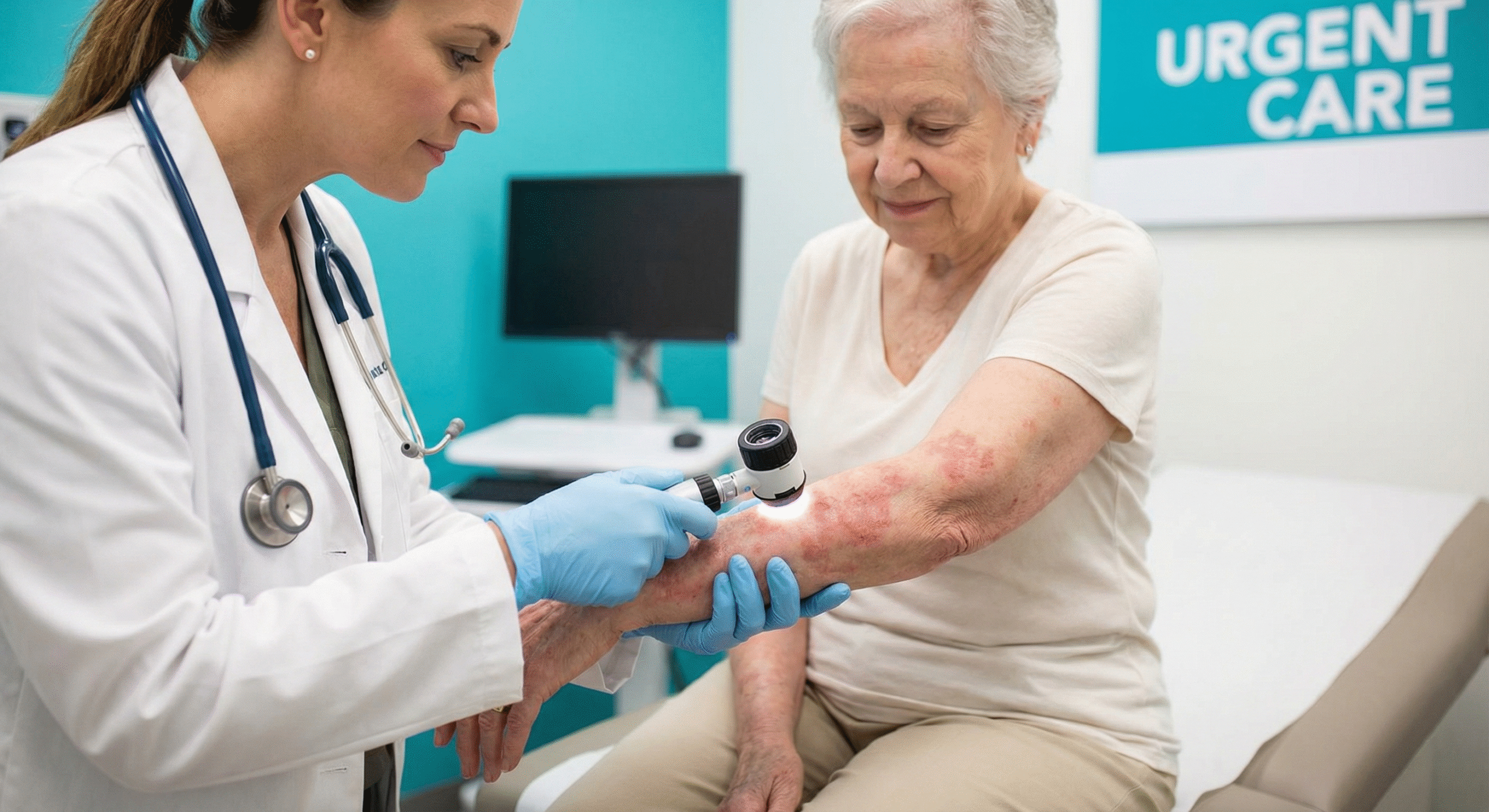
- Provider evaluation. A physician or nurse practitioner will examine the rash visually and, when needed, use a dermatoscope (a magnifying tool for skin) to get a closer look. They’ll ask follow-up questions about potential triggers.
- Diagnosis and treatment plan. Most rashes can be diagnosed clinically, without lab tests. If a skin infection is suspected, a wound swab may be taken. Your provider will explain the diagnosis and treatment options clearly.
- Prescriptions sent immediately. If medication is needed — topical steroids, antihistamines, antibiotics, or antivirals — the prescription is sent to your pharmacy before you leave.
- Follow-up guidance. For conditions needing ongoing dermatology care (like chronic eczema or psoriasis), we’ll provide a referral and help coordinate your next steps.
Most urgent care rash visits take 45–60 minutes from check-in to prescription. For complex or chronic skin conditions, our dermatology team at CityHealth Dermatology offers comprehensive evaluation and long-term management.

Need Same-Day Rash Treatment?
CityHealth San Leandro diagnoses and treats rashes same day — hives, contact dermatitis, cellulitis, and more. Walk-ins welcome, most insurance accepted.
How to Care for a Rash While You Wait for Your Appointment
While you’re preparing to come in, these steps can help minimize discomfort and prevent the rash from worsening:
- Avoid scratching. Scratching breaks the skin barrier, increases the risk of infection, and can spread rashes caused by contact irritants.
- Cool compress. A clean, damp cloth applied to the rash for 15–20 minutes can reduce inflammation and itching temporarily.
- Use mild soap and water. If you think you’ve touched poison oak or another irritant, wash the area thoroughly with gentle soap as soon as possible to remove any residual oils.
- Over-the-counter 1% hydrocortisone cream can help mild rashes but is not appropriate for all skin conditions — for example, it can worsen fungal infections like ringworm.
- Oral antihistamines (like cetirizine or loratadine) can reduce itching from allergic rashes while you wait.
- Photograph the rash. If a rash comes and goes quickly — like some hives — taking a photo on your phone gives your provider valuable information even if the rash has faded by the time you’re seen.
Treating Skin Rashes at CityHealth in Oakland
At CityHealth, we see patients with skin rashes every single day at our two Bay Area locations — Montclair Village in Oakland and San Leandro. Our providers are experienced in diagnosing and treating the full range of common skin conditions, from poison oak exposures to shingles to allergic reactions, without the long waits of a traditional dermatology appointment.
We also offer in-house dermatology services for conditions that require more specialized care or ongoing management. That means if your rash turns out to be something chronic — psoriasis, chronic eczema, or recurring hives — we can refer you within our own network and keep your care coordinated.
If you or a family member has a skin rash that’s causing pain, spreading fast, or just has you worried, don’t wait and wonder. Walk in to CityHealth today — no appointment necessary. Our team will take a look, give you a clear diagnosis, and get you on the right treatment right away.
CityHealth Montclair Village (Oakland): Open 7 days a week
CityHealth Oakland: Open 7 days a week
View hours and locations →
See our complete guide: what can urgent care treat.