
Toddler Rash When to See a Doctor: A Parent’s Guide to Knowing What’s Serious
Your toddler wakes up from a nap covered in red spots that weren’t there two hours ago. You strip off their shirt, and the rash goes all the way down their torso. Your first instinct is to grab your phone and start searching. If you’re wondering about a toddler rash when to see doctor, you’re asking the right question. Because most childhood rashes are harmless, but a few demand urgent attention. This guide helps you tell the difference.
Medically reviewed by Susana Quezada, NP — Nurse Practitioner (Pediatric), CityHealth
Why Toddlers Get Rashes So Often
Toddlers are rash magnets. Specifically, their immune systems are still learning to fight off viruses, so they catch more infections than adults. As a result, many of those infections show up on the skin. On top of that, toddlers touch everything, roll in grass, eat new foods, and drool constantly. All of these create opportunities for rashes to appear.
According to the American Academy of Pediatrics (AAP), skin rashes are one of the top reasons parents bring toddlers in for evaluation. Fortunately, most resolve on their own within a few days. However, some signal infections or conditions that need treatment. Therefore, knowing what to look for matters more than knowing every possible diagnosis.
Common Toddler Rashes That Usually Don’t Need a Doctor
First, before diving into warning signs, it helps to recognize the rashes that typically resolve at home. Understanding these can save you a stressful trip.
Viral Rashes
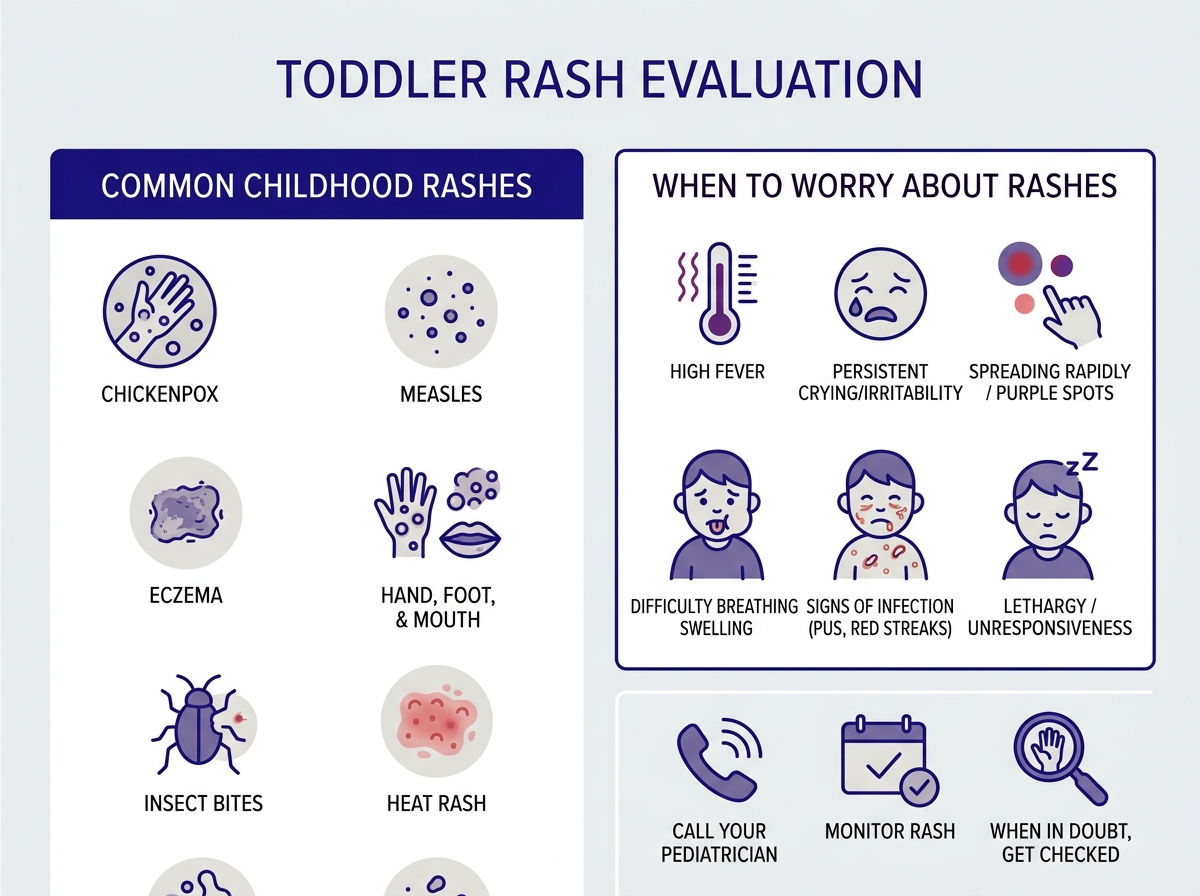
A viral rash in a toddler is one of the most common types you’ll encounter. It often appears as flat pink or red spots across the trunk, then spreads to the arms and legs. Typically, these rashes show up after a fever breaks. For example, roseola starts with three days of high fever. Then a widespread rash appears that looks alarming but means the illness is actually ending.
Heat Rash
Tiny red bumps in skin folds, on the neck, or in the diaper area often point to heat rash. It happens when sweat glands get blocked. Fortunately, moving your toddler to a cooler environment and dressing them in loose clothing usually clears it within a day.
Contact Dermatitis
New laundry detergent, sunscreen, or a plant your toddler grabbed at the park can trigger contact dermatitis. The rash appears where the irritant touched the skin. Although it’s itchy and red, it’s not dangerous. Washing the area and applying a gentle moisturizer or hydrocortisone cream typically does the trick.
Eczema Flare-Ups
If your toddler has a history of dry, patchy skin in the creases of their elbows or behind their knees, you’re likely dealing with eczema. Flare-ups look red and scaly. However, consistent moisturizing and avoiding known triggers keep most eczema manageable at home.
Toddler Rash When to See Doctor: Warning Signs That Need Attention
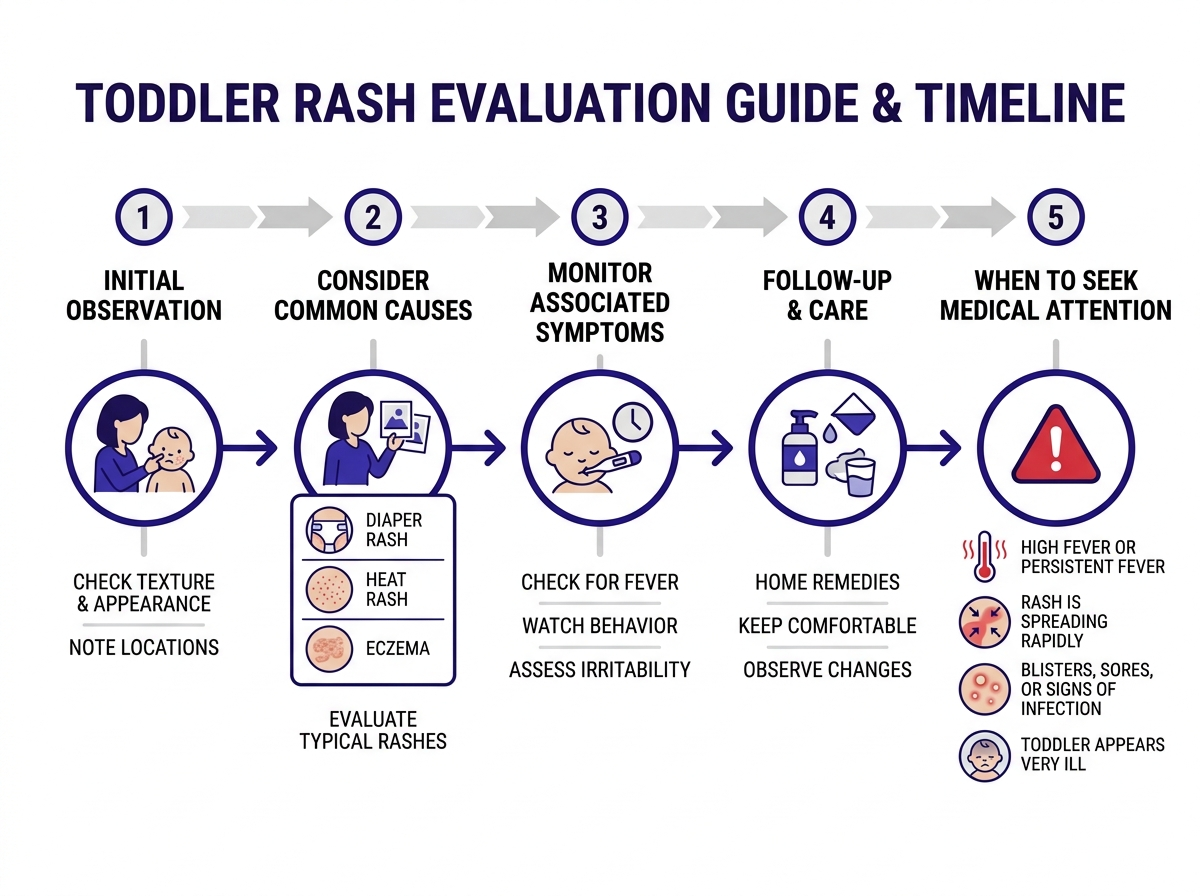
Now for the rashes that should prompt a visit. When it comes to a toddler rash when to see doctor, these are the specific signs that tell you it’s time to get your child evaluated.
Rash Combined with Fever
A rash paired with a fever over 102°F that persists for more than two days warrants medical evaluation. While many viral rashes come with low-grade fevers, a high or persistent fever alongside a rash is different. It can indicate bacterial infections, Kawasaki disease, or other conditions that need treatment. So if your toddler has a fever and rash together and seems unusually lethargic or irritable, don’t wait.
Rash That Spreads Rapidly
A rash that spreads across the body within hours needs same-day evaluation. Slow-spreading rashes over several days are typical of viral infections. In contrast, a rash that covers new areas within minutes to hours can signal an allergic reaction or a serious systemic infection. Therefore, track the progression by circling the border with a washable marker and noting the time.
Signs of Infection Around the Rash
Warmth, swelling, pus, or red streaking around a rash suggests a bacterial skin infection. For example, impetigo, cellulitis, and infected bug bites all fall into this category. These conditions need antibiotics and will not improve on their own. In fact, they’ll get worse.
Painful Rash or Blisters
A rash that causes your toddler significant pain, rather than just itching, deserves medical attention. Specifically, painful blisters can indicate conditions that need clinical assessment, including certain viral infections or allergic reactions. If your child cries when the rash is touched or won’t let you near it, bring them in.
When to Go to the Emergency Room for a Toddler Rash
Certain rash presentations are emergencies. Call 911 or go to the ER immediately if you see any of these:
- Non-blanching rash (petechiae or purpura): Press a clear glass against the rash. If the spots don’t fade under pressure, this could indicate meningococcal disease or another serious blood vessel condition. This is a medical emergency.
- Purple or dark red spots that look like bruises and weren’t caused by injury
- Rash with difficulty breathing, tongue swelling, or throat tightness, which suggests anaphylaxis
- Rash with a stiff neck, vomiting, and sensitivity to light, which are signs of meningitis
- Your toddler is unresponsive or extremely difficult to wake
Fortunately, these scenarios are rare. But they are time-sensitive. If you’re unsure whether a rash qualifies as an emergency, trust your instincts and seek care. For guidance on choosing the right level of care, see our guide on when to take your child to urgent care.
The Glass Test Every Parent Should Know
This is one of the most useful tools for evaluating a toddler rash when to see doctor decisions at home. Take a clear drinking glass and press it firmly against the rash.
If the rash fades (blanches) under the glass: This is generally reassuring. Typically, most viral rashes, allergic reactions, and heat rashes blanch. These rashes happen because blood vessels near the skin’s surface are dilated, and pressure temporarily pushes the blood away.
If the rash does NOT fade under the glass: This is a red flag. Non-blanching spots mean blood has leaked out of the blood vessels and into the skin. Small pinpoint non-blanching spots are called petechiae. Similarly, larger ones are called purpura. Both require immediate medical evaluation. They can indicate meningococcal sepsis, vasculitis, or a low platelet count.
Perform the glass test in good lighting and check multiple spots. If even a few spots don’t blanch, go to the emergency room.
Toddler Rash When to See Doctor: Urgent Care vs. ER vs. Home
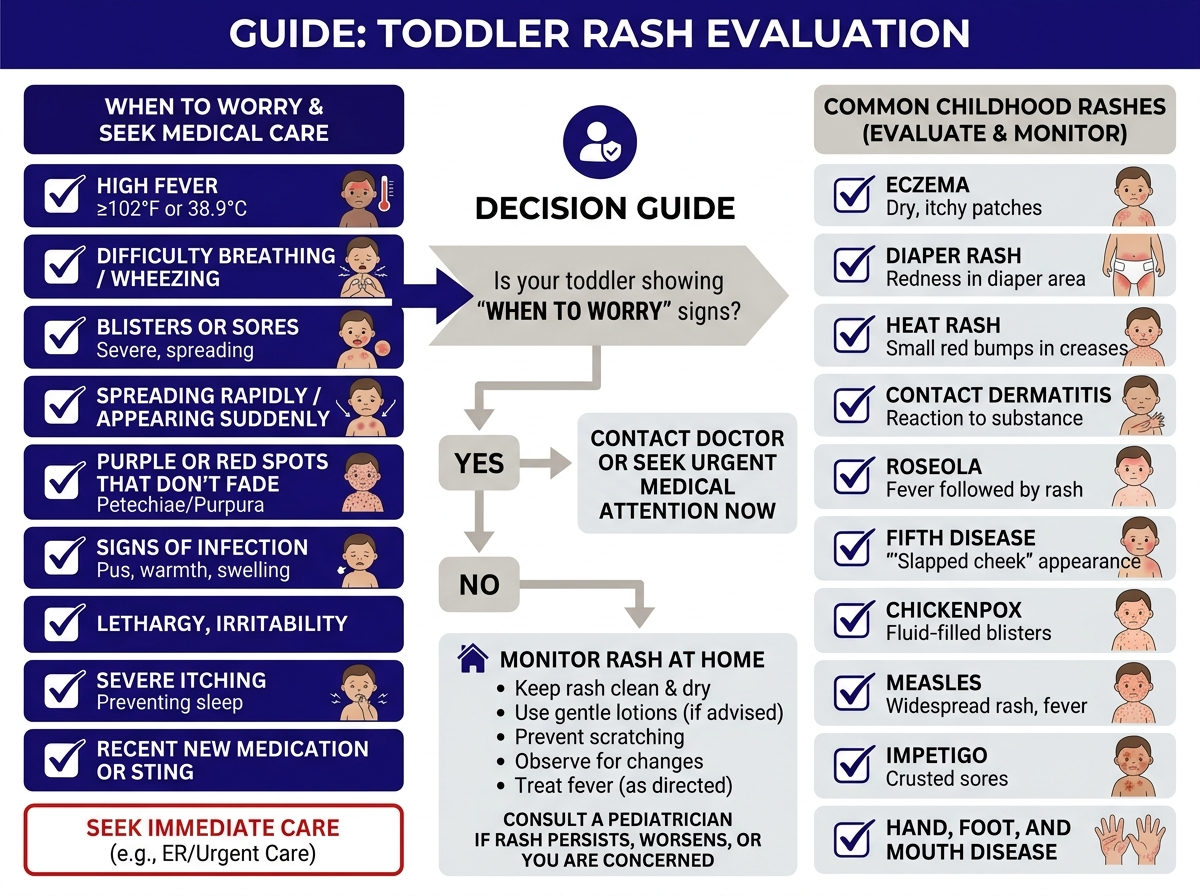
Choosing the right level of care saves time and gets your toddler treated faster. Here’s a straightforward breakdown.
Manage at home when the rash is flat and pink and your toddler has no fever or only a mild one. Also confirm they’re eating and drinking normally and the rash blanches under pressure. Then monitor for changes over 24 to 48 hours.
Visit urgent care when the rash comes with fever between 101°F and 103°F, appears infected (warm, swollen, or oozing), or is causing significant discomfort. Also visit if it has lasted more than a week without improvement or is spreading steadily. CityHealth Urgent Care evaluates toddlers 18 months and older as walk-ins, with no appointment necessary. Our providers can examine the rash and determine whether it’s viral, bacterial, or allergic. Then they start treatment the same day.
Go to the ER when the rash is non-blanching or your toddler has difficulty breathing. Also go if there are signs of meningitis (stiff neck, vomiting, light sensitivity) or your child is extremely lethargic or unresponsive.
What Happens During an Urgent Care Visit for a Rash
Knowing what to expect helps reduce anxiety for both you and your toddler. At CityHealth’s pediatric urgent care, the provider will start by examining the rash closely. They note its pattern, texture, and distribution across the body.
They’ll ask when it started, whether it’s changed, and about any new exposures like foods, medications, detergents, or sick contacts. They’ll check your toddler’s temperature, look in their throat and ears, and feel for swollen lymph nodes.
Depending on the presentation, the provider may run a rapid strep test, since scarlet fever causes a distinctive sandpaper rash. They may also evaluate for other infections. Typically, you’ll leave with a diagnosis and a treatment plan within 30 to 45 minutes.
If the rash turns out to be a chronic condition like eczema or psoriasis, it may need ongoing management. In that case, CityHealth offers dermatology services in Oakland on Wednesdays for convenient follow-up care.
How to Describe a Rash to a Medical Provider
When you bring your toddler in, your description helps the provider narrow down the diagnosis. So before your visit, take note of these details:
- When it started and how it’s changed since then
- Where it appeared first and where it has spread
- What it looks like: flat or raised, smooth or rough, small dots or large patches
- Color: red, pink, purple, skin-colored, or white
- Other symptoms: fever, itching, pain, runny nose, sore throat, vomiting
- Recent exposures: new foods, medications, plants, animals, or sick children at daycare
Also take photos as the rash changes. Because a rash that looked different this morning than it does at the appointment gives the provider valuable information.
Trust Your Gut and Get Backup
You don’t need a medical degree to sense that something is wrong with your child. In fact, parental instinct is powerful and valid. When you’re questioning a toddler rash when to see doctor, the safest answer is: if you’re worried, bring them in. After all, rashes are visual, and an in-person exam beats guessing from online image searches every time.
CityHealth Urgent Care in San Leandro and Oakland sees toddlers 18 months and older as walk-ins every day. No appointment needed. So our providers can evaluate your child’s rash, rule out anything serious, and give you a clear plan. If it turns out to be nothing, you leave with peace of mind. If it needs treatment, you’ve caught it early.
Walk in today or visit cityhealth.com/urgent-care to check wait times and hours.