
You woke up with a sore throat, a low fever, and a list of things you can’t cancel today. So searching for a telehealth doctor near me feels like the fastest path to feeling better. And sometimes it is. But sometimes it isn’t.
Telehealth visits work well for certain conditions. However, for others, you need someone to look in your throat, press on your abdomen, or run a strep test. The real question isn’t whether telehealth exists. In fact, the question is whether a video call alone can solve your specific problem.
This guide breaks down what telehealth can treat, what it can’t, how much it costs, and how to get care today in the San Leandro and Oakland area.
Medically reviewed by Sean Parkin, PA — CEO & Founder, CityHealth
What a Telehealth Doctor Near Me Can Actually Treat
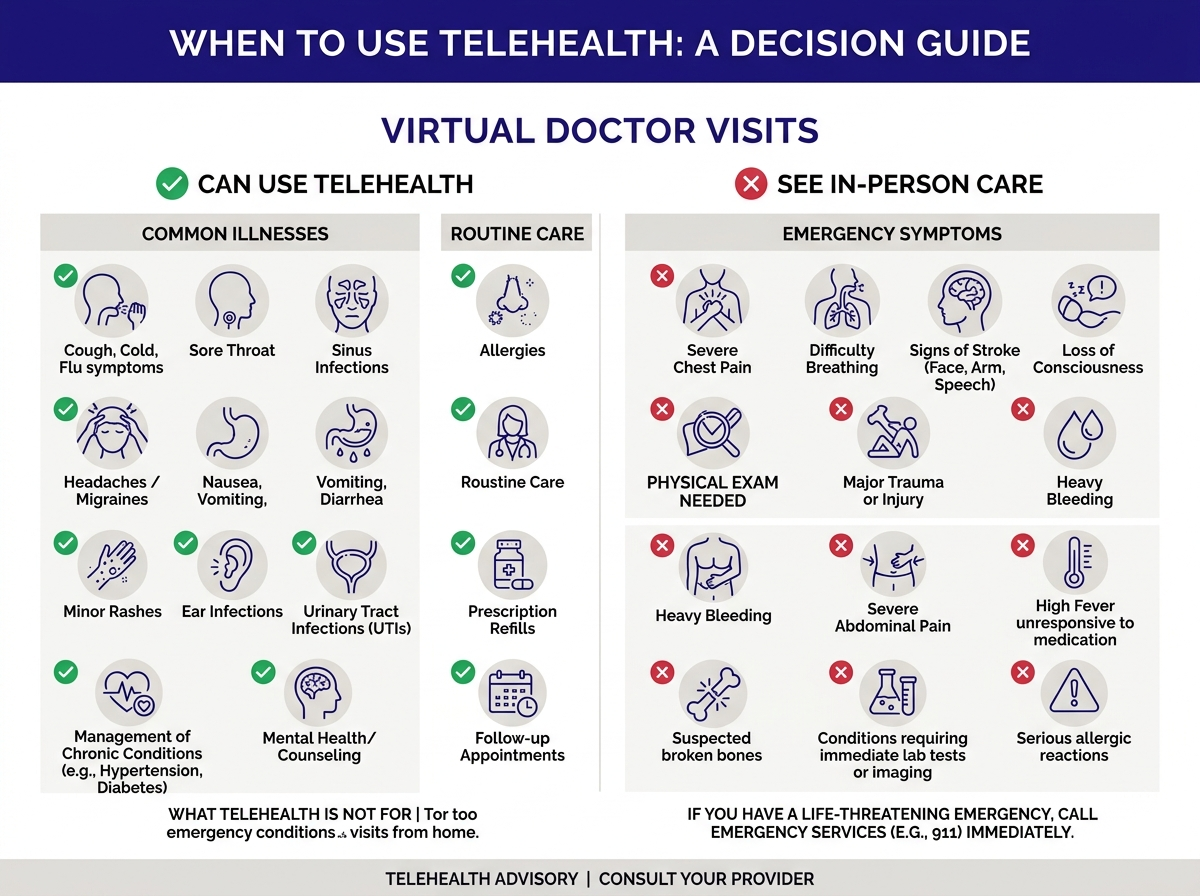
Telehealth visits work best for conditions a provider can diagnose based on your symptoms and medical history. Specifically, no lab work is required. No physical exam beyond what a camera can show.
Common conditions treated through telehealth:
- Cold and flu symptoms: Runny nose, cough, body aches, mild fever. A provider can assess symptoms and prescribe medication, including Tamiflu if caught early.
- Sinus infections: When symptoms have lasted 10+ days and match a clear pattern, providers can diagnose and prescribe antibiotics over video.
- Allergies and hay fever: Seasonal symptoms respond well to telehealth. Typically, the provider reviews your history and prescribes accordingly.
- Skin rashes (mild): If you can show the rash clearly on camera, a provider can often identify it. For example, eczema flares, contact dermatitis, and mild hives fall into this category.
- Medication refills: Birth control, blood pressure meds, inhalers, and other maintenance prescriptions.
- Mental health check-ins: Anxiety, mild depression, and follow-up visits for existing treatment plans.
- Pink eye: Classic viral conjunctivitis has obvious visual signs that show well on camera.
For these situations, a telehealth doctor near me search makes sense. You connect from home, get a diagnosis, and pick up a prescription at your pharmacy. As a result, total time is 15 to 30 minutes.
When Telehealth Falls Short
Here’s where the big national telehealth platforms won’t tell you the full story. A video call can’t run a strep test. It also can’t take an x-ray. And it can’t draw blood or collect a urine sample.
Consequently, several common conditions require in-person testing to diagnose or treat properly:
- Sore throat with fever: Strep throat requires a rapid strep test to confirm. Guessing based on symptoms alone leads to missed diagnoses or unnecessary antibiotics. Because of this, a provider needs to swab your throat.
- UTI symptoms: Burning, urgency, and frequency point toward a urinary tract infection. However, a urinalysis confirms the diagnosis and rules out other causes. Providers also check for kidney involvement that changes the treatment plan.
- Sprains and fractures: Swelling and pain after a fall need an x-ray. Telehealth simply can’t image bones.
- Ear infections: The provider needs an otoscope to look inside the ear canal. A camera can’t reach that.
- Abdominal pain: Pressing on the abdomen to check for tenderness, guarding, or rebound pain is a physical exam skill that video can’t replicate.
- STI testing: Chlamydia, gonorrhea, syphilis, and HIV all require lab samples. Although telehealth can order the test, you still need to show up somewhere to give blood or a swab.
- Chest pain or breathing difficulty: These symptoms need hands-on evaluation. Specifically, listening to your lungs with a stethoscope, checking oxygen levels, and sometimes ordering a chest x-ray are all in-person requirements.
According to the U.S. Department of Health and Human Services, telehealth works best when combined with in-person care options. In other words, the goal is the right care in the right setting.
How Much Does a Telehealth Doctor Visit Cost?
Cost drives most telehealth searches. Here’s a realistic breakdown.
With insurance: Most plans cover telehealth visits at the same copay as an office visit. Typically, you can expect $20 to $50 per visit. Some plans even waive the copay for telehealth altogether.
Without insurance: National platforms like Teladoc and Doctor On Demand charge $75 to $100 per visit. Meanwhile, CVS MinuteClinic Virtual Care runs about $59. Amazon One Medical charges $9/month plus $29 per telehealth visit.
The hidden cost: If your telehealth provider diagnoses you over video but guesses wrong because they couldn’t examine you, you end up paying for a second visit in person. Therefore, that “$20 online doctor visit” becomes $120 when you add the follow-up.
CityHealth offers virtual urgent care visits and accepts 25+ insurance plans. The difference: if your telehealth provider determines you need labs, a strep test, or an x-ray, you can walk into the San Leandro clinic the same day. No second copay juggling. In addition, you won’t need to start over with a new provider at a different facility.
Why a Telehealth Doctor Near Me Matters More Than a National App
Teladoc, MDLive, and Doctor On Demand connect you with a licensed provider. However, that provider sits in a call center that could be anywhere in the country. They don’t know your area. And they can’t see you in person if the video visit isn’t enough.
A local telehealth doctor changes that equation. When your provider is also connected to a walk-in urgent care clinic, you get a backup plan built into every visit.
Here’s what that looks like in practice:
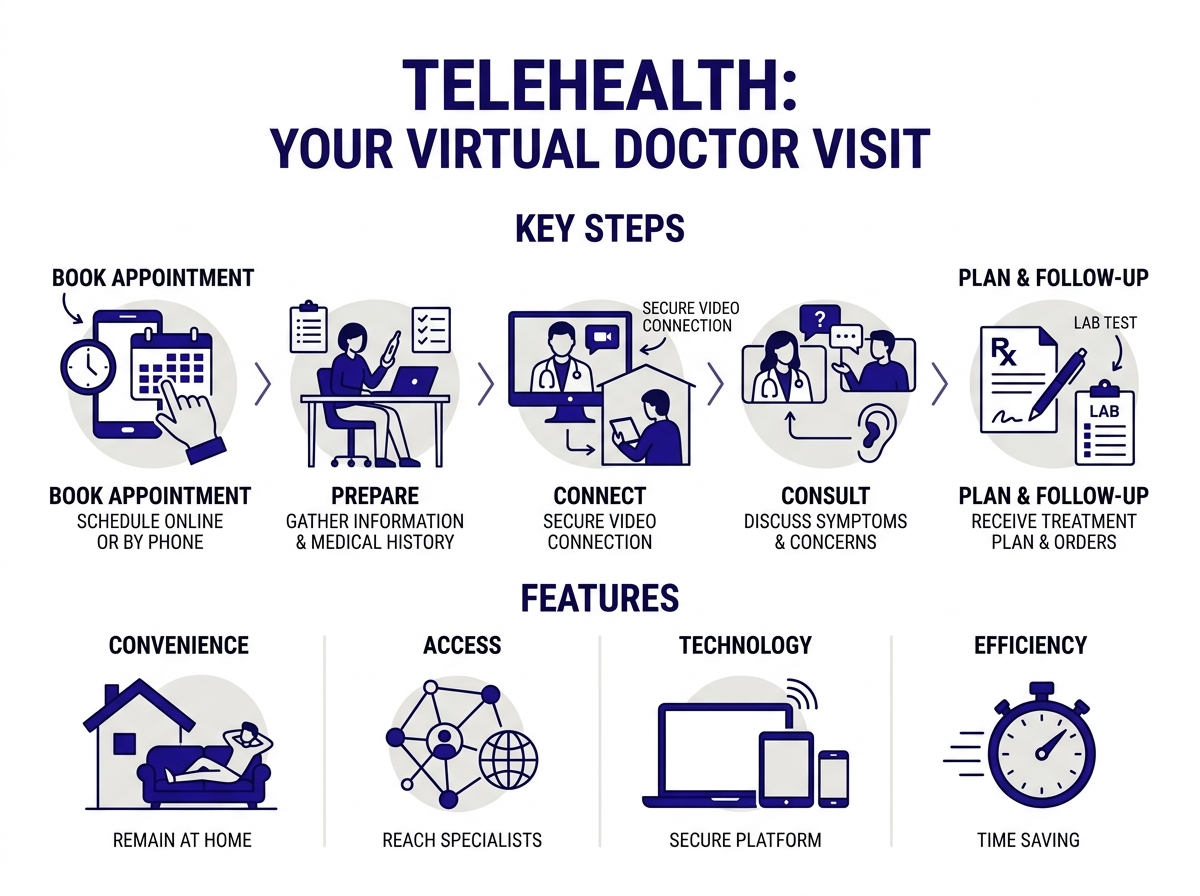
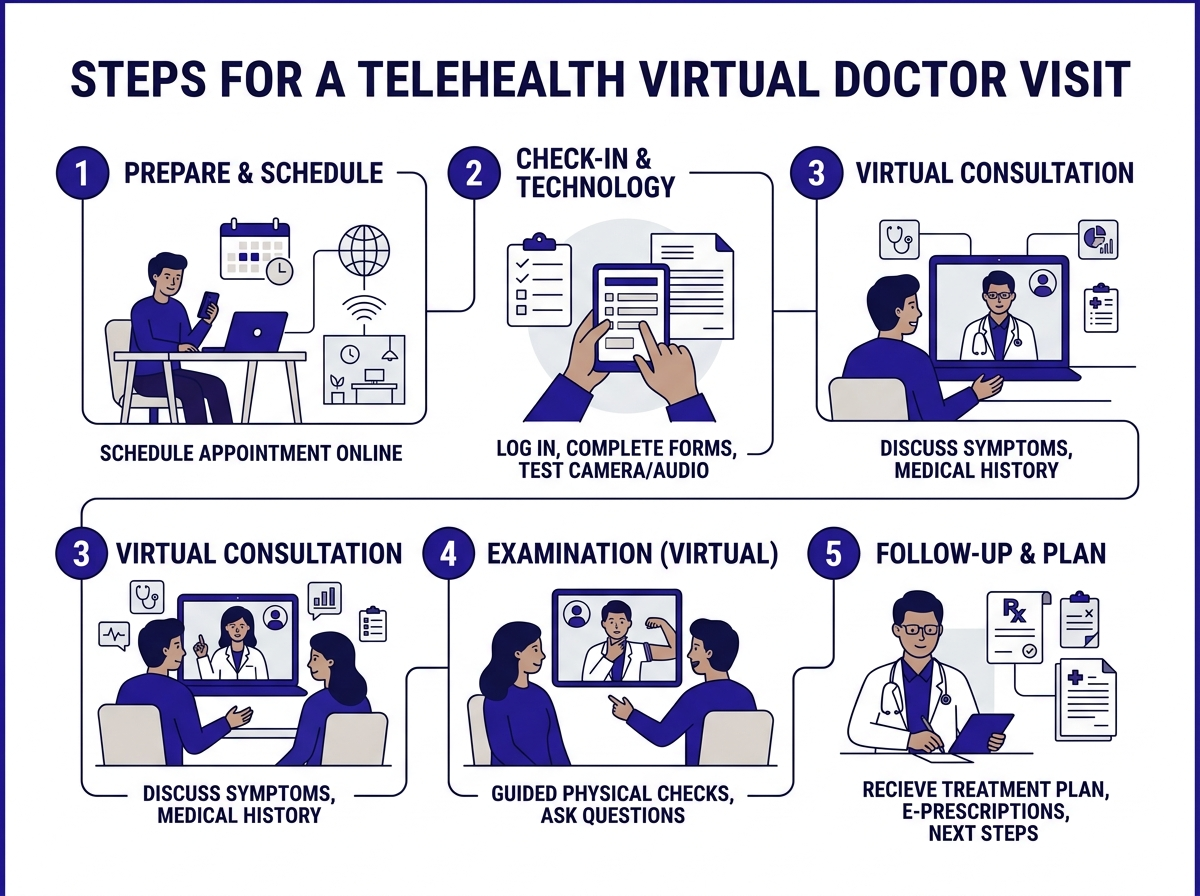
- First, start with telehealth. You connect from home and describe your symptoms. The provider then evaluates whether video is enough.
- Next, get a diagnosis or get redirected. If the provider can treat you over video, you get a prescription sent to your pharmacy. Done.
- Finally, walk in if you need more. If the provider needs to run a strep test, check your ears, or order an x-ray, you head to the clinic. Your chart is already started. The provider already knows your symptoms. So there’s no repeat paperwork.
That seamless handoff doesn’t exist with national telehealth apps. In contrast, with those services, you hang up and start from scratch at whatever walk-in doctor near you happens to be closest.
Can Telehealth Help With a Sore Throat?
Sometimes. If your symptoms clearly point to a viral infection (runny nose, cough, scratchy throat, no fever), a telehealth provider can recommend rest, fluids, and over-the-counter remedies.
But if you have a sore throat with a fever above 101, swollen lymph nodes, or white patches on your tonsils, you need a rapid strep test. Strep throat requires antibiotics. Without the test, a telehealth provider is guessing.
Group A Streptococcus causes about 20-30% of sore throats in children and 5-15% in adults. Consequently, missing it can lead to complications like rheumatic fever. A rapid strep test takes five minutes and gives a definitive answer. Yet that test requires an in-person visit.
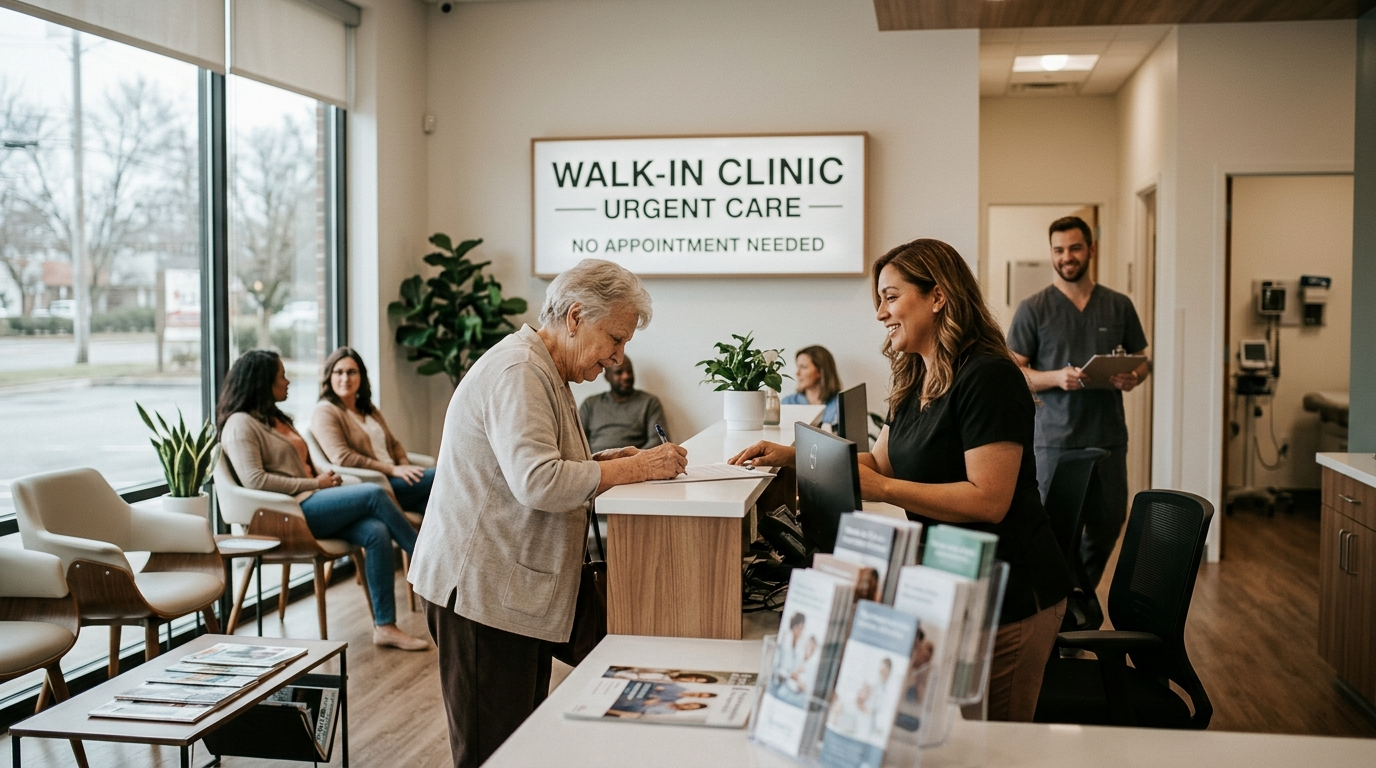
Fortunately, CityHealth runs rapid strep tests at the San Leandro walk-in clinic seven days a week. No appointment needed.
Can You Do a Telehealth Visit for a UTI?
Telehealth platforms routinely prescribe antibiotics for UTI symptoms over video. This approach works for some patients. But it has real risks.
Symptoms that mimic a UTI can actually signal:
- A kidney infection (which needs stronger antibiotics or IV treatment)
- An STI like chlamydia or gonorrhea
- Vaginitis or yeast infection
- Bladder irritation from other causes
A simple urinalysis (a urine dipstick test) takes two minutes and confirms whether bacteria are present. Without it, the provider treats based on probability rather than evidence. That works most of the time. But when it doesn’t, the delay in correct treatment can let the infection spread to your kidneys.
Therefore, the safest approach is to start with telehealth if you can’t get to a clinic right away, but follow up with an in-person visit for a urinalysis if symptoms don’t improve within 48 hours.
How to Find the Right Telehealth Doctor Near Me
Not all telehealth services offer the same value. Before you book, check these five things:
- In-person backup. Can the telehealth provider also see you in person? If the answer is no, you may end up paying for two visits.
- Insurance accepted. Verify your plan is covered. Out-of-network telehealth visits can cost more than an in-network urgent care copay.
- Lab and testing access. Does the provider have a lab on-site if you need bloodwork, urinalysis, or a strep test?
- Prescribing ability. Some telehealth platforms restrict controlled substances. So make sure the provider can prescribe what you might need.
- Same-day availability. A telehealth visit scheduled for next Tuesday doesn’t help when you’re sick today.
Telehealth vs. Walk-In Urgent Care: Quick Comparison
| Feature | National Telehealth App | Local Clinic with Telehealth |
|---|---|---|
| Video visit | Yes | Yes |
| Same-day in-person visit | No | Yes |
| On-site labs and x-ray | No | Yes |
| Chart follows you to in-person | No | Yes |
| Local provider who knows your area | No | Yes |
| Physical exam capability | No | Yes |
Get Care Today: Telehealth or Walk-In
When you search for a telehealth doctor near me, you want fast answers and real treatment. CityHealth gives you both options under one roof.
Start with a virtual visit for cold and flu symptoms, rashes, allergies, medication refills, and other conditions that don’t need labs. Then, if your provider decides you need testing, walk into the San Leandro clinic at 201 Dolores Ave the same day. No appointment needed. Open seven days a week.
CityHealth also accepts Aetna, Blue Shield, Anthem, Cigna, United Healthcare, Medicare, Alameda Alliance, and 20+ other plans. Self-pay options are available too.
Book a virtual visit or walk in today at CityHealth Urgent Care.