
Hives — medically known as urticaria — are one of the most startling skin reactions a person can experience. One moment your skin is normal. The next, you have raised, itchy welts appearing seemingly out of nowhere. Understanding hives treatment at urgent care and when to seek help can make a significant difference in how quickly you recover.
Hives affect about 20% of people at some point in their lives, according to the American Academy of Allergy, Asthma and Immunology (AAAAI). While they are usually harmless and resolve on their own, certain cases require prompt medical attention — including ones accompanied by throat swelling, breathing difficulty, or dizziness, which may signal anaphylaxis, a life-threatening emergency.
What Do Hives Look Like?
Hives appear as raised, red or skin-colored welts called wheals. They can range from the size of a pea to several inches across. Hives often:
- Itch intensely, sometimes with a burning or stinging sensation
- Appear suddenly, often within minutes of exposure to a trigger
- Change shape, grow, or merge into large patches (called plaques)
- Blanch (turn white) when pressed in the center
- Move around — a welt that appears on the arm may fade and reappear on the back within hours
- Resolve within 24 hours at one location, though new welts may keep appearing
Hives can appear anywhere on the body — face, trunk, arms, legs, and even the lips and eyelids. When swelling occurs in deeper skin tissue (particularly around the eyes, lips, hands, feet, and throat), this is called angioedema. Angioedema combined with hives is more serious and requires urgent evaluation.
What Causes Hives?
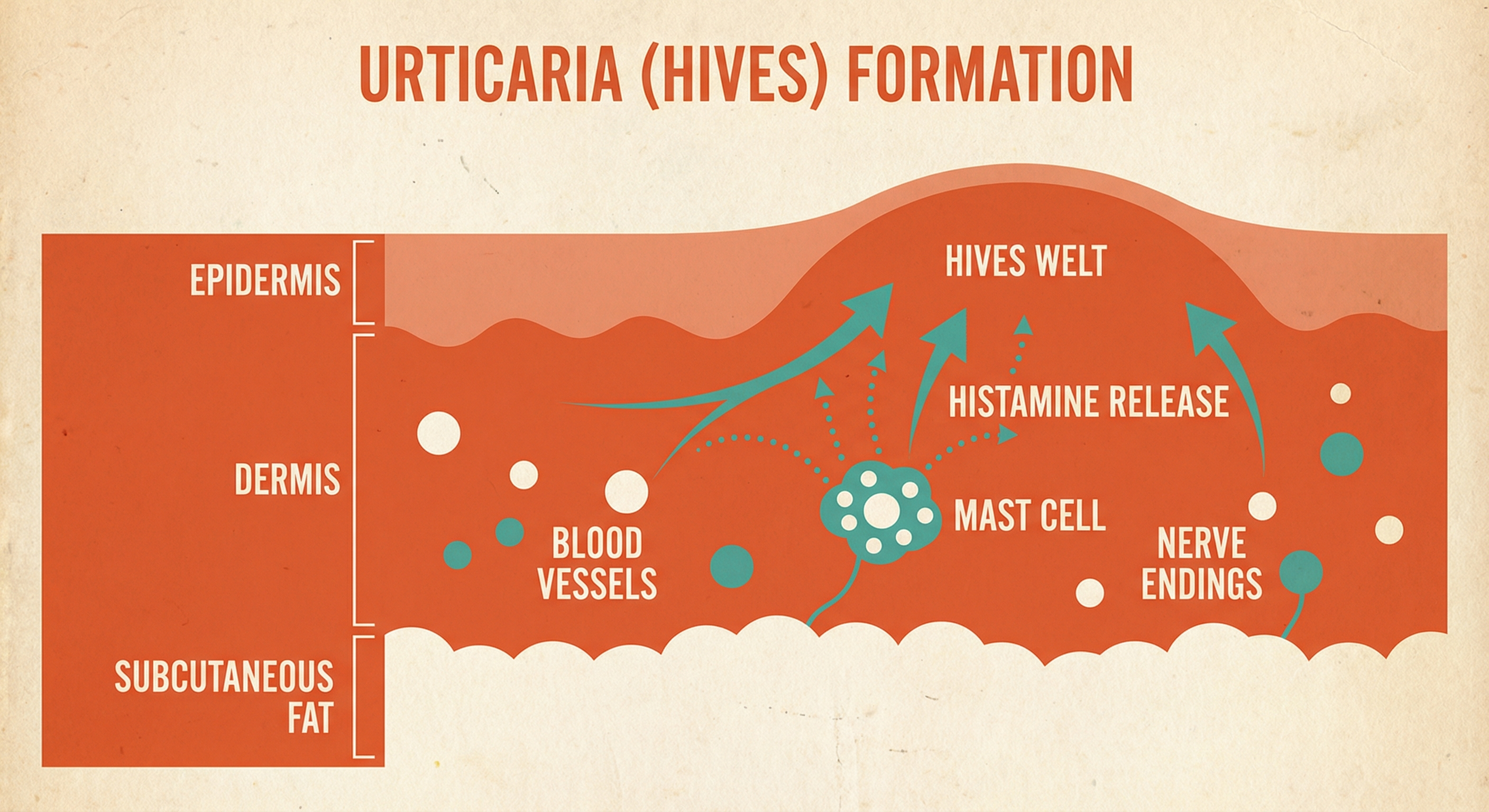
Hives occur when the immune system releases histamine and other chemicals into the bloodstream in response to a trigger. This causes tiny blood vessels to leak fluid, which accumulates under the skin to form the characteristic welts. Common causes include:
Hives or a rash that won’t go away?
CityHealth Oakland can evaluate and treat hives and allergic reactions same-day. Walk-in welcome.
Book Online →
- Allergic reactions — Foods (shellfish, nuts, eggs, dairy), medications (penicillin, aspirin, NSAIDs, ACE inhibitors), insect stings, and latex are frequent culprits.
- Infections — Viral infections (colds, the flu, COVID-19, mononucleosis) and bacterial infections (strep throat, urinary tract infections) can trigger hives.
- Physical triggers — Cold, heat, pressure, exercise, and even sunlight can cause hives in sensitive individuals. These are called physical urticarias.
- Stress — Emotional stress can trigger hives or worsen existing outbreaks.
- Chronic underlying conditions — Thyroid disease, lupus, and other autoimmune conditions are associated with chronic hives.
- Idiopathic causes — In about 50% of chronic hives cases, no cause is ever identified.
Acute vs. Chronic Hives
Doctors classify hives by how long they last:
- Acute hives last less than 6 weeks. They are usually triggered by an identifiable allergen or infection and often resolve once the trigger is removed and antihistamines are taken. Most people experience only acute hives.
- Chronic hives last 6 weeks or more, often with no clear trigger. Chronic spontaneous urticaria (CSU) is the most common form. It requires ongoing medical management and is best handled by a dermatologist or allergist.
When to Visit Urgent Care for Hives
Most mild hive outbreaks can be managed at home with over-the-counter antihistamines (like cetirizine or loratadine) and avoiding the suspected trigger. However, you should visit urgent care for hives treatment if:
- The hives are severe, widespread, or extremely painful
- Over-the-counter antihistamines are not providing relief after 24-48 hours
- You develop swelling of the lips, tongue, eyelids, or throat (angioedema)
- The hives are accompanied by nausea, abdominal pain, or joint pain
- You are experiencing hives for the first time and are unsure of the cause
- Your hives keep returning despite treatment
Call 911 or go to the ER immediately if hives are accompanied by throat tightening, difficulty breathing, dizziness, or a drop in blood pressure. These are signs of anaphylaxis — a severe, life-threatening allergic reaction that requires epinephrine (EpiPen) and emergency care.
How Are Hives Treated?
At urgent care, the treatment approach for hives depends on severity and suspected cause:
- Antihistamines — First-line treatment for most hives. Second-generation antihistamines (cetirizine, loratadine, fexofenadine) are preferred because they cause less drowsiness. For more severe cases, prescription-strength antihistamines or combinations may be used.
- Corticosteroids — For severe or widespread hives, a short course of oral prednisone may be prescribed to quickly reduce inflammation and histamine release.
- Epinephrine — For hives accompanied by signs of anaphylaxis, an epinephrine injection is administered immediately. Patients are also given a prescription for an epinephrine auto-injector (EpiPen) to carry going forward.
- Trigger identification — The provider will review your recent history to identify possible allergens or triggers and advise on avoidance strategies.
Chronic Hives: When to See a Dermatologist
If your hives persist for more than 6 weeks or keep recurring, a dermatologist can provide more comprehensive evaluation and management. Chronic hives may require:
- Allergy testing to identify specific triggers
- Blood tests to rule out underlying autoimmune conditions
- Prescription medications including omalizumab (Xolair), a biologic approved for chronic spontaneous urticaria
- A structured antihistamine protocol tailored to your response
CityHealth’s dermatology team in Oakland specializes in skin conditions including chronic hives. No referral is needed — you can book a same-day or next-day appointment directly.
Book a Dermatology Appointment in Oakland
CityHealth Oakland Montclair Village — dermatology open Wednesdays. Board-certified dermatologists, most insurance accepted.
Home Care for Mild Hives
While you wait to be seen or for mild outbreaks, the following home care measures can help relieve discomfort:
- Apply a cool, wet compress or an ice pack wrapped in a cloth to the affected area for 10-15 minutes at a time
- Take an over-the-counter antihistamine such as cetirizine (Zyrtec), loratadine (Claritin), or fexofenadine (Allegra)
- Wear loose, soft, breathable clothing to reduce skin irritation
- Avoid known triggers including hot showers, tight clothing, alcohol, and any suspected allergens
- Do not scratch — scratching worsens inflammation and can break the skin, risking infection
Get Hives Treatment at CityHealth Oakland
CityHealth treats hives and skin reactions at our Montclair Village clinic in Oakland. Whether you need immediate relief from an acute outbreak or a comprehensive evaluation for chronic hives, our team can help. We also offer same-day urgent care for allergic reactions, skin infections, and other conditions that cannot wait for a primary care appointment.
Walk in or book online — no referral required. Our providers are experienced in diagnosing and treating skin conditions quickly, so you can get relief and get back to your day.
Sources: American Academy of Allergy, Asthma and Immunology | American Academy of Dermatology
CityHealth Urgent Care — San Leandro
Hives, allergic reactions, and rash treatment. Same-day walk-in care.
Book Appointment →
Need same-day care?
CityHealth San Leandro offers walk-in urgent care 7 days a week with on-site lab and X-ray. Book an appointment online or visit our San Leandro clinic.
See our complete guide: what can urgent care treat.


