

It’s 2 a.m. Your child is burning up. She’s been coughing all day, barely eating, and now she’s crying in a way that doesn’t sound right. You grab your phone to call the pediatrician. Voicemail. The office opens at 8:30, but you need someone to look at your kid now. This is the moment every parent dreads: your child is sick and you’re wondering when to see a doctor. In fact, knowing the answer to “child sick when to see doctor” can save you hours of worry and keep a minor illness from turning dangerous.
Medically reviewed by Susana Quezada, NP — Nurse Practitioner, CityHealth
Most childhood illnesses run their course at home. For example, colds, low fevers, and mild stomach bugs typically resolve on their own. Your child feels lousy for a few days, then bounces back. However, some symptoms cross a line. Specifically, they signal infections, dehydration, or breathing problems that need a provider’s evaluation.
This guide walks you through the specific warning signs that mean it’s time to bring your child in. In addition, we’ll cover what you can manage at home, when to head to the ER instead, and how CityHealth Urgent Care in San Leandro helps parents get answers fast. Because understanding child sick when to see doctor guidelines ahead of time prepares you to act quickly.
Common Childhood Illnesses You Can Usually Manage at Home
Not every sniffle needs a clinic visit. Kids get 6 to 8 colds per year, according to the American Academy of Pediatrics. As a result, that’s a lot of runny noses. Fortunately, most of them resolve on their own within 7 to 10 days.
You can typically manage these at home:
- Common cold: Runny nose, mild cough, sneezing, low-grade fever under 101°F. Push fluids, use a cool-mist humidifier, and let your child rest.
- Mild stomach bugs: A round or two of vomiting, loose stools for a day. Keep offering small sips of water or an electrolyte solution like Pedialyte.
- Low-grade fevers (under 101°F): Fever is the body fighting infection. If your child is still drinking, playing at least a little, and making eye contact, then a low fever alone isn’t an emergency.
- Minor rashes without fever: Contact dermatitis, mild eczema flares, heat rash. These usually respond to over-the-counter creams and cool baths.
The key is watching your child’s behavior, not just the thermometer. For instance, a kid with a 100.5°F fever who’s sipping juice and watching cartoons is in a different situation than a child with the same temperature who’s limp, glassy-eyed, and refusing to drink.
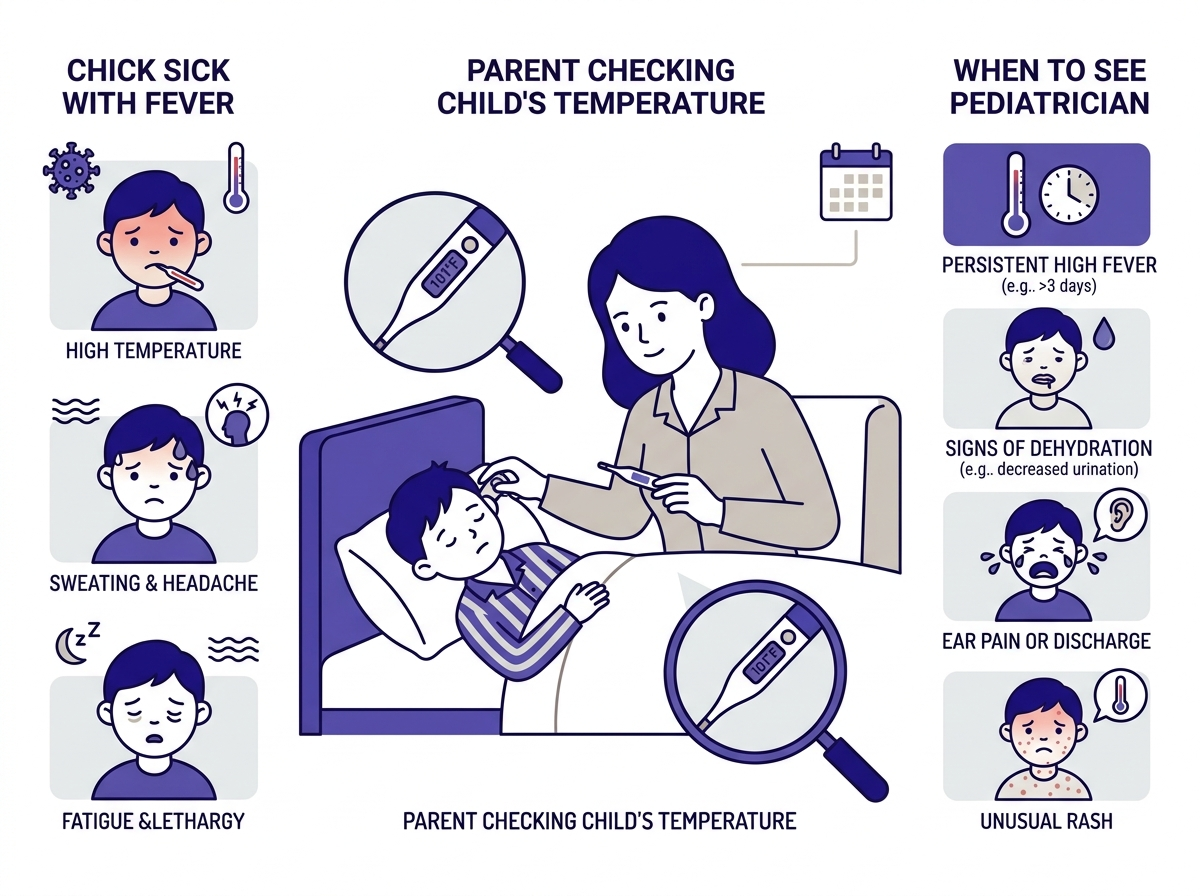
Child Sick When to See Doctor: Key Warning Signs
Certain symptoms change the math. When you spot these, it’s time to stop Googling and bring your child to a provider. Ultimately, the question of child sick when to see doctor comes down to a handful of warning signs.
Fever That Lasts 3 to 5 Days
A fever that spikes on day one and breaks by day two is normal. However, a fever that persists for 3 or more days needs evaluation. This is especially true if the fever stays above 102°F or keeps climbing despite acetaminophen or ibuprofen.
Fevers lasting this long may point to bacterial infections like strep throat, ear infections, or urinary tract infections. Because these won’t clear on their own, they need testing and often antibiotics. For a deeper dive, read our guide on child fever and when to go to the doctor.
Signs of Dehydration
Dehydration sneaks up on small children fast because their bodies hold less fluid. As a result, a single day of vomiting or diarrhea can tip the balance. Watch for these dehydration red flags:
- No wet diaper in 6 or more hours (for toddlers)
- No urination in 8 or more hours (for older kids)
- Crying without tears
- Dry, cracked lips and a dry mouth
- Sunken eyes or a sunken soft spot (in younger toddlers)
- Unusual drowsiness or irritability
If your child can’t keep fluids down for more than a few hours, don’t wait. Instead, a provider can assess hydration status and decide whether oral rehydration is enough or if IV fluids are needed.
Difficulty Breathing
Breathing trouble is always urgent. In fact, this is one of the clearest signals that your child is sick and needs to see a doctor right away. Look for:
- Rapid breathing or nostrils flaring with each breath
- Ribs or the space below the ribcage pulling inward (retractions)
- Wheezing, grunting, or a barking cough that sounds like a seal
- Skin around the lips or fingernails turning blue or gray
Croup, asthma flares, pneumonia, and RSV can all cause these symptoms. Therefore, if breathing is severely labored or your child’s lips look blue, skip urgent care and call 911.
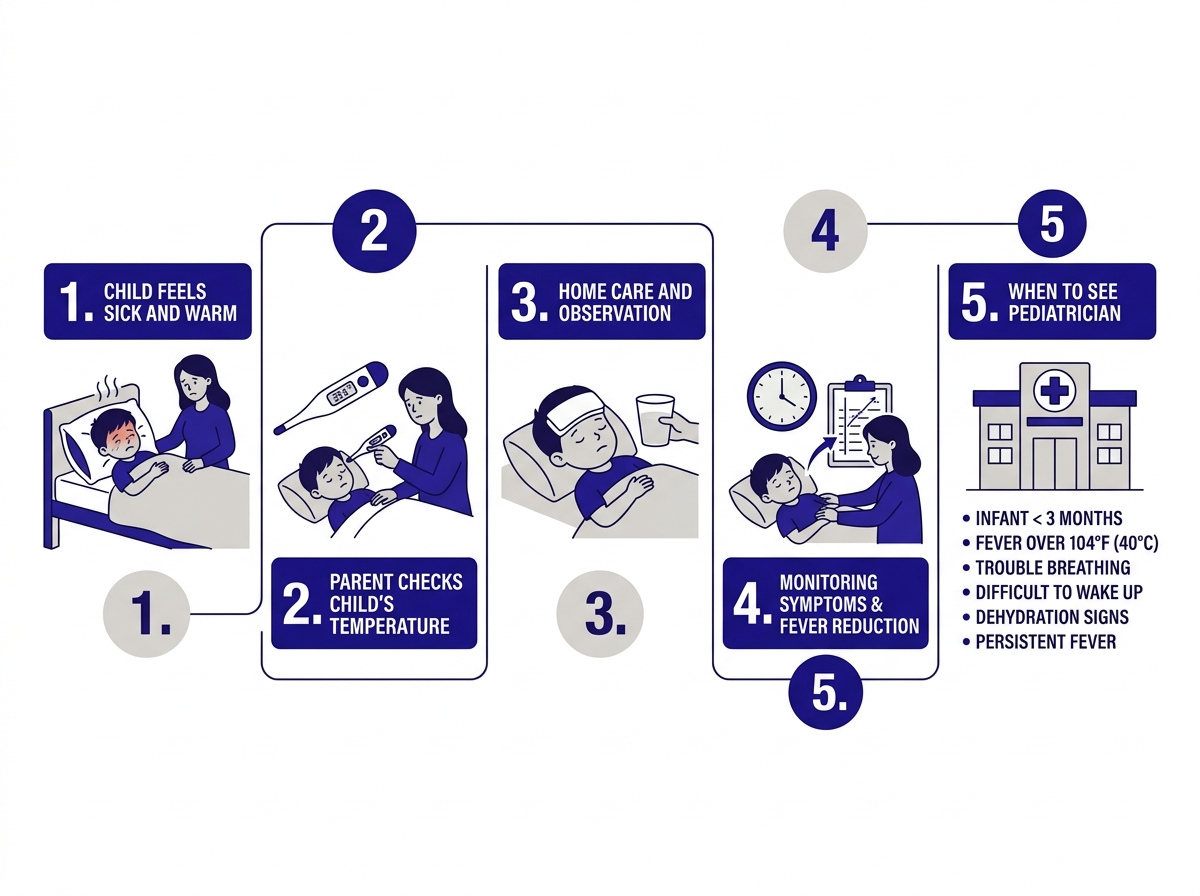
Persistent Vomiting or Diarrhea
Vomiting that continues for more than 24 hours in a toddler, or diarrhea lasting more than 2 to 3 days, warrants a visit. Specifically, repeated vomiting prevents your child from absorbing fluids or medication. Furthermore, prolonged diarrhea drains electrolytes that small bodies can’t afford to lose.
Blood in vomit or stool is a separate concern. Consequently, that always needs same-day evaluation.
Ear Pain, Sore Throat, or Painful Urination
These symptoms point toward bacterial infections that benefit from testing. For example, strep throat doesn’t resolve without antibiotics. Similarly, ear infections sometimes need them too. Also, urinary tract infections in children can spread to the kidneys if left untreated.
If your child is tugging at their ear, refusing to swallow, or crying during diaper changes or bathroom trips, then a quick exam and test can give you a definitive answer.
Rash With Fever
A rash combined with a fever is a combination that always deserves evaluation. While many viral rashes are harmless, rash plus fever can also signal scarlet fever, Kawasaki disease, or other conditions that need prompt treatment.
If the rash looks like small purple or red dots that don’t fade when you press a glass against the skin, seek care immediately. This can indicate a serious blood infection.
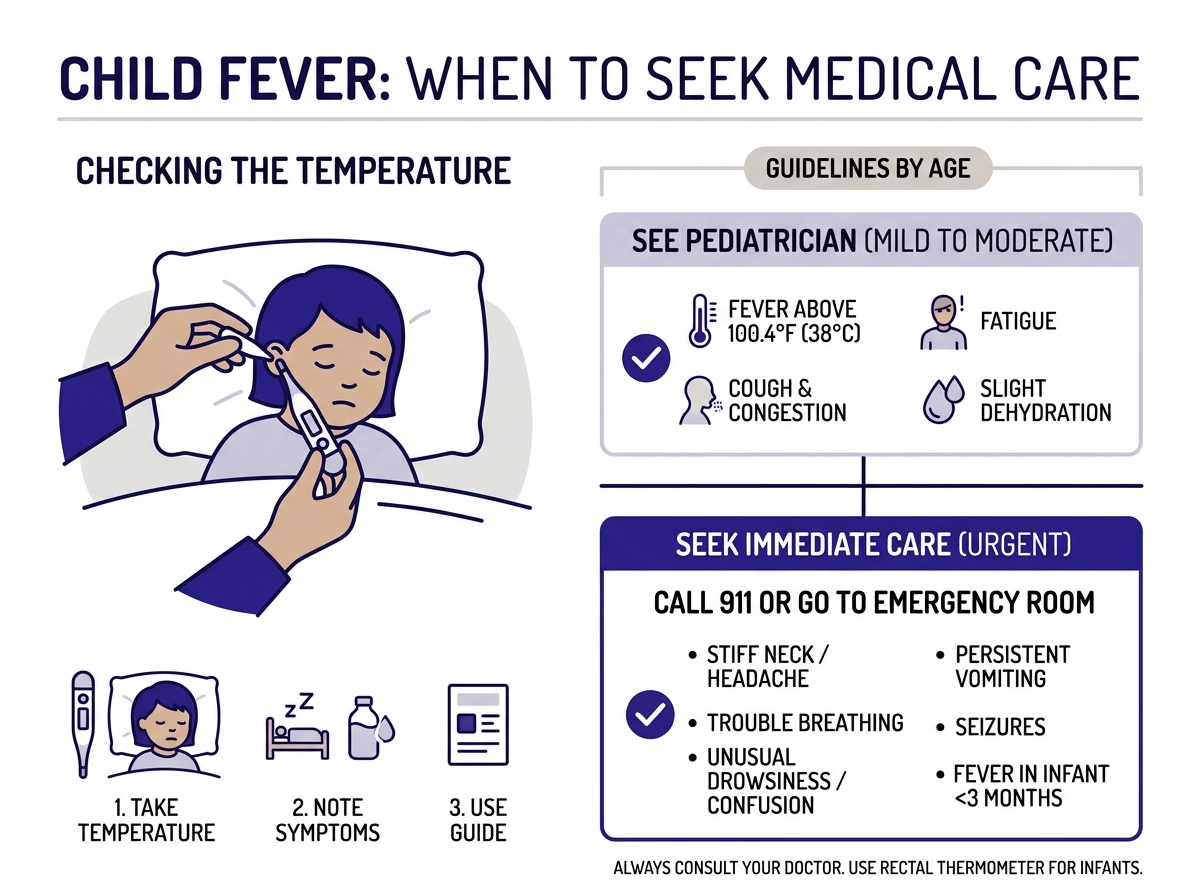
Child Sick When to See Doctor vs. Going to the ER
Parents often debate between urgent care and the emergency room. The short answer: the ER is for life-threatening situations. On the other hand, urgent care handles everything else that can’t wait for a pediatrician appointment.
Go to the ER if your child has:
- Severe difficulty breathing or bluish skin
- A seizure (especially a first-time seizure)
- Loss of consciousness or inability to wake up
- A head injury with vomiting, confusion, or uneven pupils
- A high fever in an infant under 3 months old
- Signs of a broken bone with visible deformity
- Severe allergic reaction with throat swelling or trouble breathing
Choose urgent care when:
- Fever has lasted several days and the pediatrician can’t see you today
- Your child needs a strep test, flu test, or urine test
- An ear infection or sore throat is getting worse
- Mild to moderate dehydration from a stomach bug
- A cough or cold that’s not improving after a week
- A rash you’re unsure about
- A minor injury that might need an x-ray
Urgent care visits typically take 30 to 90 minutes. In contrast, ER visits for non-emergencies often stretch to 3 to 5 hours. So when your child is sick and miserable, that time difference matters.
What to Track Before Your Visit (So the Provider Can Help Faster)
Walking into a clinic with clear information speeds up the whole process. Before you head out the door, jot down a few things on your phone:
- Symptom timeline: When did the fever start? When did the vomiting begin? Is it getting better or worse?
- Temperature log: Write down the highest readings and when you took them.
- Fluid intake: Roughly how much has your child been drinking? When was the last wet diaper or bathroom trip?
- Medications given: What you gave, what dose, and when. Include Tylenol, Motrin, and any prescriptions.
- Allergies and medical history: Especially relevant for children with asthma, prior febrile seizures, or chronic conditions.
This information helps the provider zero in on a diagnosis fast. Additionally, it prevents unnecessary repeat testing.
Why Parents Choose CityHealth When a Child Is Sick and They Need to See a Doctor
When your child is sick and you need to see a doctor today, CityHealth Urgent Care is built for exactly that situation. Here’s what makes the difference:
- Walk-in care for kids 18 months and up. No appointment needed. Just come in.
- On-site lab testing. Strep tests, flu tests, urine analysis, and blood work happen in the clinic. Therefore, you get results before you leave.
- X-ray on-site. If your provider suspects pneumonia or a fracture, imaging happens in the same visit.
- Open 7 days a week. Weekends, holidays, evenings. In other words, the times when your pediatrician’s office is closed are the times CityHealth is open.
- San Leandro location serving Oakland families. Easy access from East Oakland, Hayward, and surrounding neighborhoods.
CityHealth doesn’t replace your child’s pediatrician. Your pediatrician handles wellness checks, vaccines, growth tracking, and ongoing care. However, when your child wakes up sick on a Saturday morning and the pediatrician’s office is dark, you need a place that can see your kid now. That’s what we’re here for.
Trust Your Instincts: If Your Child Is Sick, Know When to See a Doctor
You know your child better than any symptom chart. So if something feels off, even if you can’t pinpoint exactly what, that’s a valid reason to bring them in. Parents who say “something just wasn’t right” are often correct.
The worst outcome of an “unnecessary” visit is peace of mind. Meanwhile, the worst outcome of waiting too long is a preventable complication. When you’re wondering child sick when to see doctor, always err on the side of getting checked.
Your child is sick and you need answers today? Walk into CityHealth Urgent Care in San Leandro. No appointment. No long ER wait. Just a provider who can examine your child, run tests, and tell you what’s going on. Find our pediatric urgent care services here.