Your child’s forehead burns against your palm at 2 a.m. The thermometer reads 103.4. Every parent asks about child fever when to go to doctor and when you can safely treat at home. This guide gives you clear temperature thresholds by age, warning signs that demand a same-day visit, and steps to keep your child comfortable while you decide.
Medically reviewed by Susana Quezada, NP — Nurse Practitioner
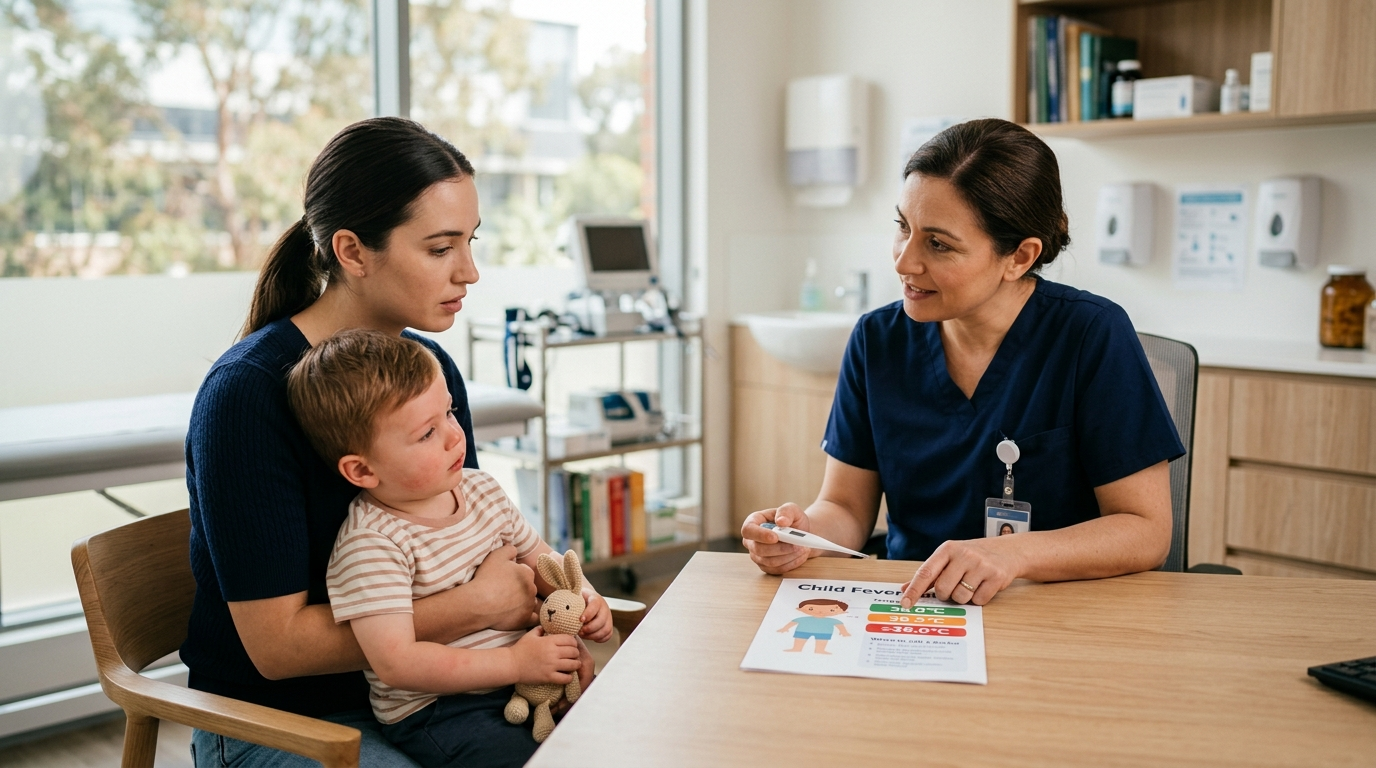
What Counts as a Fever in Children?
First, a fever is a rectal, ear, or forehead temperature of 100.4°F (38°C) or higher. For oral readings, the threshold is 100°F (37.8°C). Also, armpit temperatures register about one degree lower, so 99°F (37.2°C) in the armpit equals a fever.
However, fever itself is not a disease. Instead, it signals that your child’s immune system is actively fighting an infection. Because of this, the number on the thermometer matters less than how your child looks and acts. Still, certain temperatures at certain ages demand a doctor visit.
Child Fever When to Go to Doctor: Temperature Thresholds by Age
Age changes everything. Specifically, newborns have immature immune systems, so even a low-grade fever can signal a serious infection. Conversely, older children tolerate higher temperatures with far less risk. Below are the key thresholds every parent should know.
Newborns (0 to 3 Months)
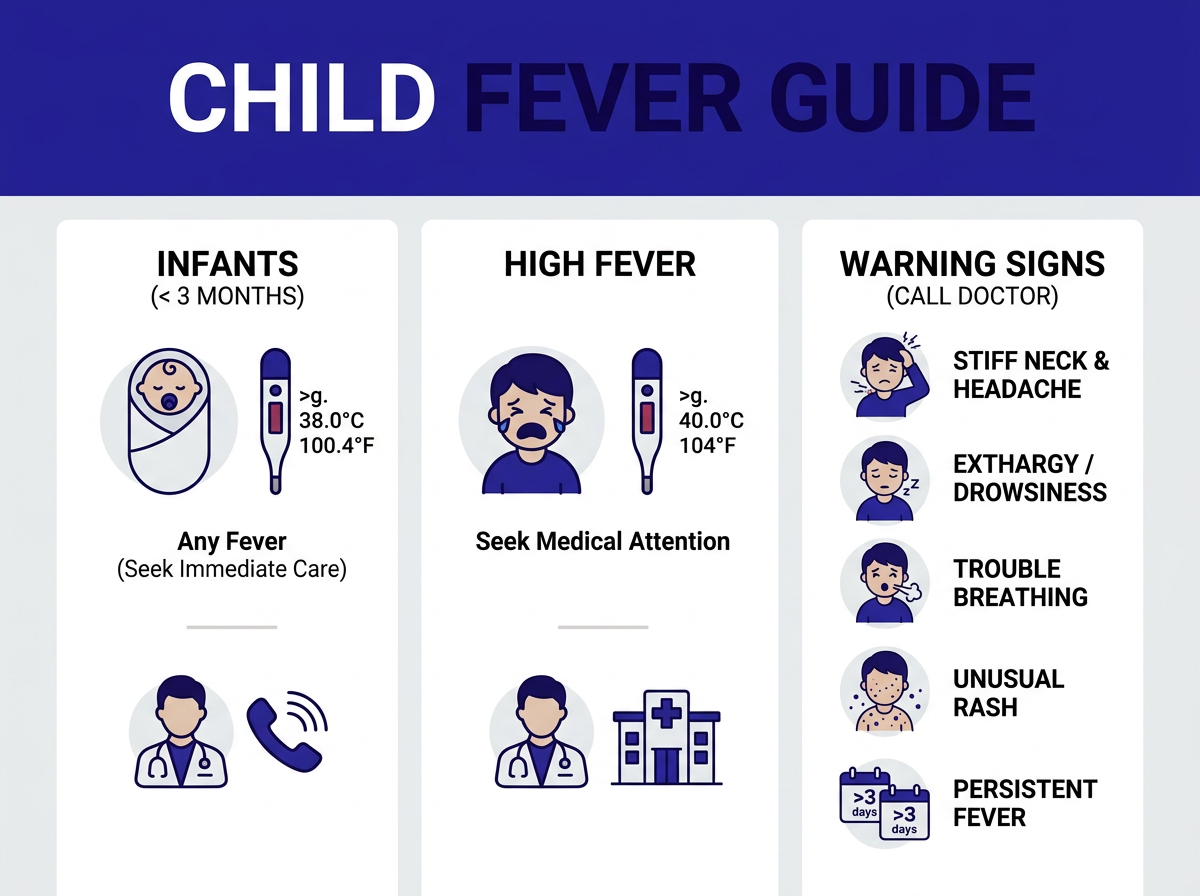
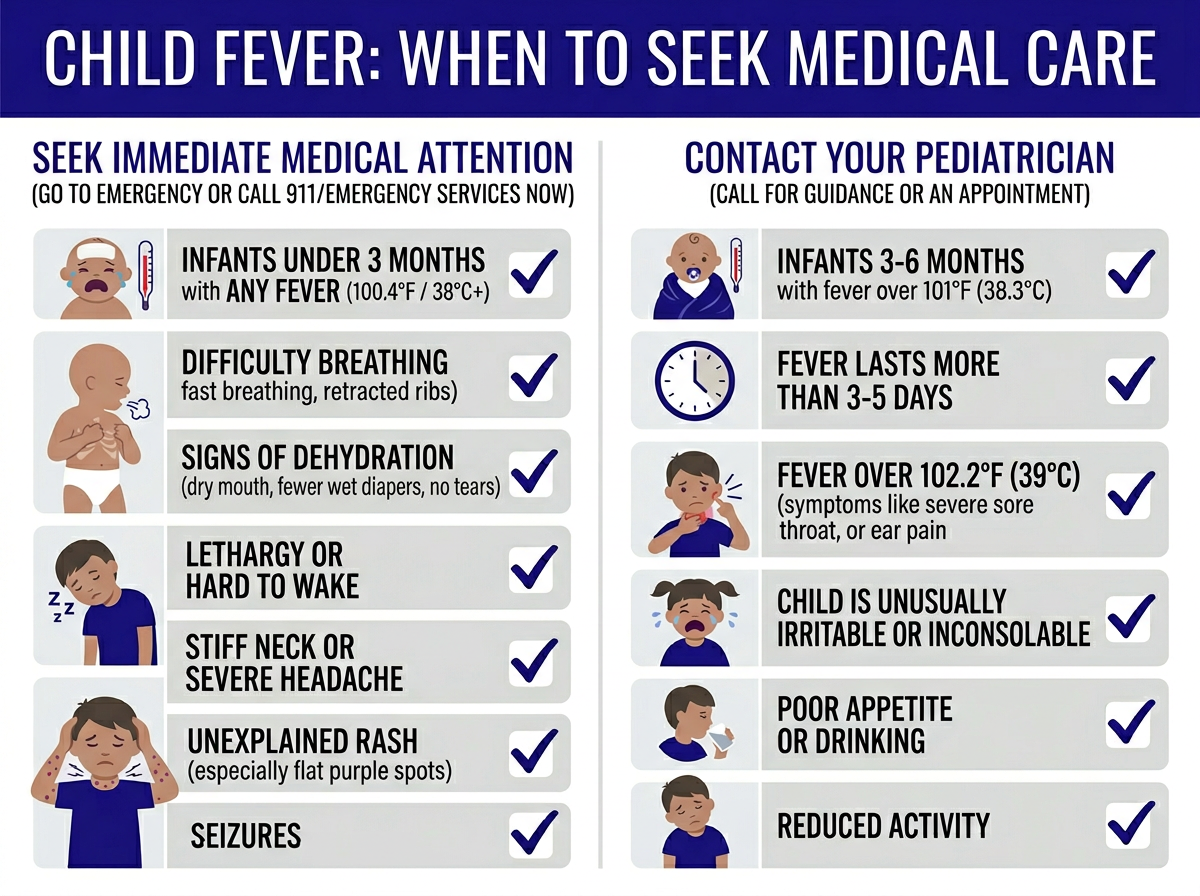
Go to the doctor right away for any rectal temperature of 100.4°F (38°C) or higher. Do not wait. Do not give fever medicine first. In fact, a fever in this age group can indicate meningitis, a urinary tract infection, or a bloodstream infection that requires urgent testing.
If your pediatrician’s office is closed, then take your newborn to the nearest pediatric walk-in clinic or emergency room right away.
Infants (3 to 6 Months)
Call your doctor for any temperature of 101°F (38.3°C) or higher. Also call if the fever stays below 101°F but your baby seems unusually cranky, sleepy, or refuses to feed. At this age, a fever above 102°F (38.9°C) needs same-day medical care regardless of other symptoms.
Babies (6 to 12 Months)
Contact your doctor if the fever reaches 102°F (38.9°C) or lasts longer than 24 hours. At this age, common causes include ear infections, roseola, and teething. However, teething only causes mild fever. If your baby drinks fluids, makes wet diapers, and stays somewhat alert between fever spikes, you can often monitor at home while following up with your provider.
Toddlers and Older Children (1 to 17 Years)
See a doctor if the fever goes above 102.2°F (39°C) and lasts more than 24 hours, or if a fever of any degree stays for more than 3 days. Additionally, a temperature of 104°F (40°C) or higher at any age needs prompt medical care, even if your child seems fine otherwise.
For children over age 2, a fever without a clear source (no cough, no runny nose, no sore throat) also calls for a doctor visit. In particular, it may point to a urinary tract infection or another condition that needs lab testing.
Warning Signs: Child Fever When to Go to Doctor Right Away
Temperature thresholds matter, but behavior tells you more. Regardless of the number on the thermometer, take your child to a doctor or urgent care if you notice any of these signs with a fever:
- Extreme sleepiness or trouble waking up (not just tired from being sick, but truly hard to rouse)
- Refusal to drink any fluids for several hours, or signs of dehydration like dry mouth, no tears, or fewer than 3 wet diapers in 24 hours
- Bad headache or stiff neck (these are possible meningitis warning signs)
- A new rash, especially one that looks like purple or red spots that do not fade when you press on them
- Trouble breathing, fast breathing, or working hard to breathe (ribs pulling in with each breath)
- Nonstop vomiting that stops the child from keeping down any liquids
- Bad ear pain or sore throat that makes swallowing hard
- Belly pain focused on the lower right side
- A seizure, even if it stops on its own (febrile seizures affect about 2-5% of children and need medical care)
- Your gut says something is wrong. You know your child best. If their behavior scares you, trust that feeling and get them seen.
When a Child’s Fever Does NOT Need a Doctor Visit
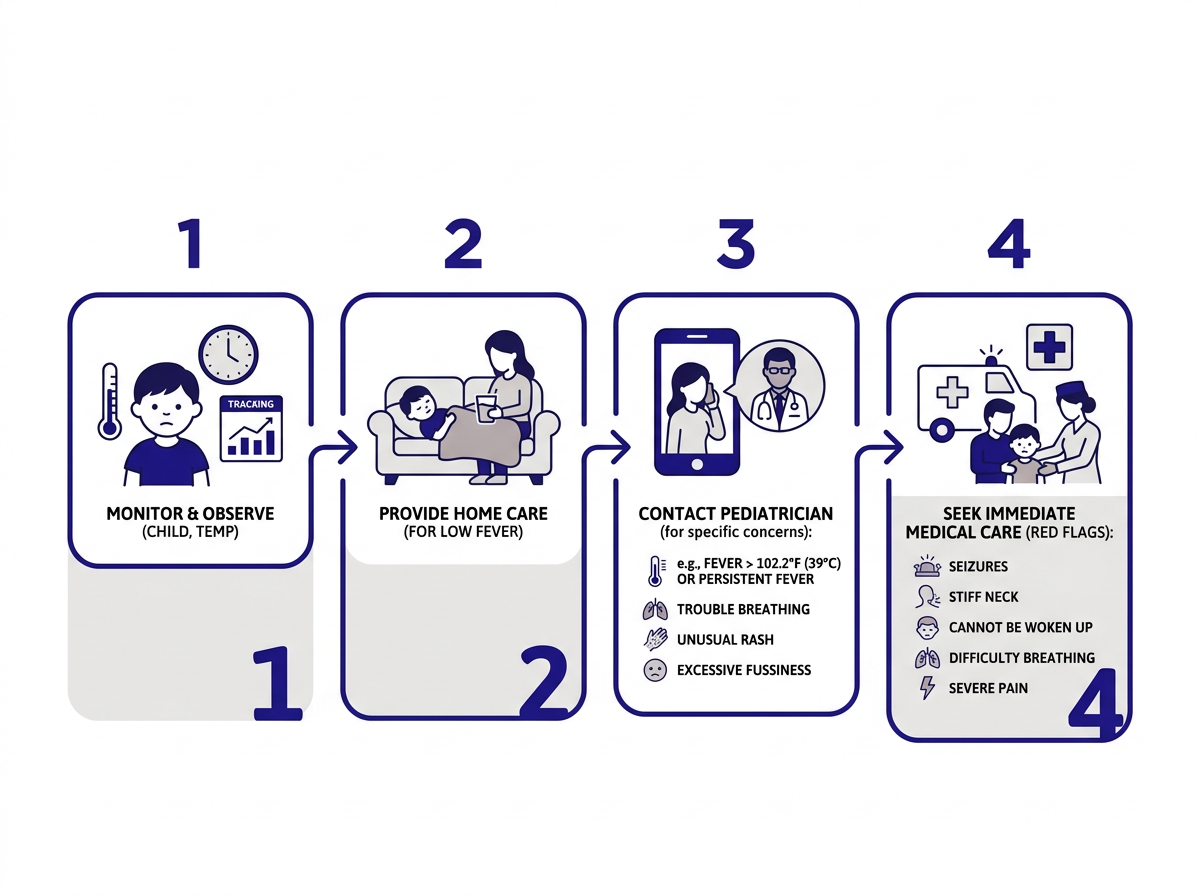
Most childhood fevers clear up in 2 to 3 days on their own. You can likely manage at home if your child meets all of these criteria:
- Older than 3 months
- Temperature stays below 102°F
- Still drinking fluids and making wet diapers
- Alert and aware between fever spikes
- Playing or showing interest in things around them, even if subdued
- No rash, stiff neck, or breathing trouble
For example, a child with a 101°F fever who sits up watching cartoons and sips juice is in much better shape than a child with 100.5°F who lies limp and refuses water. So focus on behavior first, temperature second.
How to Treat a Child’s Fever at Home
While monitoring at home, these steps help your child stay more comfortable:
Give acetaminophen (Tylenol) or ibuprofen (Motrin/Advil). Follow the dosing chart on the package based on your child’s weight, not age. Also, ibuprofen is approved for children 6 months and older. Never give aspirin to anyone under 18 because of Reye’s syndrome risk.
Push fluids. Offer water, diluted juice, clear broth, or Pedialyte. Specifically, small and frequent sips work better than large amounts at once.
Dress them lightly. One layer of clothing and a light blanket let heat escape. Bundling a feverish child traps heat and can push the temperature higher.
Try a lukewarm bath. A lukewarm (not cold) bath can bring brief comfort. However, cold water causes shivering, which actually raises core body temperature. Also, skip alcohol baths entirely because alcohol absorbs through the skin.
Track the fever. Check the temperature every 4 to 6 hours. Write down the readings so you can share them with the doctor if the fever goes on. Similarly, note how much fluid your child takes in and how many wet diapers they produce.
Urgent Care vs. ER: Child Fever When to Go to Doctor or Emergency Room
Not every fever needs an ER trip. In fact, urgent care handles most pediatric fever cases faster and at lower cost. Consider urgent care when:
- Your child is older than 3 months with a fever above 102°F that has not come down with medicine
- The fever has lasted more than 3 days
- You suspect an ear infection, strep throat, or urinary tract infection
- Your pediatrician’s office is closed and the situation is not life-threatening
On the other hand, choose the emergency room when:
- Your child is under 3 months old with any fever
- Temperature goes above 105°F
- Your child has a seizure, trouble breathing, a stiff neck, or a fast-spreading rash
- Your child will not respond or is very hard to wake
At CityHealth Urgent Care in San Leandro, we see children with fevers every day. Our team can run rapid strep tests, check for ear infections, do urinalysis, and prescribe antibiotics on the spot when needed. Walk-ins are always welcome, and you can also see a walk-in doctor without a referral.
The 24-Hour Fever Rule for Children
Many parents search for the “24-hour fever rule.” Essentially, this guideline says children should stay home from school or daycare until they have been fever-free for 24 hours without medicine. The rule protects other children from catching the illness.
However, the 24-hour rule is a school policy, not a medical decision tool. A fever that breaks after exactly 24 hours does not automatically mean your child is well. Likewise, a fever that comes and goes over two days does not always mean something dangerous is happening.
Instead, ask this: Has the fever lasted more than 72 hours total? If yes, call your doctor. According to the American Academy of Pediatrics, any fever going past three days needs medical review to rule out bacterial infections that may need antibiotics.
What Happens at the Doctor Visit for Child Fever
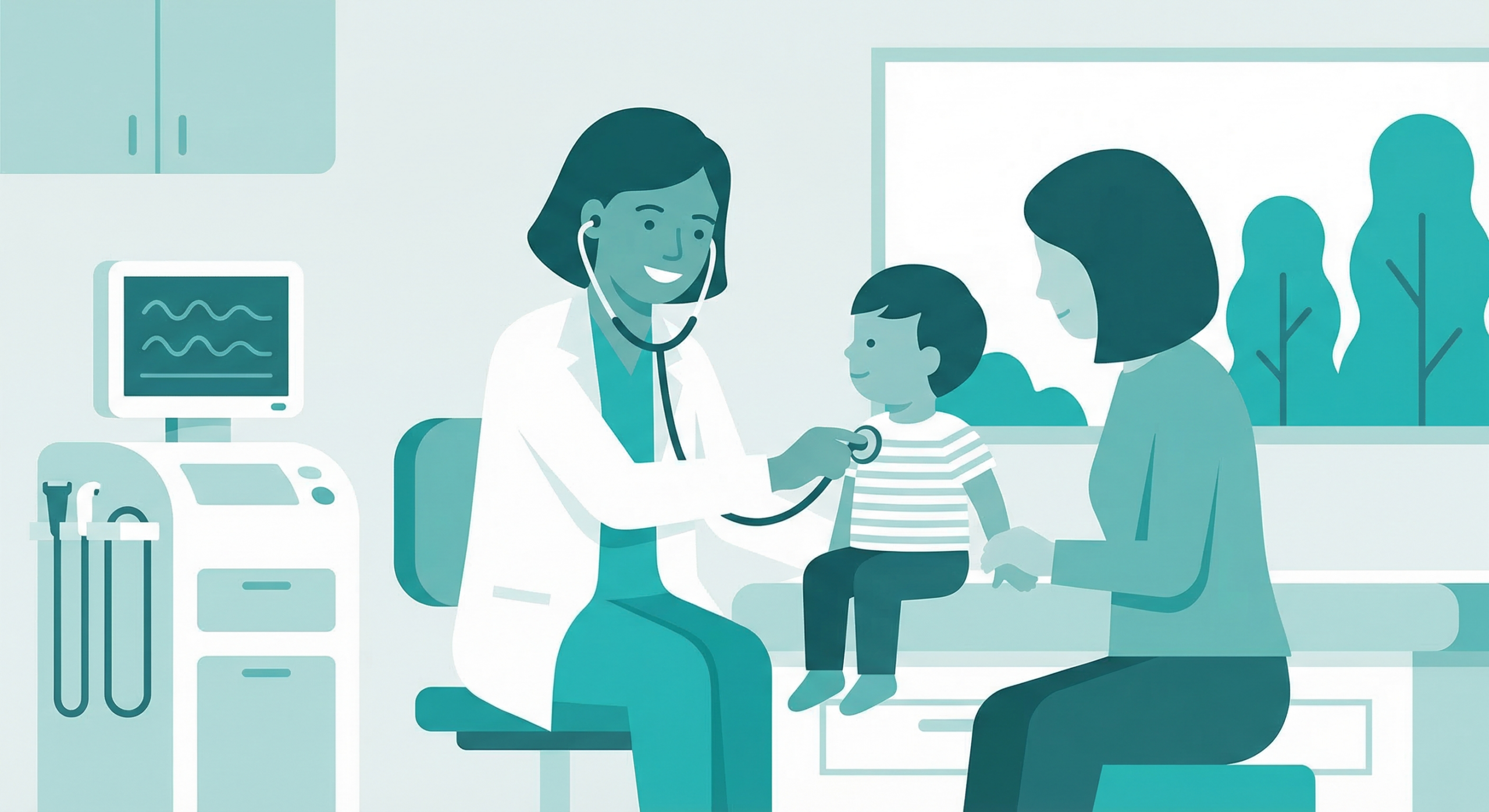
Knowing what to expect at the visit reduces anxiety for both you and your child. Typically, the provider will:
- Confirm the temperature with an ear or forehead thermometer.
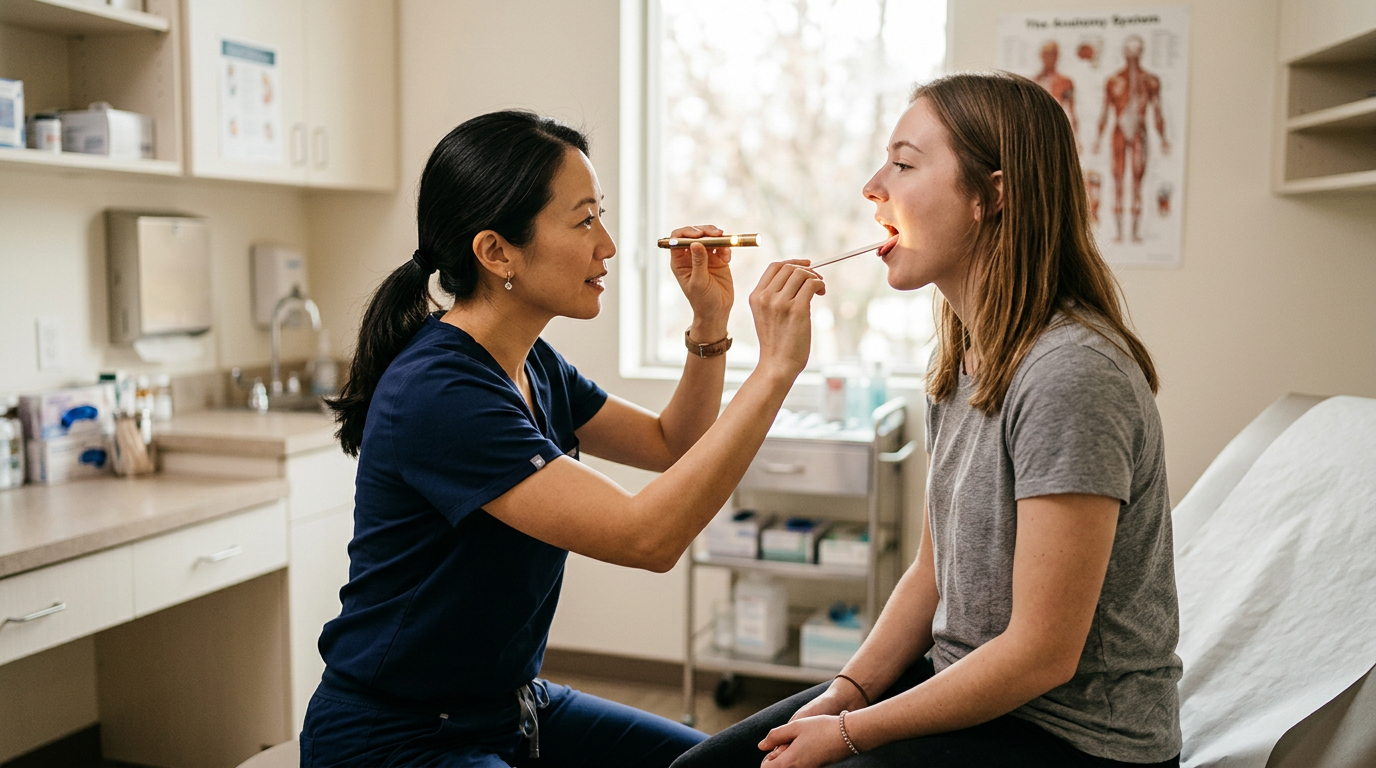
- Check the ears, throat, and lungs for signs of infection. Indeed, ear infections and strep throat cause a large share of pediatric fevers.
- Look for dehydration by checking the mouth, eyes, and skin.
- Order rapid tests if strep, flu, RSV, or a UTI is suspected. Results usually take 5 to 15 minutes at urgent care.
- Start treatment, which may include antibiotics for bacterial infections or home care steps for viral illness.
Before the visit, bring a list of your child’s temperatures from the past 24 to 48 hours, any medicines you already gave (with times), and a note about fluid intake. Consequently, this helps the provider make faster and more accurate decisions about next steps.
Book Your Child’s Visit at CityHealth Urgent Care
If your child has a fever that worries you, do not wait for it to get worse. Now you know the temperature thresholds and warning signs, so act on them. CityHealth Urgent Care in San Leandro treats children of all ages for fevers, ear infections, strep throat, flu, and other common pediatric conditions. No appointment is needed, but you can also reserve your spot ahead of time.
Book your child’s visit now at CityHealth Urgent Care or walk in during our open hours. Getting your child checked gives you answers and peace of mind.