

Your child has been coughing for two weeks, three weeks, maybe longer. You’ve tried honey. You’ve run the humidifier every night. Still, nothing works. When a child cough won’t go away, parents start running through worst-case scenarios. However, most of the time, a lingering cough has a treatable cause. But you need to know which causes require a doctor and which ones resolve on their own.
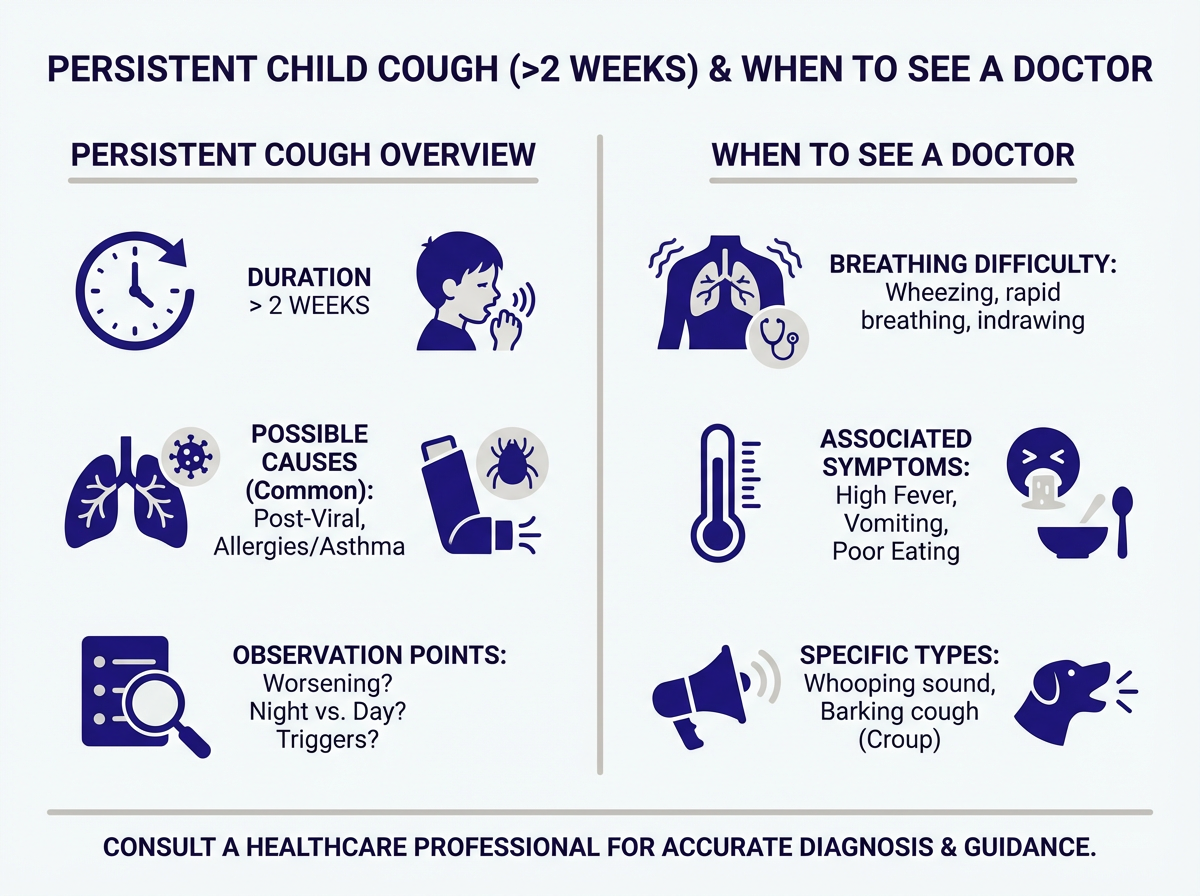
This article breaks down the most common reasons a child’s cough keeps hanging on, what actually helps at each age, and the specific signs that mean it’s time to bring your kid in.
Medically reviewed by Susana Quezada, NP — Nurse Practitioner
Why Your Child Cough Won’t Go Away
A cough that lasts more than three weeks after a cold is called a post-viral cough. In this case, the infection is gone, but the airways stay irritated and inflamed. As a result, the cough reflex fires at triggers that wouldn’t normally bother your child, such as cold air, exercise, laughing, or lying down at night.
In fact, post-viral cough is the single most common reason a child’s cough is not going away. According to the Nemours KidsHealth Foundation, most coughs from colds clear up within one to two weeks. However, when they don’t, something else is usually driving the cough.
Here are the causes providers evaluate when a persistent cough in a child extends past that window.
Post-Nasal Drip
Mucus drips from the sinuses down the back of the throat. Consequently, your child’s body coughs to clear it. This is the most common cause of a dry cough in a child that won’t go away, especially if your child also has a stuffy nose, throat clearing, or a scratchy voice. Specifically, allergies, sinus infections, and lingering colds all trigger post-nasal drip.
Asthma
Asthma cough often shows up as a dry, repetitive cough that gets worse at night, during exercise, or in cold air. Notably, some children never wheeze. Instead, they only cough. Providers call this “cough-variant asthma,” and it accounts for a significant percentage of chronic cough in kids. So if your child coughs every time they run around at recess or wakes up coughing in the early morning hours, asthma should be on the list.
Allergies
Seasonal or environmental allergies inflame the airways and produce excess mucus. As a result, the cough follows the allergen exposure. For example, if your child coughs more in spring, around pets, or in dusty rooms, allergies are a likely cause. Your provider can confirm this with a history and examination.
Reflux (GERD)
Stomach acid backs up into the esophagus and irritates the airway. Because of this, children with reflux-related cough may cough more after eating, when lying flat, or first thing in the morning. However, they may not have the classic heartburn complaints that adults describe. In younger children, reflux can also be silent.
Persistent Bacterial Infections
Sometimes what seems like a lingering cold is actually a secondary bacterial infection. Specifically, bacterial sinusitis and bacterial bronchitis both cause coughs that last weeks. The tip-off: thick green or yellow mucus, a cough that got better and then got worse again, or a low-grade fever that keeps returning. Fortunately, these infections respond to antibiotics.
Less Common but Serious Causes
Whooping cough (pertussis) causes intense coughing fits that end with a gasping “whoop” sound. Although it can affect vaccinated children, symptoms tend to be milder. Croup, on the other hand, produces a barking cough and usually hits children under age 5. Meanwhile, inhaled foreign objects cause sudden-onset coughing in toddlers, often with no preceding illness. A provider can identify these with a physical exam and targeted testing.
Age Matters: Toddler Cough vs. Older Child Cough
A toddler cough that won’t go away has a different set of concerns than a persistent cough in a 10-year-old. Here’s how age changes the picture.
Under 12 Months
Babies under one year should see a provider for any cough lasting more than a few days. Because their airways are small, they can’t clear mucus effectively. Also, RSV, bronchiolitis, and whooping cough hit this age group hardest. Do not give honey to children under 12 months due to botulism risk. Likewise, do not give any over-the-counter cough medicine to infants.
Ages 1 to 3 (Toddlers)
Toddlers put everything in their mouths. Therefore, a sudden cough with no cold symptoms could mean an inhaled object, such as a small toy, food, or button battery. In addition, toddler airways are still narrow, so even mild swelling from croup or asthma creates noticeable breathing changes. The AAP recommends against OTC cough and cold medicines for children under 4.
Ages 4 to 6
Cough-variant asthma often first appears in this age range. Since children in daycare or preschool cycle through six to eight colds per year, each cold can leave a two-to-three-week cough. That means some kids seem to cough all fall and winter. However, if the cough truly never stops between illnesses, asthma or allergies deserve evaluation.
Ages 7 and Up
School-age children can describe their symptoms more clearly. For example, a child who says their throat tickles at night likely has post-nasal drip. Similarly, a child who coughs only during PE probably has exercise-induced asthma. Also at this age, habit cough (also called psychogenic cough) enters the picture: a dry, repetitive cough that disappears during sleep and has no physical cause.
When a Child Cough Won’t Go Away at Night
Nighttime coughing is the complaint that breaks parents. You finally get your child to sleep, and then the coughing starts again 30 minutes later. There are specific reasons coughs get worse after dark.
Gravity works against you. When your child lies flat, mucus pools in the back of the throat instead of draining. Consequently, post-nasal drip gets worse. Reflux also gets worse. In addition, asthma symptoms peak between 2 a.m. and 4 a.m. because of natural drops in cortisol and airway-relaxing hormones.
If your child’s cough won’t go away at night, try these steps before the visit:
- Elevate the head of the bed. Place a pillow under the mattress (not under your child’s head) to create a gentle incline. For toddlers in cribs, elevate one end of the crib frame slightly.
- Run a cool-mist humidifier. Dry air irritates already-inflamed airways. Keep the humidity between 40% and 50%. Also, clean the humidifier daily to prevent mold.
- Give honey before bed (ages 1+). One to two teaspoons of honey coats the throat and reduces cough frequency. In fact, studies show honey outperforms most OTC cough suppressants in children.
- Saline nasal spray or rinse. Clearing the sinuses before bed reduces the mucus that triggers nighttime coughing. For younger children, use saline drops and a bulb syringe instead.
If nighttime coughing causes vomiting, prevents sleep for more than two consecutive nights, or comes with wheezing or labored breathing, bring your child in for evaluation.
Home Remedies That Actually Work (and What to Skip)
Parents want to help. The internet offers hundreds of cough remedies for kids. So here’s what the evidence supports.
Do This
- Honey (ages 1+): One to two teaspoons, straight or in warm water. Give it 30 minutes before bed. It works.
- Fluids: Water, warm broth, and diluted juice keep mucus thin and easier to cough up. Overall, hydration is the simplest and most effective supportive measure.
- Cool-mist humidifier: Adds moisture to dry indoor air. This is particularly helpful during winter when heating systems dry out your home.
- Saline nasal irrigation: Flushes allergens, mucus, and irritants from the nasal passages. Neti pots work for older children, while saline drops work for babies and toddlers.
- Chest rub with menthol (ages 2+): Vicks VapoRub on the chest (never under the nose) can reduce coughing at night. Rather than applying it directly, you can also apply to the feet with socks as an alternative for sensitive skin.
Skip This
- OTC cough suppressants (under age 4): The FDA and AAP both warn against these. They don’t work well in young children and carry real risks, including sedation and breathing problems.
- Antibiotics without a diagnosis: Antibiotics treat bacterial infections. However, they do nothing for viral coughs, post-nasal drip, asthma, or reflux. Furthermore, unnecessary antibiotics create resistant bacteria.
- Essential oils in diffusers near babies: Notably, eucalyptus and peppermint oils can cause breathing difficulties in infants and toddlers.
- Codeine-containing cough medicines: The FDA banned codeine use in children under 12 and also recommends against it through age 17.
When to Worry About Your Child’s Cough
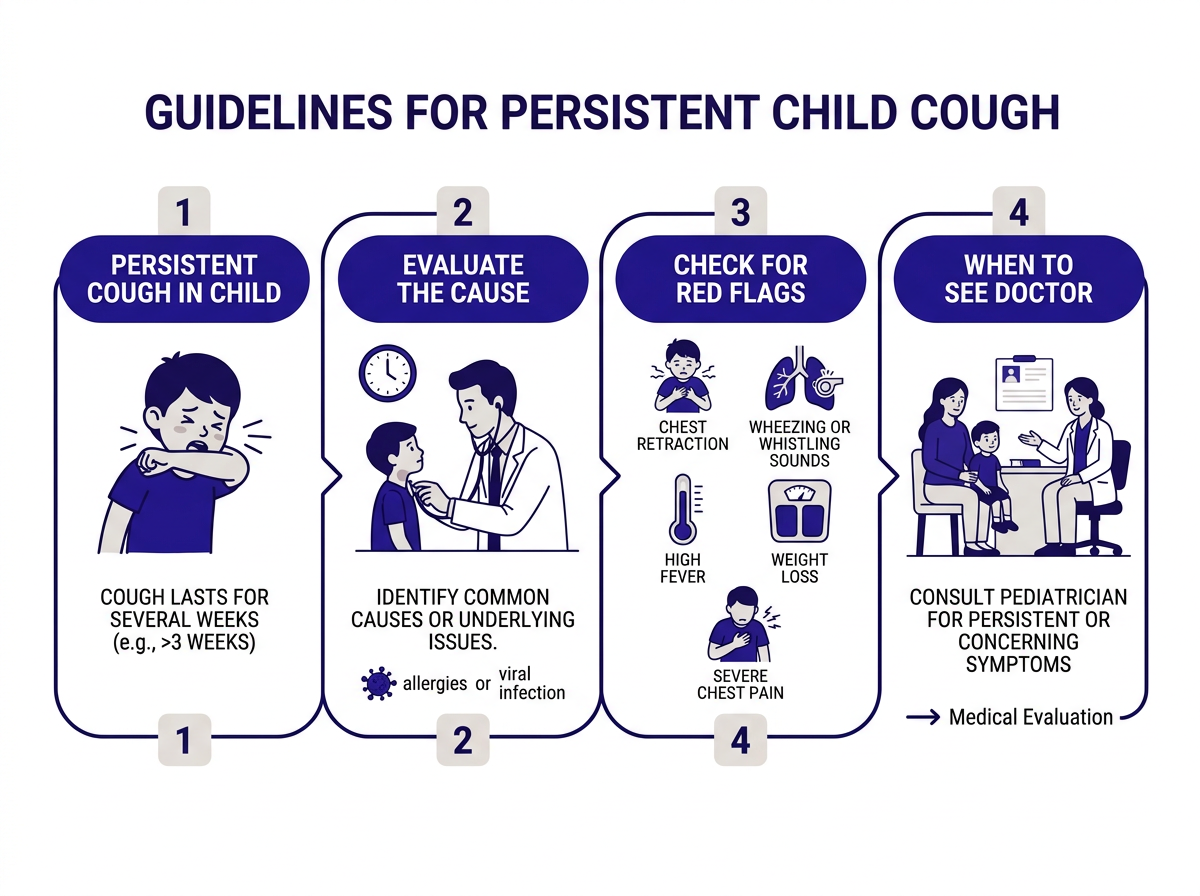
Most coughs resolve within one to three weeks. Nevertheless, take your child to a provider when you see any of these signs:
- Cough lasting longer than 3 weeks with no improvement
- Fever returning after your child seemed to be getting better (this suggests secondary bacterial infection)
- Wheezing or audible breathing sounds at rest
- Breathing fast or using neck, rib, or belly muscles to breathe (retractions)
- Blue or gray lips or fingernails (get emergency care immediately)
- Coughing up blood or blood-streaked mucus
- Vomiting from coughing that prevents your child from keeping food or fluids down
- Weight loss or poor feeding in infants
- Barking cough with stridor (a high-pitched sound when breathing in)
If your child has a fever that won’t break alongside the cough, that combination raises the urgency. Specifically, fever plus persistent cough can indicate pneumonia, whooping cough, or another infection that needs testing.
What CityHealth Tests For When Your Child’s Cough Won’t Stop
At CityHealth Urgent Care in San Leandro, our providers see children with lingering coughs every week. Here’s what a typical evaluation looks like.
First, history and physical exam. Your provider asks how long the cough has lasted, what it sounds like, when it’s worst, and what you’ve tried. They listen to your child’s lungs, check the ears and throat, and look for signs of allergies or infection.
Rapid strep test. A sore throat with cough can point to strep, which requires antibiotics. Results come back in minutes.
Flu and COVID testing. If your child has fever with the cough, rapid testing helps identify whether antiviral treatment is appropriate.
Pulse oximetry. A painless clip on your child’s finger measures oxygen levels. Low readings indicate the cough is affecting breathing efficiency and may therefore point toward pneumonia or asthma.
Chest X-ray (on-site). If the provider hears abnormal lung sounds or suspects pneumonia, CityHealth performs chest X-rays in the clinic. No separate imaging appointment needed.
Finally, a treatment plan. Based on findings, your provider may prescribe antibiotics for bacterial infection, an inhaler trial for suspected asthma, antihistamines for allergy-driven cough, or a referral to a pediatric specialist for complex cases. As a result, you leave with a clear plan, not just a “wait and see.”
How to Tell If It’s “Just a Cough” or Something More
Parents often ask: how do I know if this is serious? Use these patterns to guide your decision.
Probably fine to monitor at home: Your child coughs during the day but sleeps well. They eat normally. They also play and act like themselves. The cough is improving, even slowly. There’s no fever and no breathing changes.
Schedule a visit this week: The cough has lasted more than two weeks. It’s not getting better. Your child coughs hard enough to gag or vomit occasionally. They’re tired but not in distress. Despite trying home remedies, you haven’t seen success.
Come in today: Your child has a fever over 102°F with the cough. They’re also breathing fast. You see rib retractions. They can’t keep fluids down. Or the cough started suddenly with no preceding cold (possible foreign body). Additionally, bring in any child under 3 months old with any cough. Learn more about when to take your child to urgent care.

Stop the Cycle: Get Your Child’s Persistent Cough Evaluated
A child cough that won’t go away is your body’s signal that something needs attention. Specifically, post-viral inflammation, undiagnosed asthma, hidden reflux, or a stubborn bacterial infection can all keep that cough cycling for weeks. Although home remedies help manage symptoms, they won’t fix the underlying cause if one exists.
CityHealth Urgent Care in San Leandro sees kids of all ages, seven days a week. Walk in or book online. No referral needed. Our providers can test, diagnose, and start treatment the same day.
Visit CityHealth Urgent Care to get your child’s cough evaluated. In-clinic testing. Same-day answers. Finally, a real plan to stop the cough.