
Urgent Care for Muscle Strain: When to Go and What to Expect
You pulled something during a workout, a sudden awkward move, or just picked up something the wrong way. Now it hurts to move and you’re not sure if it’s serious. Urgent care for muscle strain is the right first call — we can assess the injury, rule out fractures, and build you a treatment plan in one visit. Here’s when to come in and what to expect.
Medically reviewed by Paul Dwight, PA — Physician Assistant, CityHealth Urgent Care
Muscle Strain vs. Sprain: The Difference
People use these terms interchangeably. However, they involve different structures.
- Strain — injury to a muscle or tendon (muscle to bone). Caused by overstretching or tearing.
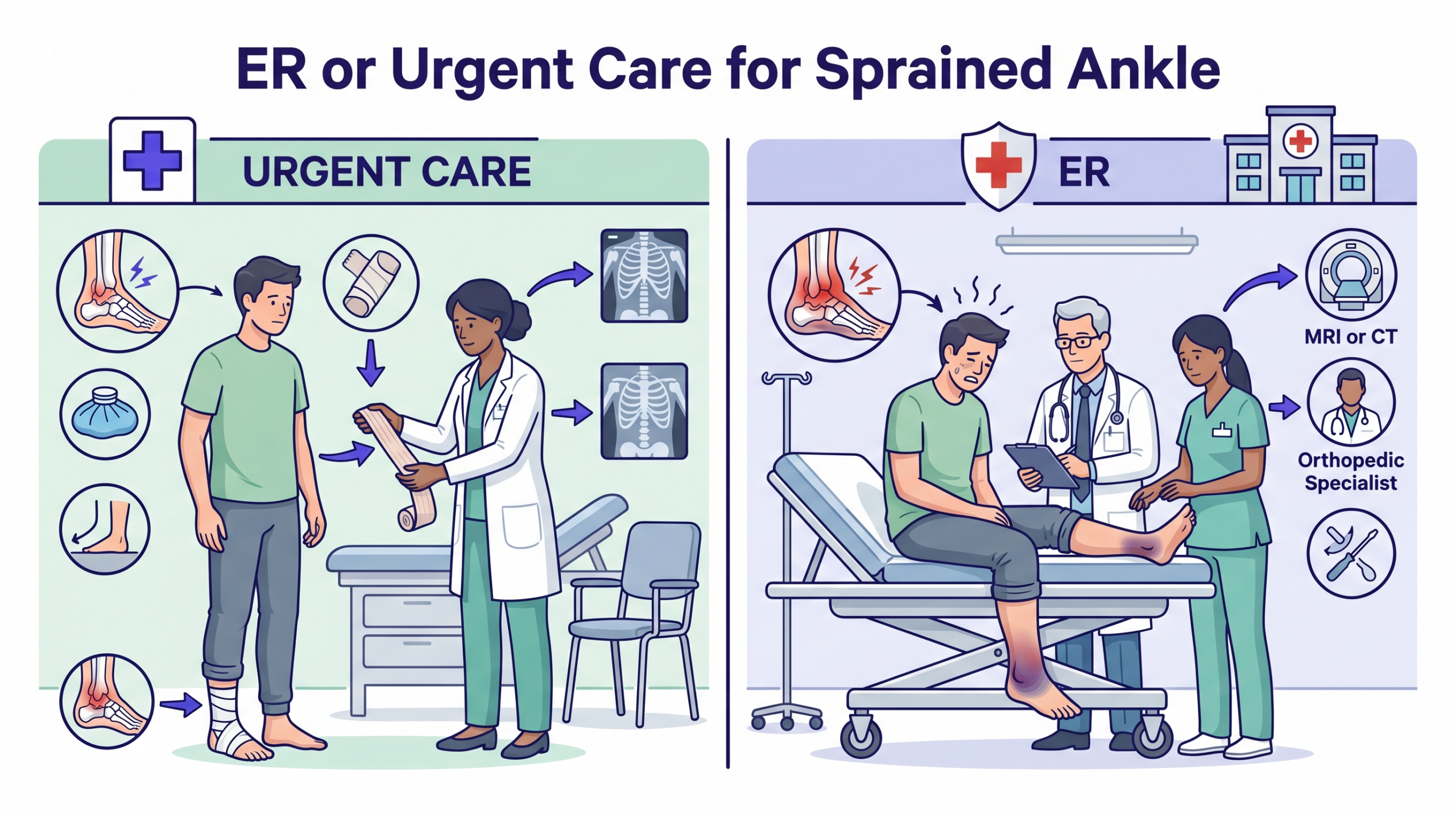
- Sprain — injury to a ligament (bone to bone). Typically happens at a joint: ankle, knee, or wrist.
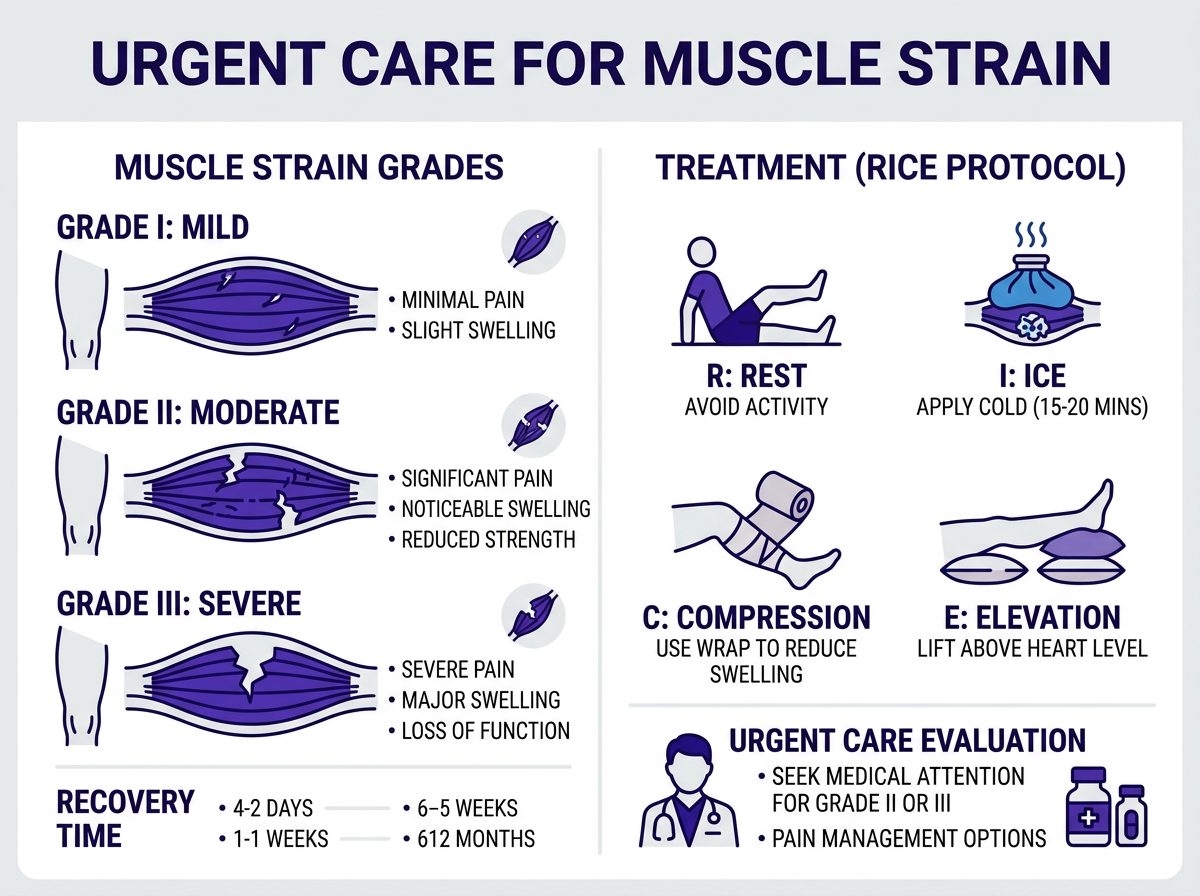
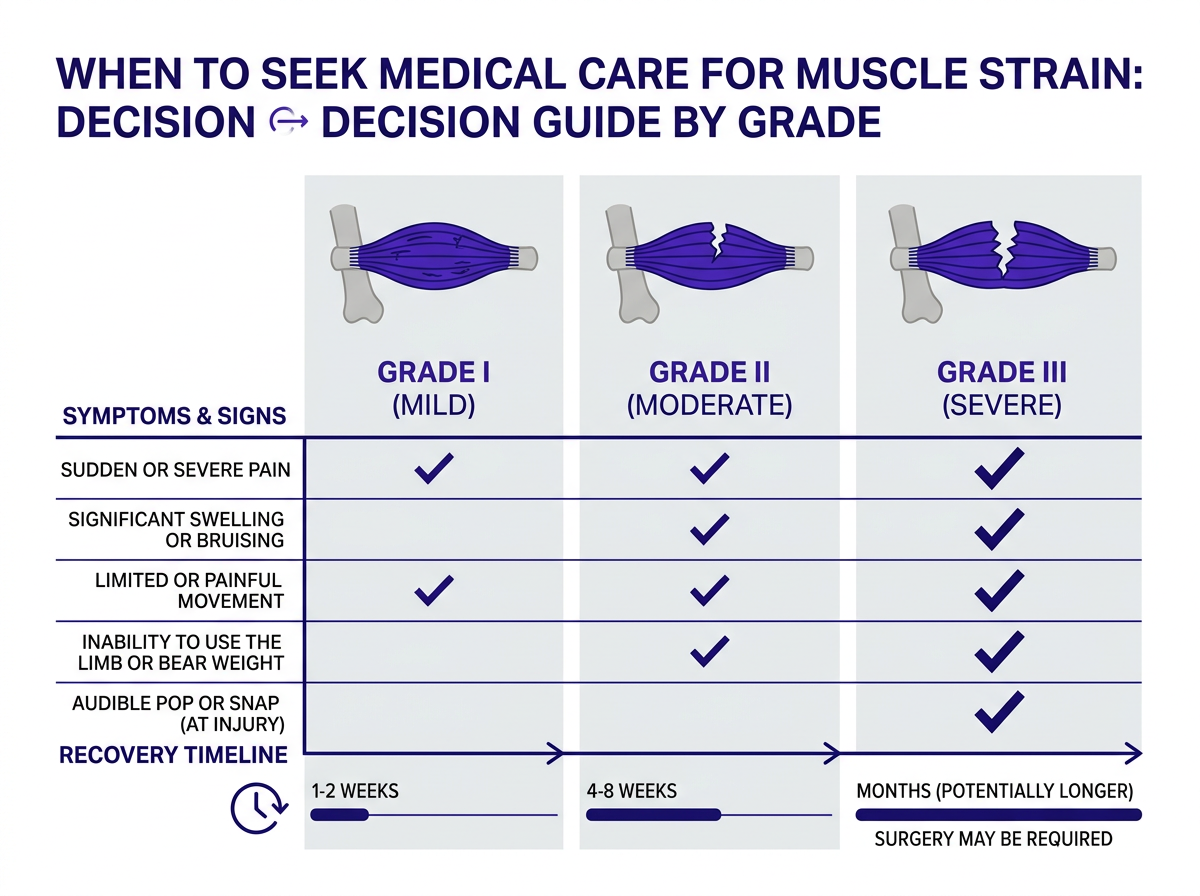
Indeed, both cause pain, swelling, and limited movement. Additionally, both can range from Grade I (mild tear) to Grade III (complete rupture). Because the symptoms overlap significantly, you often can’t tell the grade from how it feels. So that’s why urgent care for muscle strain matters — a physical exam and imaging when needed gives you a clear picture.
When Should You Go to Urgent Care for Muscle Strain?
Not every pulled muscle needs a visit. Grade I strains — mild pulls with full range of motion — often improve with rest and ice. However, come in when:
- Pain is severe and not improving after 24–48 hours of rest and OTC pain relief
- You can’t use the affected body part normally — walking, lifting, or turning is severely limited
- You felt or heard a pop at the time of injury — often a more serious tear
- You see visible deformity or a dent in the muscle — possible complete rupture
- Significant swelling or bruising appeared quickly after injury
- Muscle spasms won’t stop and are limiting daily activity
- You need imaging to rule out a fracture — bones fracture in ways that feel just like a muscle pull
- You need prescription pain relief or muscle relaxants
- Back injury with numbness or weakness down your leg — suggests nerve involvement, not just muscle
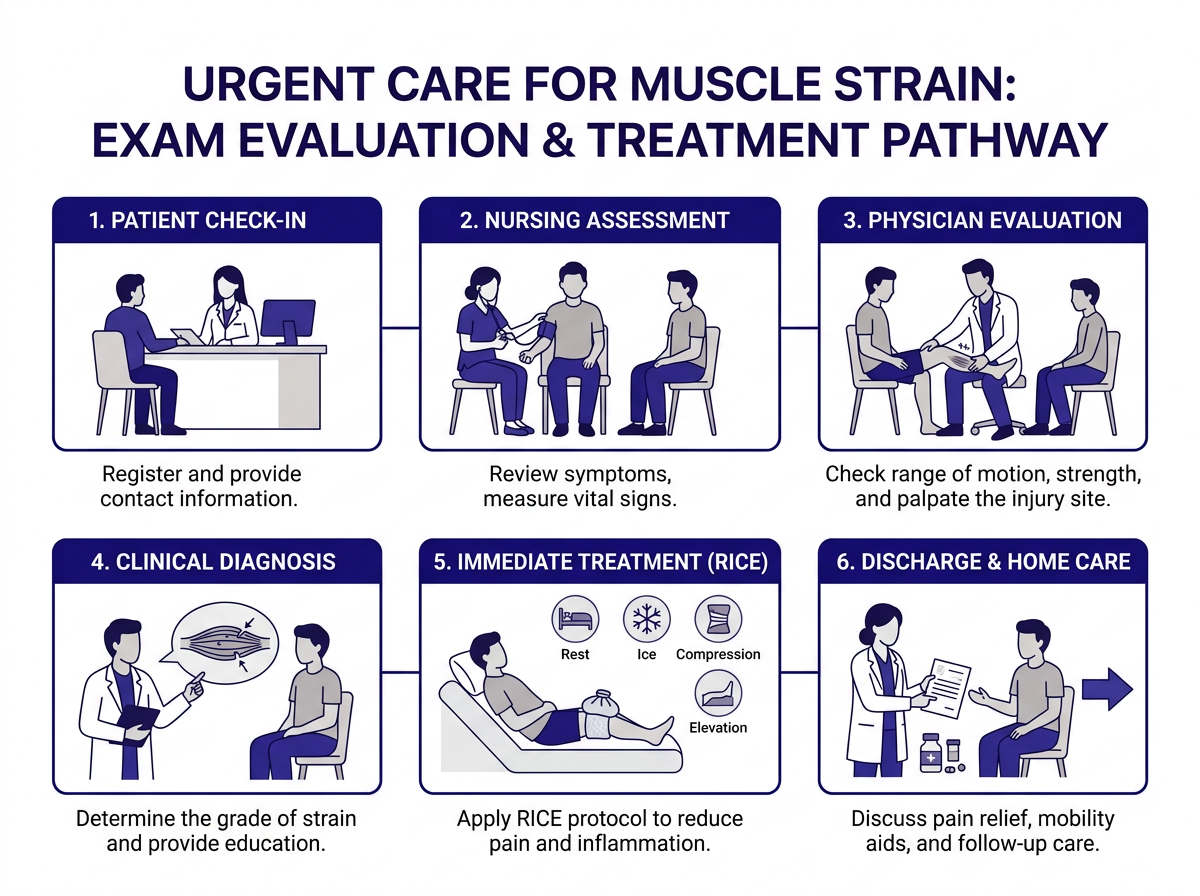
Urgent Care for Muscle Strain: What Happens at Your Visit
At CityHealth, we take a structured approach to evaluating muscle injuries.
Physical Examination
First, your provider assesses the muscles and joints involved. They check range of motion, test strength against resistance, and locate the area of maximum tenderness. This helps grade the injury and identify any ligament or joint involvement.
X-Ray When Needed
X-rays don’t show soft tissue directly. However, they show bones — which is exactly what’s needed to rule out a fracture masquerading as a muscle pull. Specifically, this matters for back strains, rib injuries, and injuries near joints. CityHealth has on-site X-ray — same visit, same day.
Treatment Plan
Based on the exam, treatment options include:
- Specific RICE guidance — Rest, Ice, Compression, Elevation — with instructions for your actual injury, not generic advice
- Prescription NSAIDs — stronger anti-inflammatory doses for significant pain and swelling
- Muscle relaxants — for painful spasms, especially in back strains
- Activity modification plan — what to avoid and how to return to activity safely
- Physical therapy referral — for Grade II or III injuries, PT is often the most important part of full recovery
- Orthopedic referral — for suspected Grade III tears or injuries that don’t respond to conservative care
Common Muscle Strains Treated at Urgent Care
Muscle strains happen anywhere in the body. However, some areas are more common than others. The most common ones we see include:
- Back strain — the most common type. Usually the lower back, from lifting or twisting. Most resolve in 1–2 weeks. See: Urgent Care for Back Pain
- Hamstring strain — common in runners. A Grade II tear causes significant bruising and limits walking.
- Calf strain — sudden sharp pain in the back of the lower leg during activity
- Groin strain — inner thigh pain from lateral movements and direction changes
- Shoulder strain — rotator cuff injuries range from mild strain to full tear. See: Urgent Care for Shoulder Pain
- Neck strain — often from sudden head movement (whiplash). See: Urgent Care for Neck Pain
When to Go to the ER Instead
Muscle strains rarely need the ER. However, go immediately if you have:
- Back injury with loss of bladder or bowel control — spinal emergency
- Severe numbness or paralysis in a limb after trauma
- Signs of compartment syndrome — severe, constant pain in a swollen limb that doesn’t improve with elevation
- Major trauma with suspected internal injuries
That said, if you’re unsure, start at urgent care. We’ll assess the injury and send you to the ER if needed. Generally, most muscle strains do not require emergency care.
How Long Does a Muscle Strain Take to Heal?
Ultimately, recovery depends on injury grade. According to the American Academy of Orthopaedic Surgeons, most Grade I strains heal with conservative care.
- Grade I: 1–2 weeks. Rest, ice, and light activity.
- Grade II: 3–6 weeks. Activity restriction plus physical therapy.
- Grade III: Several months. Often needs orthopedic evaluation and possibly surgery.
Importantly, returning to activity too soon is the most common mistake. Indeed, incomplete healing leads to re-injury — often worse than the first. So a clear return-to-activity plan from your provider matters. Don’t rush it. Give the muscle time to heal.
Frequently Asked Questions
Should I go to urgent care for a pulled muscle?
Yes — if the pain is severe, range of motion is significantly limited, swelling appeared quickly, or you heard a pop. Mild pulls that improve with rest and ice in 24–48 hours can often be managed at home.
Can urgent care treat a muscle tear?
Urgent care evaluates and initiates treatment for suspected tears. Grade III tears will need orthopedic follow-up for surgical assessment. However, urgent care is the right first stop for diagnosis and stabilization.
Can I go to urgent care for muscle spasms?
Yes. Specifically, if spasms are severe and not responding to OTC pain relief, we can prescribe muscle relaxants and evaluate the underlying cause.
Can urgent care help with back muscle strain?
Yes. Back strain is one of the most common injuries we treat. Specifically, we check the muscles and rule out bone injuries. We can prescribe muscle relaxants and anti-inflammatories. Most back strains resolve in 1–2 weeks with the right plan.
Does urgent care do MRIs?
Urgent care typically doesn’t have MRI on-site. However, we can refer you for MRI at an outpatient center. X-ray is available on-site to rule out fracture. See: Does Urgent Care Do MRIs?
Get Evaluated Today — No Appointment Needed
Waiting on a significant muscle injury without knowing the grade is a gamble. Walk into CityHealth Urgent Care in San Leandro for a proper assessment — physical exam, imaging when needed, and a treatment plan that gives your body the right protocol to heal fully. Check in online to reduce your wait.
Also see: Urgent Care for Sprained Ankle | Urgent Care for Knee Pain