
Urgent Care for Athlete’s Foot: When to Skip the Drugstore
Itchy, burning, peeling skin between your toes — most people start with an OTC spray. However, when that fails, urgent care for athlete’s foot is the right next step. The infection may have spread, opened sores, or stopped responding to drugstore products. A prescription changes the outcome. Here’s exactly when to come in and what we can do.
Medically reviewed by Dr. Francis Hsiao, MD — Dermatology Medical Director, CityHealth
What Is Athlete’s Foot?
Athlete’s foot is a fungal skin infection. Its medical name is tinea pedis. Notably, the same fungal group also causes ringworm and jock itch. Despite the name, you don’t need to be athletic to get it. You just need bare feet on a wet floor. Locker rooms, pool decks, and gym showers are the most common spots.
The fungus thrives in warm, moist spots. Specifically, feet trapped in socks and shoes for hours are ideal. According to the American Academy of Dermatology, athlete’s foot affects up to 15% of the population at any given time.
Three common forms exist:
- Interdigital type — itching and scaling between the toes, most common between the 4th and 5th toes
- Moccasin type — scaling across the whole sole and sides of the foot; often mistaken for dry skin
- Blister type — fluid-filled blisters on the sole; less common but more painful
When Does Urgent Care for Athlete’s Foot Make Sense?
Not every case needs a provider. However, here’s how to decide.
Try OTC Treatment First (When These Apply)
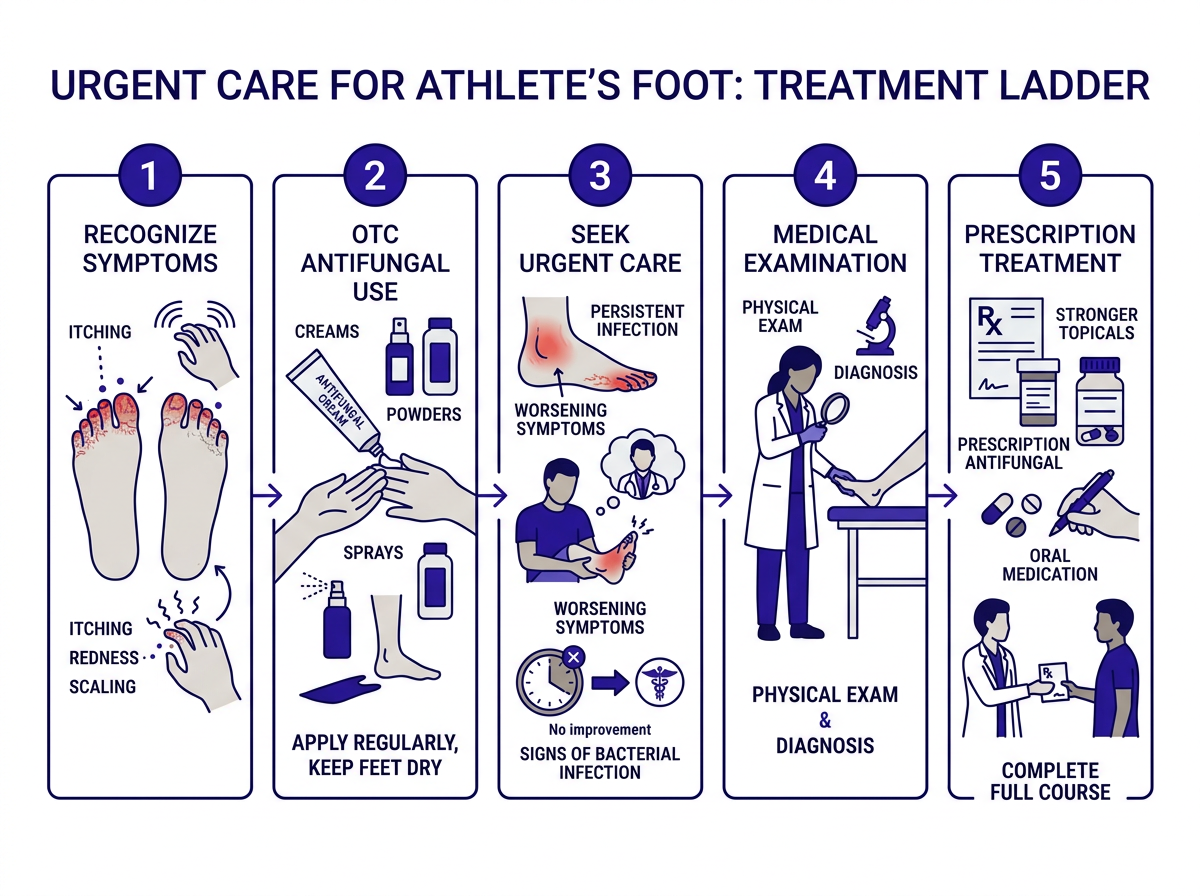
Standard OTC antifungal creams work well for mild cases. Common options include clotrimazole, miconazole, and terbinafine cream. Importantly, apply them for the full two to four weeks. In fact, stopping early is the most common reason the rash comes back.
So OTC is the right call when symptoms are mild, it’s your first case, and you have no open wounds, no spreading rash, and no health conditions like diabetes.
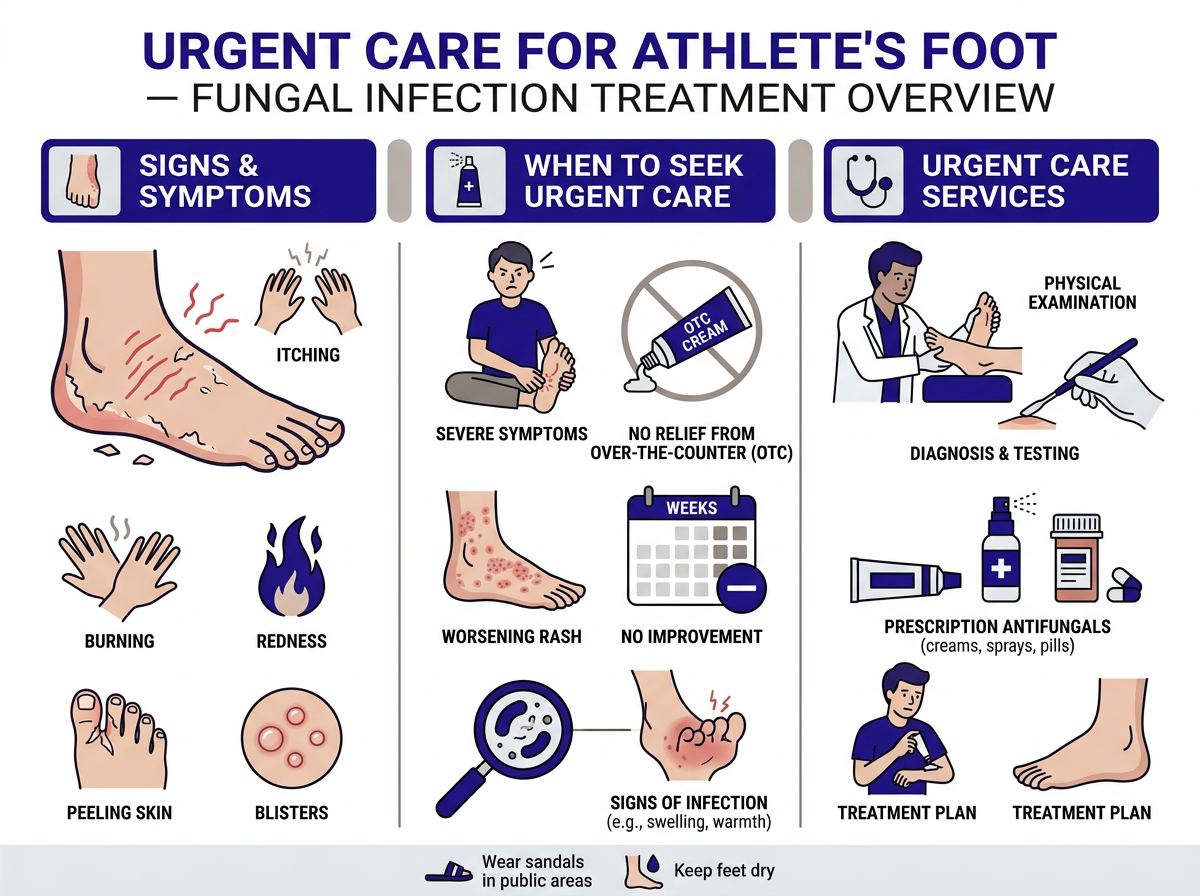
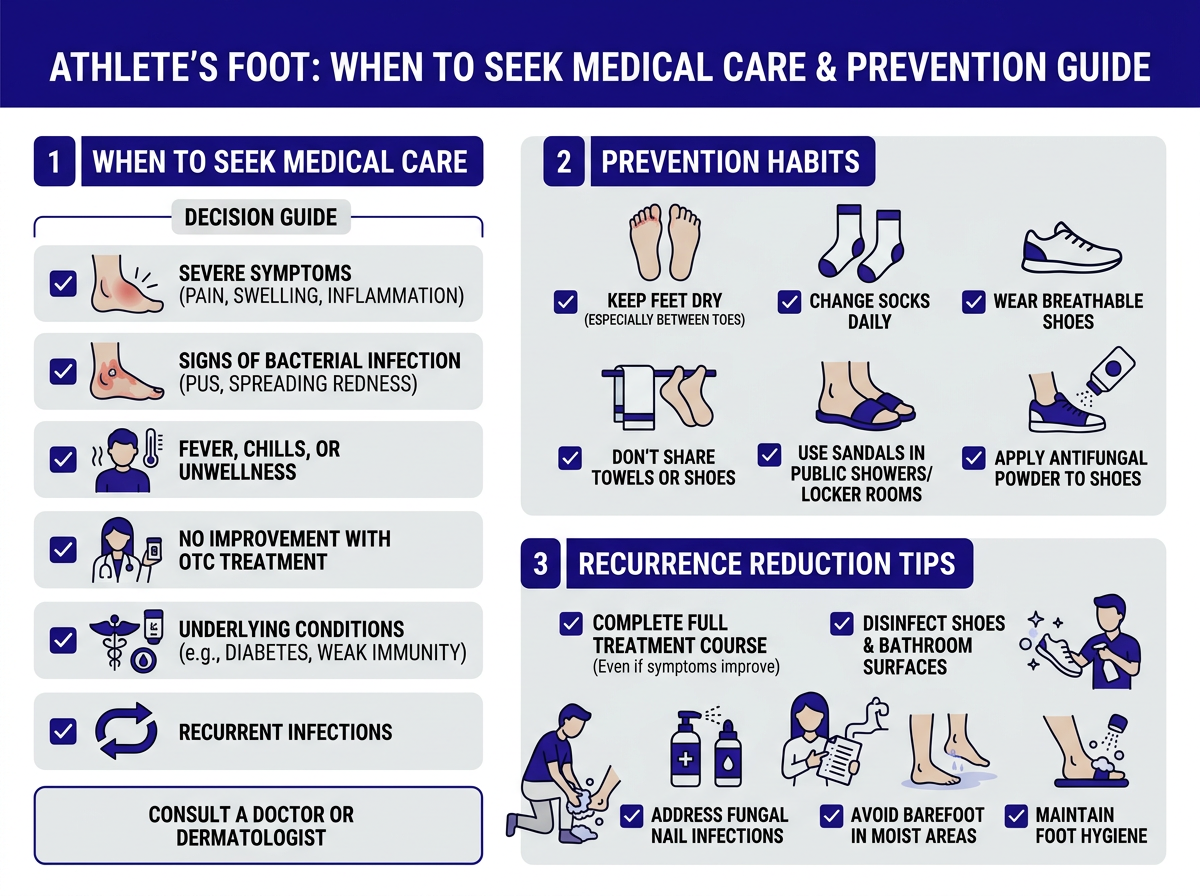
Go to Urgent Care for Athlete’s Foot When
- OTC treatment has not worked after 2 weeks
- The infection is spreading — up the foot, to the heel, or beyond
- Skin is cracked, bleeding, or has open sores — these invite bacterial infection
- Signs of bacterial infection on top — redness, warmth, swelling, pus, or fever. This becomes cellulitis.
- You have diabetes or poor circulation — foot infections move fast. Don’t rely on OTC.
- You are not sure it is athlete’s foot — eczema and contact dermatitis look nearly the same. The wrong diagnosis means the wrong treatment.
- The infection has reached your toenails — nail fungus needs oral medicine, not topical creams
What Does Urgent Care Prescribe for Athlete’s Foot?
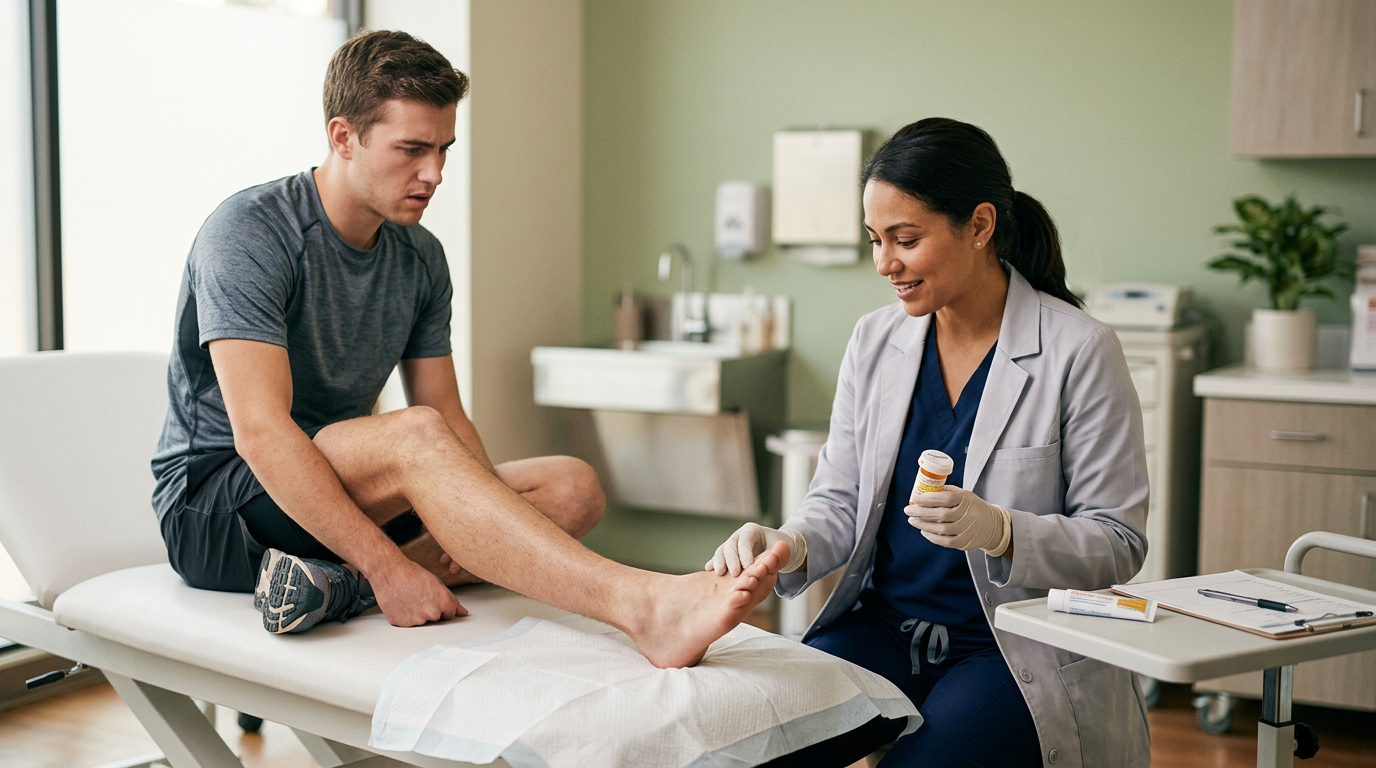
Your provider examines the skin and checks how far the infection has spread. Based on that, treatment options include:
Prescription-Strength Topicals
When OTC products fail, prescription creams are stronger. For example:
- Econazole — broader coverage than most OTC options
- Ciclopirox — a prescription cream with a wider range of coverage
- Luliconazole — once daily, with a shorter course than older creams
Oral Antifungals
For widespread infections or nail involvement, oral antifungals clear the fungus from the inside out. Terbinafine (Lamisil) is first-line. It takes two weeks for skin infections and twelve weeks for nail fungus. Fluconazole and itraconazole are used when terbinafine alone doesn’t work.
Antibiotics When Needed
Additionally, if a bacterial infection has developed — swelling, warmth, pus, or spreading redness — antibiotics are needed alongside the antifungal cream. So both infections get treated at the same time. Walk into CityHealth Urgent Care in San Leandro — no appointment needed.
Athlete’s Foot vs. Other Skin Conditions
Not every itchy, scaling foot rash is fungal. Several conditions look similar but need different treatment:
- Contact dermatitis — an allergic reaction to shoe materials or sock dye. Antifungal creams won’t help at all.
- Eczema — small blisters on the sole or sides of the foot, often stress-related
- Psoriasis — thick, scaly patches, usually on the heel
- Pitted keratolysis — a bacterial skin infection causing small craters in the soles, linked to sweating and odor
So if antifungal creams haven’t helped after two weeks, it may not be athlete’s foot. Indeed, a provider examines the skin and redirects your treatment. For complex skin issues, dermatology at CityHealth Oakland (Wednesdays only) offers specialist-level care. See also: Urgent Care for Ringworm — same fungal family, different body location.
Can Athlete’s Foot Spread to Other Parts of the Body?
Yes — the same fungus spreads through direct contact or shared items. For instance:
- Toenails — nail fungus typically starts as untreated athlete’s foot spreading to the nail bed
- Groin — jock itch comes from the same fungus via shared towels or clothing
- Hands — tinea manuum, especially from scratching the infected foot
Treating the infection early stops the spread. Furthermore, consistent prevention habits stop it from coming back. First, dry your feet well after bathing — especially between the toes. Also, wear clean, moisture-wicking socks every day. Additionally, use sandals in locker rooms and pool areas. Finally, never share towels or shoes. These simple habits cut your risk of recurrence significantly.
How Long Does It Take to Clear Up?
With the right treatment, most cases resolve in two to four weeks. Skin infections clear faster than nail infections. So start treatment early. The sooner you start, the sooner the itch stops. Nail fungus takes longer. Oral treatment runs three months in most cases. Still, daily treatment makes a real difference. Don’t skip doses. Don’t quit early. The fungus will return if you do. Stay the course. Give it time to work.
How Much Does It Cost?
Without insurance, an urgent care visit for a foot infection typically costs $150–$250. Specifically, that includes the exam and any prescription. By contrast, a dermatology appointment often runs $200–$400 and may take weeks to schedule. So urgent care is usually the faster and cheaper option. CityHealth accepts Medi-Cal, Alameda Alliance, and most major insurance plans.
Frequently Asked Questions
Can I go to urgent care for athlete’s foot?
Yes. Urgent care for athlete’s foot is appropriate when OTC treatment has not worked, the infection is spreading, or you have diabetes. We prescribe prescription-strength topicals or oral antifungals same day.
Should I see a podiatrist for athlete’s foot?
Generally, urgent care handles most cases without a specialist referral. However, persistent nail fungus or repeated infections despite treatment may need a podiatrist or dermatologist follow-up.
Can urgent care test for athlete’s foot?
Usually, a provider diagnoses it by examining the skin. In uncertain cases, a skin scraping goes to a lab for fungal culture.
When should I go to urgent care for athlete’s foot?
Specifically, go when OTC treatment has not worked after 2 weeks, the infection is spreading, you see signs of bacterial infection, or you have diabetes or a weakened immune system.
Get Treated Today — No Appointment
An infection that does not respond to drugstore treatment will not resolve on its own. Walk into CityHealth Urgent Care in San Leandro for a prescription treatment plan today. Same-day care, no appointment. Check in online to save time.