Your child woke up with a 102-degree fever and a swollen throat. You searched “pediatric doctor near me” and found slots three weeks out. Meanwhile, your kid is sick and you need help today. This happens to parents across San Leandro and the East Bay every day.
Medically reviewed by Susana Quezada, NP — Nurse Practitioner

Finding a kids’ doctor who can see your child fast feels almost impossible. Because of that, many parents face a tough choice: wait weeks or sit in an ER for hours. However, there is a third option. Walk-in urgent care clinics like CityHealth Urgent Care in San Leandro treat children same-day. They handle fevers, ear infections, sore throats, minor injuries, and more. No appointment needed.
In this guide, you will learn what a pediatric doctor near me treats. You will also learn how pediatricians differ from family doctors. We cover when your child truly needs one and what to do when you can’t get in fast enough.
What Does a Pediatric Doctor Near Me Actually Treat?
When you search for a pediatric doctor near me, you want someone who focuses on kids. These doctors care for infants, children, and teens from birth through age 18. In fact, some see patients up to age 21. Indeed, their training centers on how illness and growth work in young bodies.
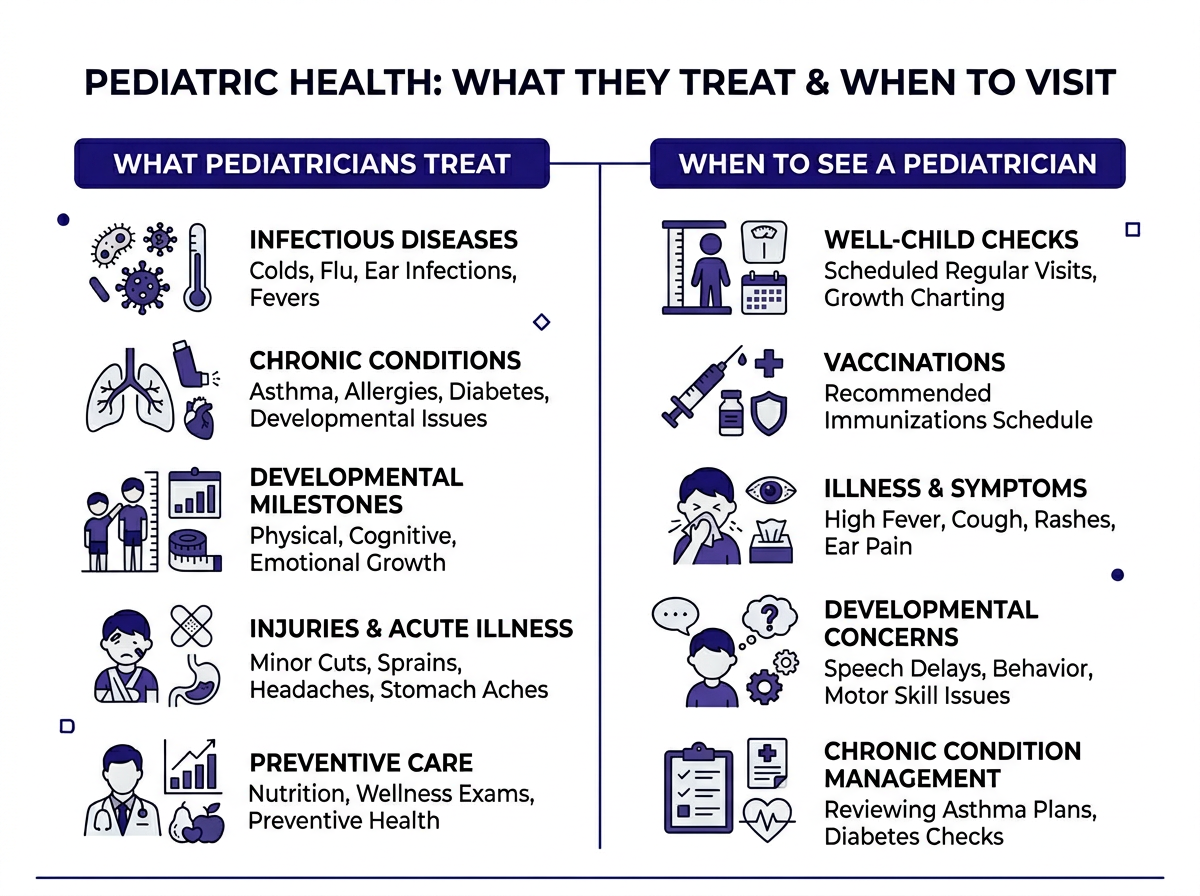
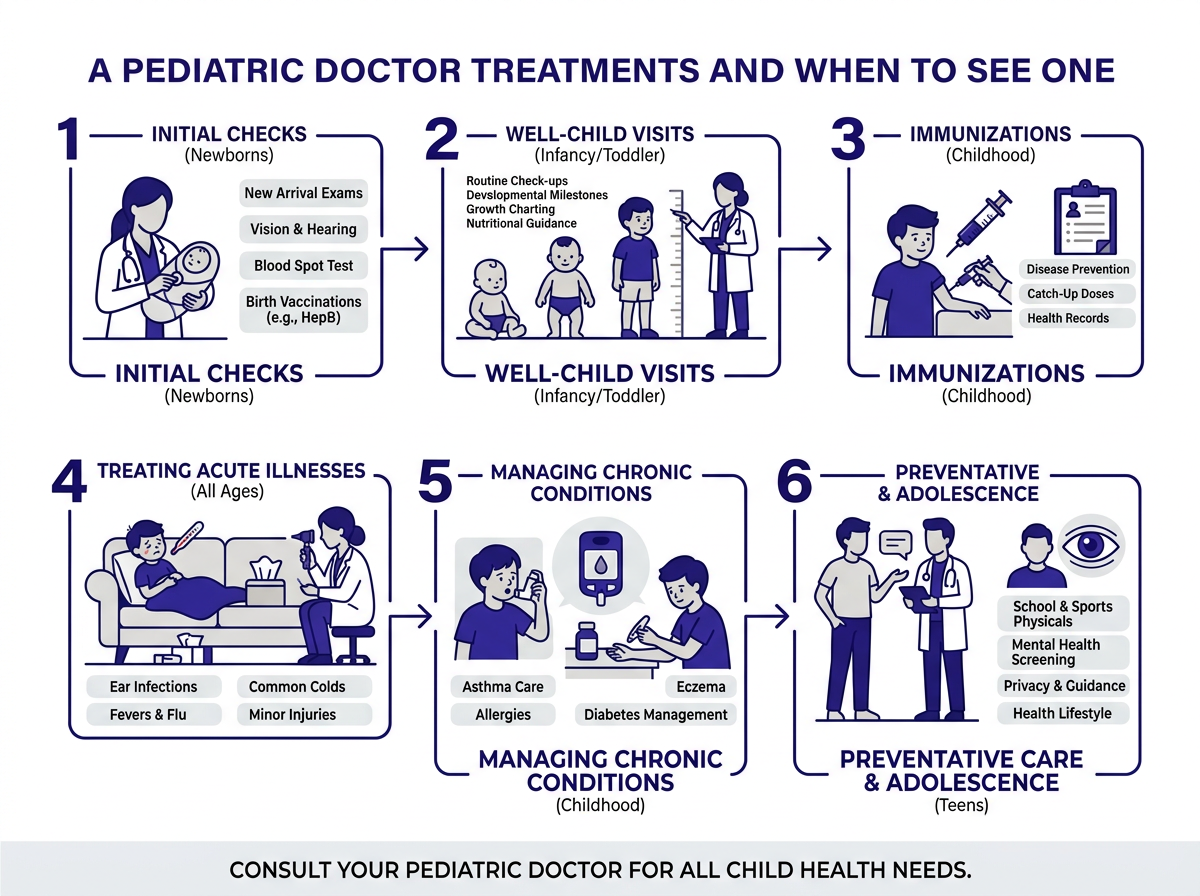
Pediatricians handle a wide range of care. Specifically, they treat and manage:
- Well-child visits: Growth tracking, developmental screening, and vaccine schedules
- Acute illness: Ear infections, strep throat, flu, RSV, croup, and stomach bugs
- Chronic conditions: Asthma, allergies, ADHD, eczema, and diabetes
- Behavioral health: Anxiety, depression, sleep issues, and developmental delays
- Newborn care: Jaundice, feeding problems, weight checks, and cord care
- Injury evaluation: Sprains, minor fractures, concussions, and wound care
- School and sports physicals: Required clearance exams for activities and enrollment
According to the American Academy of Pediatrics, children should see their doctor for about 12 well-child visits between birth and age three. After that, yearly checkups continue through the teen years.
When Should a Child See a Pediatrician?
Every child benefits from having a primary care doctor. This could be a pediatrician or a family doctor. However, certain situations make that relationship especially important.
Your child needs a pediatrician for:
- Routine well-child visits and vaccines on the AAP schedule
- Ongoing care for chronic conditions like asthma or ADHD
- Tracking growth milestones in the first five years
- Mental health concerns that need counseling referrals
- Complex medical histories that require specialist coordination
For these situations, a children’s doctor serves as your child’s medical home base. Therefore, they can spot trends in growth charts, vaccine records, and past illnesses. A one-time visit would miss these patterns.
But here’s the reality. Even after you find a great pediatrician, their office often books two to four weeks out for sick visits. In addition, most close by 5 PM and stay shut on weekends. When your child gets sick on a Saturday, that long-term bond doesn’t solve the immediate problem.
Pediatric Doctor vs. Family Doctor: Which Is Best for a Child?
When searching for a pediatric doctor near me, parents often wonder which type is best. Both pediatricians and family doctors give quality care for kids. However, their training and focus differ in key ways.
Pediatricians
Pediatricians complete a three-year residency focused entirely on children. Specifically, they study childhood diseases, growth milestones, behavioral health, and teen medicine. As a result, they bring deep expertise in conditions that affect kids.
Best for: Families who want a doctor trained only in pediatric medicine. This is especially true for children with chronic conditions or complex medical needs.
Family Medicine Doctors
Family doctors complete a three-year residency that covers patients of all ages. In contrast, they train across pediatrics, internal medicine, and geriatrics. Because of that broad scope, they can treat your entire family under one roof.
Best for: Families who prefer one doctor for everyone. This is handy for parents who want to book their own checkups alongside their children’s visits.
What About a Child Specialist?
Many parents ask: what is the difference between a pediatric doctor and a child specialist? In most cases, these terms mean the same thing. However, “child specialist” sometimes refers to pediatric subspecialists. These include pediatric heart doctors, brain doctors, and surgeons who focus on specific systems in children.
Your child’s pediatrician will refer you to one of these experts if needed. For example, a child with a heart murmur might see a pediatric heart specialist. Similarly, a child with seizures would see a pediatric brain specialist.
How to Find a Pediatric Doctor Near Me
Searching for a children’s doctor starts with a few simple steps. You want a provider who takes your insurance, works close to home, and has hours that fit your family’s schedule.
Step 1: Check Your Insurance Network
Start with your insurance company’s provider list online. Then filter results by “pediatrics” and your zip code. As a result, this step narrows your search right away to doctors who accept your plan.
Step 2: Ask for Recommendations
Other parents in your area offer the most honest reviews. In addition, their firsthand experience tells you more than any online rating. For a deeper guide on picking the right provider, read our post on how to find a good pediatrician in the Bay Area.
Step 3: Evaluate the Practice
Once you have a shortlist, check these factors:
- Office hours: Do they offer early morning, evening, or weekend slots?
- After-hours care: What happens when your child gets sick at 9 PM?
- Wait times: How long does it take to get a sick visit?
- Communication: Do they offer a patient portal, phone triage, or telehealth?
- Hospital ties: Which hospital does the practice send patients to if needed?
Step 4: Schedule a Meet-and-Greet
Many pediatric offices offer free intro visits for expecting parents or new families. Therefore, use this visit to tour the office and meet the staff. Ask the doctor about their approach to antibiotics, vaccines, and common childhood concerns. This helps you confirm you found the right kids’ doctor for your family.
The Well-Child Visit Schedule Every Parent Should Know
Your pediatrician follows a visit schedule set by the American Academy of Pediatrics. These checkups track your child’s growth, development, and overall health. Most importantly, they catch problems early when treatment works best.
Birth to 12 months: Visits at 3 to 5 days, 1 month, 2 months, 4 months, 6 months, 9 months, and 12 months. Each visit includes weight and length checks, head size, growth screening, and scheduled vaccines.
Ages 1 to 3: Visits at 15 months, 18 months, 24 months, and 30 months. In particular, these visits focus on speech, motor skills, behavioral milestones, and autism screening at 18 and 24 months.
Ages 3 to 21: Yearly well-child visits. Additionally, these include vision and hearing screening, blood pressure checks, BMI tracking, and talks about nutrition, safety, and puberty.
Your children’s doctor handles all these routine visits. However, sick visits, acute injuries, and urgent needs don’t always fit into the schedule. As a result, walk-in urgent care fills the gap when timing matters most.
Can’t Get an Appointment? When Urgent Care Is the Right Move
You found a great pediatric doctor near me for your family. Your child has a medical home. But right now, your toddler has been pulling at her ear for two days. The earliest sick visit is next Thursday. So what do you do?
This is exactly when walk-in urgent care becomes your best option. After all, many conditions get worse with delays. CityHealth Urgent Care in San Leandro sees children same-day for a wide range of issues that can’t wait.
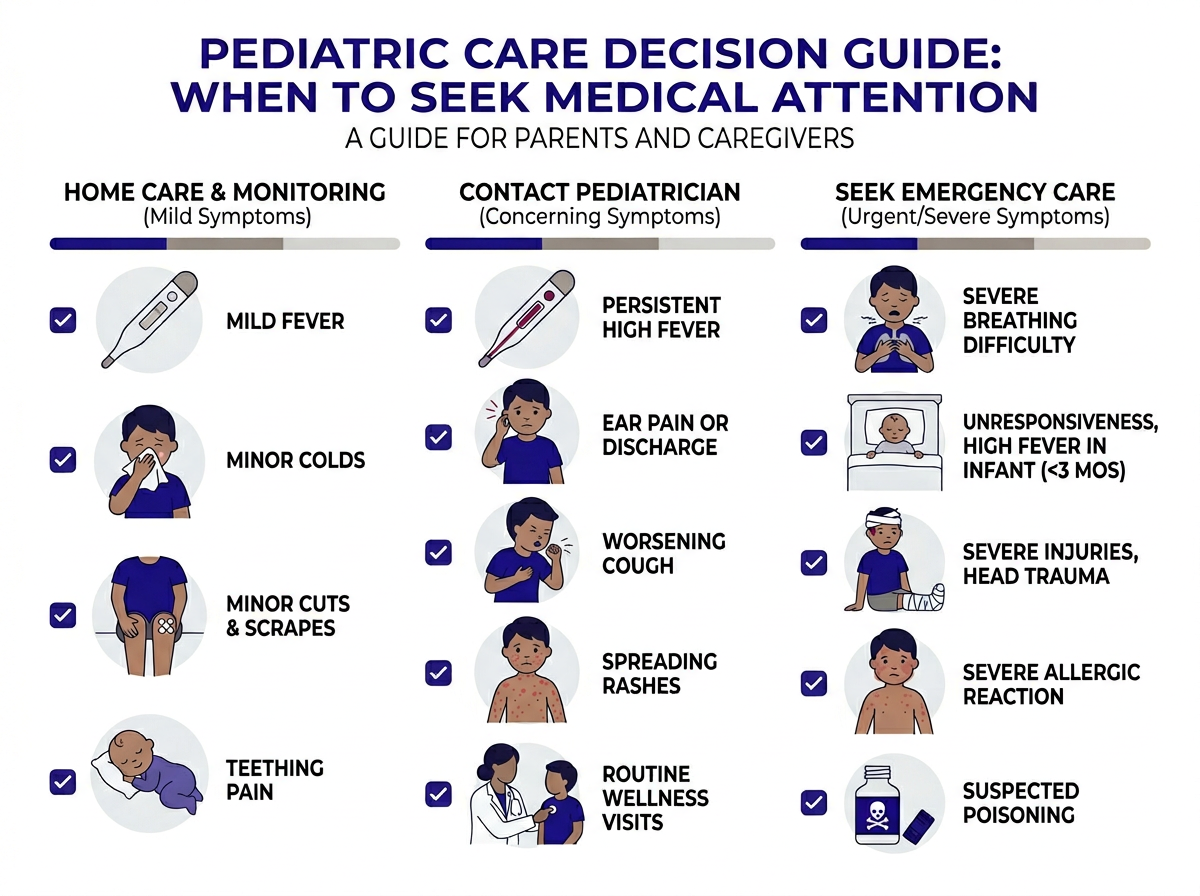
Conditions Urgent Care Treats in Children
- Ear infections: One of the most common childhood illnesses. Urgent care providers find and treat them on the spot. For details, see our guide on child ear infection treatment at urgent care.
- Fevers: A high fever in a child needs care today, not next week. Learn more about when to see a doctor for a child’s fever.
- Sore throats and strep: Rapid strep testing with results in 10 minutes. If positive, your child leaves with a prescription.
- Coughs and colds: Also, providers check whether the cough is viral, bacterial, or something more serious like pneumonia.
- Rashes: Allergic reactions, hives, eczema flares, and rashes with no clear cause.
- Minor injuries: Sprains, cuts needing stitches, and fracture checks with on-site X-rays.
- Pink eye: Bacterial pink eye requires antibiotic eye drops. Urgent care tells you which type your child has.
- Vomiting and diarrhea: Dehydration checks and treatment, especially for toddlers.
In other words, you don’t need to wait when your pediatrician is booked. CityHealth provides walk-in care for children seven days a week. For more on how we handle younger patients, visit our toddler urgent care page.
Urgent Care vs. ER for Kids
Urgent care handles the vast majority of childhood sick visits. However, some cases require an emergency room. Head to the ER if your child has:
- Trouble breathing or turning blue
- Seizures or loss of consciousness
- A severe allergic reaction with face or throat swelling
- A broken bone with visible deformity
- Head trauma with vomiting or confusion
- Fever over 100.4 in a baby under 3 months old
For everything else, urgent care saves you hours of waiting and hundreds in ER copays. In fact, the average ER visit costs $2,000 to $3,000 without insurance. An urgent care visit typically runs $100 to $250. Consequently, many parents use urgent care as their go-to when their kids’ doctor can’t see them quickly.
What to Bring to a Pediatric Doctor or Urgent Care Visit
Whether you’re visiting your regular pediatrician or walking into urgent care, being prepared helps. Specifically, bring these items:
- Insurance card: The subscriber card and your child’s Medi-Cal card if applicable
- Vaccine records: Especially key at urgent care where providers lack your child’s history
- Current medications: Everything your child takes, including dose and how often
- Allergy list: Drug allergies and food allergies
- Symptom timeline: When symptoms started, what you tried at home, and whether things got better
- Comfort items: A favorite toy or blanket to keep your child calm
At CityHealth, most visits take 30 to 60 minutes from check-in to checkout. Because providers see your child quickly, you spend less time waiting and more time starting treatment. Additionally, providers send visit notes to your child’s pediatrician so nothing falls through the cracks.
Pediatric Doctor Near Me: Building a Complete Care Plan
The smartest approach to your child’s health uses two providers. First, pair a long-term pediatrician with a walk-in urgent care backup. Here is how the two work together in practice.
Your pediatrician handles: Well-child visits, vaccines, chronic condition care, growth tracking, and school physicals when you can plan ahead.
Walk-in urgent care handles: Sudden fevers, ear infections, sore throats, injuries, and any acute illness that can’t wait. Most importantly, urgent care providers send visit notes to your pediatrician so the record stays complete.
As a result, this two-provider approach means your child never goes without timely care. You don’t skip treatment because the calendar says “no openings.” Furthermore, you don’t sit in an ER for a problem that urgent care resolves in under an hour.
Get Same-Day Pediatric Walk-In Care at CityHealth
You searched for a pediatric doctor near me because your child needs care. If your pediatrician can’t see your kid today, CityHealth Urgent Care in San Leandro is ready to help. We treat children for fevers, ear infections, sore throats, rashes, and minor injuries. Walk in seven days a week with no appointment.
Walk In for Same-Day Pediatric Care
CityHealth Urgent Care | San Leandro, CA
Open 7 days a week | No appointment needed
Most insurance accepted including Medi-Cal