Doctors Near Me No Insurance: Your Guide to Affordable Same-Day Care
About 27 million Americans have no health insurance. If you are one of them, searching for doctors near me no insurance probably feels stressful. After all, you need care today, but you worry about a surprise bill that wrecks your budget. Here is the reality: a basic doctor visit without insurance costs $150 to $400 at most private practices. Meanwhile, an ER visit averages $750 or more. However, low-cost options exist. For instance, walk-in urgent care clinics, community health centers, and telehealth services bring the cost down to $100 to $200 for most visits. You just need to know where to look.
Medically reviewed by Sean Parkin, PA — CEO & Founder, CityHealth
What Does It Cost to See a Doctor Without Insurance?
Before you pick a provider, you need to understand the price range. Indeed, not every medical visit carries the same price tag. The type of clinic you choose sets how much you pay out of pocket. As a result, picking the right setting saves you hundreds of dollars.
Cost Breakdown by Facility Type
- Primary care office visit: $150 to $400. Most private practices charge on the higher end for uninsured patients. In addition, they often require an appointment weeks out.
- Urgent care clinic: $100 to $250, with a national average around $165. This covers the visit itself. However, labs, X-rays, and medicines cost extra but remain far cheaper than hospital prices.
- Emergency room: $750 on average, though bills often exceed $1,000 to $3,000. Therefore, the ER should be your last resort for non-emergency problems.
- Community health center: $20 to $80 on a sliding fee scale based on your income. However, wait times vary, and same-day open slots are limited.
- Telehealth visit: $50 to $100 for a virtual visit. Notably, this works well for simple conditions like sinus infections or UTIs.
- Retail clinic (CVS MinuteClinic, Walgreens): $60 to $100 for basic services. Of course, these clinics handle a narrow list of conditions.
For context, consider doctor visit costs without insurance at CityHealth. The clinic posts clear prices so you know the total before you walk in.
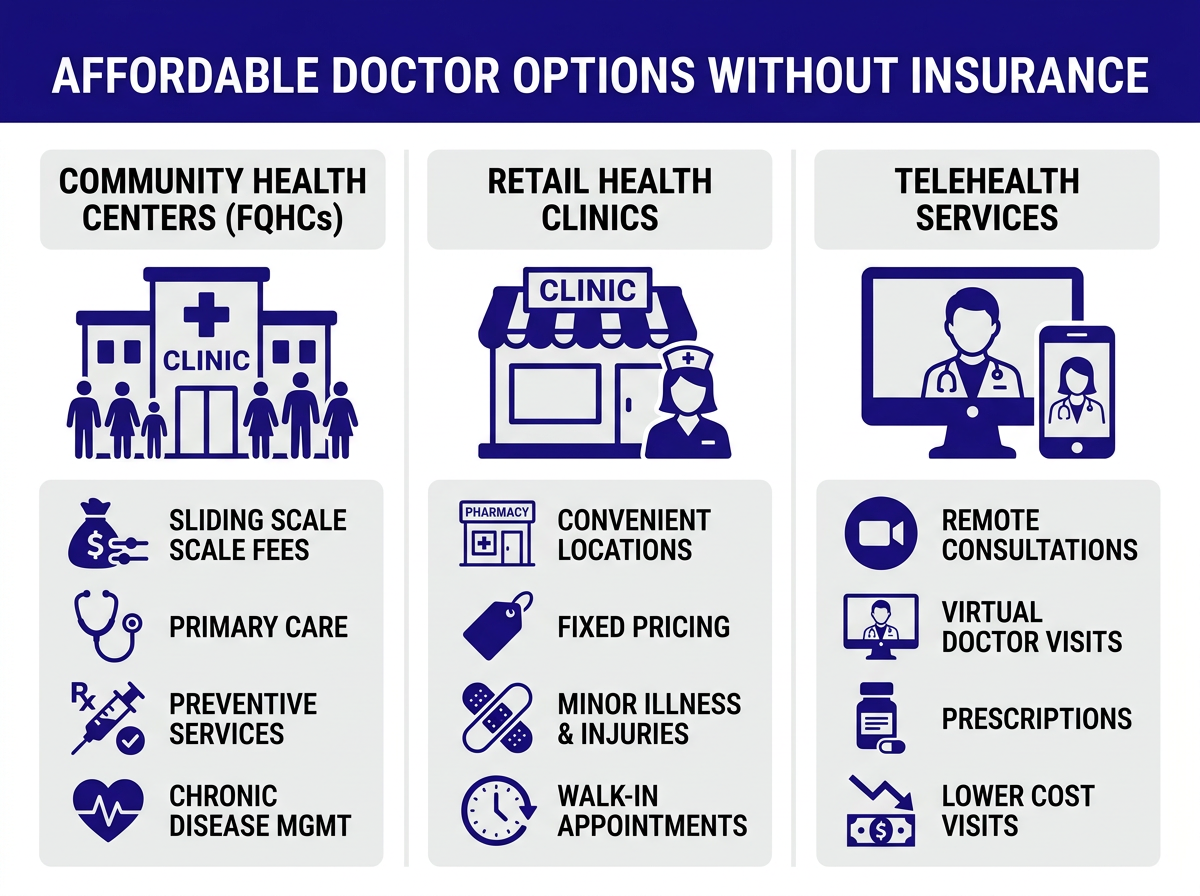
Finding Doctors Near Me No Insurance: 5 Real Options
In fact, you have more choices than you think. Each option below works differently, so the best fit depends on your budget, your condition, and how fast you need care. Ultimately, any of these paths beats an expensive ER visit for a non-emergency problem.
1. Walk-In Urgent Care Clinics
First, urgent care clinics treat most of the same conditions your primary care doctor handles. They see patients on a walk-in basis, which means you get treated the same day. Furthermore, most clinics welcome patients without insurance and offer a self-pay rate upfront.
Best for: Sore throats, ear infections, UTIs, sprains, rashes, minor injuries, flu symptoms, and physical exams. In addition, many clinics offer X-rays, rapid strep tests, and basic lab work on site.
Typical cost: $100 to $250 per visit. Notably, some clinics charge less than $150 for simple visits. Because urgent care avoids hospital overhead, prices stay lower than the ER.
If you live in the East Bay, CityHealth operates as a walk-in clinic Oakland area residents trust for clear self-pay pricing. Most importantly, there are no hidden fees and no surprise bills weeks later.
2. Community Health Centers (FQHCs)
Second, Federally Qualified Health Centers serve patients no matter their ability to pay. These centers use a sliding fee scale tied to your household income. As a result, if you earn below the federal poverty level, your visit might cost as little as $20.
Best for: Ongoing primary care, chronic disease management, preventive screenings, and dental or mental health services.
Typical cost: $20 to $80 depending on income. Besides the visit fee, you will need to provide proof of income at your first visit.
Drawback: Many FQHCs have long wait times. Consequently, getting an appointment can take weeks, especially for new patients. If you need care today, this option might not work. However, you can find a center near you through the HHS community health center locator.
3. Telehealth Services
Next, virtual doctor visits grew rapidly after 2020, and prices dropped along with them. Currently, several platforms offer visits for $50 to $100 without insurance. You connect with a provider through your phone or computer and describe your symptoms. Then you receive a diagnosis and prescription if needed.
Best for: Sinus infections, cold and flu symptoms, UTIs, skin rashes, medicine refills, and mental health visits.
Typical cost: $50 to $100 per visit. Furthermore, some subscription services bring the cost below $30 per month for unlimited visits.
Drawback: The provider cannot perform a physical exam, run labs, or take X-rays. So telehealth works only for conditions that a provider can diagnose through talk and a visual check.
4. Retail Clinics
Also, CVS MinuteClinic, Walgreens, and similar retail health clinics station nurse practitioners inside stores. They handle a short list of conditions and offer vaccines, basic screenings, and wellness checks.
Best for: Flu shots, strep tests, blood pressure checks, and minor skin issues.
Typical cost: $60 to $100 for most services.
Drawback: Limited scope. For instance, if your condition requires lab work, imaging, or anything beyond a basic check, the retail clinic will refer you elsewhere. As a result, that referral adds time and money to your care.
5. Free Clinics and Volunteer Groups
Finally, some nonprofit groups run free clinics for uninsured patients. In fact, these clinics rely on volunteer doctors and donations. Services vary by location. However, many provide basic primary care, chronic disease care, and preventive screenings at no cost.
Best for: Patients with very low income who need routine care and can wait for an appointment.
Typical cost: Free, though donations are welcome.
Drawback: Open slots are limited. Indeed, most free clinics operate on limited schedules with long wait lists. As a result, same-day walk-in care is rare at these clinics.
The Cheapest Way to See a Doctor Without Insurance
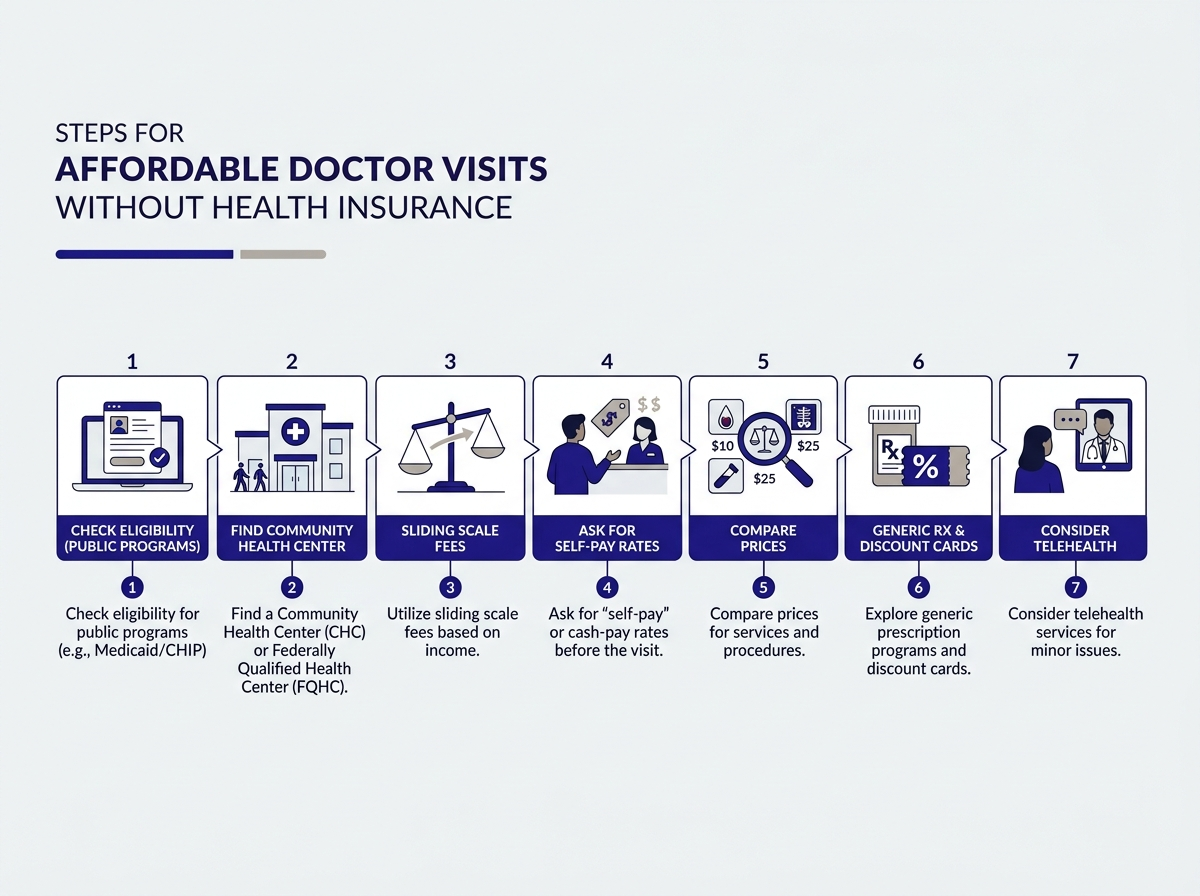
If cost is your top concern, these strategies help you pay less at any type of clinic. In fact, many people overpay simply because they do not ask about discounts or compare prices before they go.
Ask About Self-Pay Discounts
Many clinics offer a cash-pay or self-pay discount that knocks 20% to 40% off the standard rate. Because providers prefer direct payment, it cuts out insurance paperwork and delays. So always ask about the self-pay price before your visit. At CityHealth, for example, the self-pay rate is posted clearly so you know exactly what you owe.
Compare Prices Before You Go
Notably, prices vary widely between clinics, even within the same city. For example, a strep test at one urgent care might cost $75, while another charges $200. So call ahead or check websites for posted pricing. Providers with clear prices list their self-pay rates online. In contrast, clinics that refuse to share pricing before your visit often charge more.
Use Prescription Discount Programs
After your visit, you may need a prescription. Without insurance, medicines can cost a lot. However, services like GoodRx, RxSaver, and Cost Plus Drugs offer coupons that cut drug prices by 50% to 80% at major pharmacies. Also, your provider can prescribe generic options that cost a fraction of brand-name drugs.
Skip the ER for Non-Emergencies
Above all, this point deserves repeating. An ER visit for a sore throat or a sprained ankle costs five to ten times more than the same treatment at urgent care. Besides the higher cost, the ER also means longer wait times. Staff handle life-threatening cases first. Unless you have chest pain, trouble breathing, heavy bleeding, or signs of a stroke, choose urgent care. As a result, you will save hundreds of dollars and get treated faster.
Look Into Healthcare Marketplace Plans
If you expect to need regular medical care, a marketplace insurance plan may save you money over time. Open enrollment runs from November through January each year. In addition, special enrollment periods open after life events like losing a job or moving. Furthermore, many people qualify for subsidies that bring monthly premiums below $50. Even a basic plan covers preventive care at no extra cost and caps your out-of-pocket spending.
What to Expect at a Walk-In Visit Without Insurance
Many people avoid the doctor because they fear surprise costs or judgment for not having insurance. However, at a quality walk-in clinic, neither of those things happens. Here is what a typical self-pay visit looks like.
Step 1: Check in. First, you provide your name, contact details, and reason for your visit. Then the front desk confirms the self-pay rate and any extra costs for labs or imaging before your exam. No surprises.
Step 2: See the provider. Next, a physician, physician assistant, or nurse practitioner examines you, asks about your symptoms, and runs any necessary tests. The visit usually takes 15 to 30 minutes.
Step 3: Get your diagnosis and treatment plan. Then, the provider explains what they found and prescribes treatment. If you need medicine, they send the prescription to your preferred pharmacy.
Step 4: Pay at checkout. Finally, you pay the agreed-upon price at the front desk. The clinic gives you an itemized receipt. No bills arriving weeks later.
In fact, the entire process, from walking in to walking out, often takes under an hour. Compare that to most ER visits, where non-emergency patients wait two to four hours on average. That is much faster.
Doctors Near Me No Insurance in San Leandro and Oakland
If you live in the San Leandro, Oakland, or greater East Bay area, CityHealth Urgent Care provides affordable same-day care for uninsured patients. Indeed, the clinic was built around the idea that quality healthcare should not depend on your insurance status.
Why Uninsured Patients Choose CityHealth
- Transparent self-pay pricing. You know the cost before your visit. No hidden fees. No surprise bills.
- Walk-in hours seven days a week. Mon 10am-7pm. Tue-Fri 9am-7pm. Sat-Sun 9am-5pm.
- Broad services on site. Sick visits, physical exams, X-rays, lab work, STI testing, TB testing, pediatric care, and more.
- Fast treatment. Most patients get in and out within an hour.
- Skilled providers. The medical team handles thousands of walk-in visits each year for conditions ranging from strep throat to fractures.
CityHealth is located at 201 Dolores Ave, San Leandro, CA 94577. In addition, the clinic serves patients from Oakland, Hayward, Castro Valley, and surrounding East Bay communities. If you need a walk-in doctor near me, the clinic welcomes you with or without insurance.
For Oakland residents, CityHealth also offers urgent care without insurance in Oakland at the same clear rates.
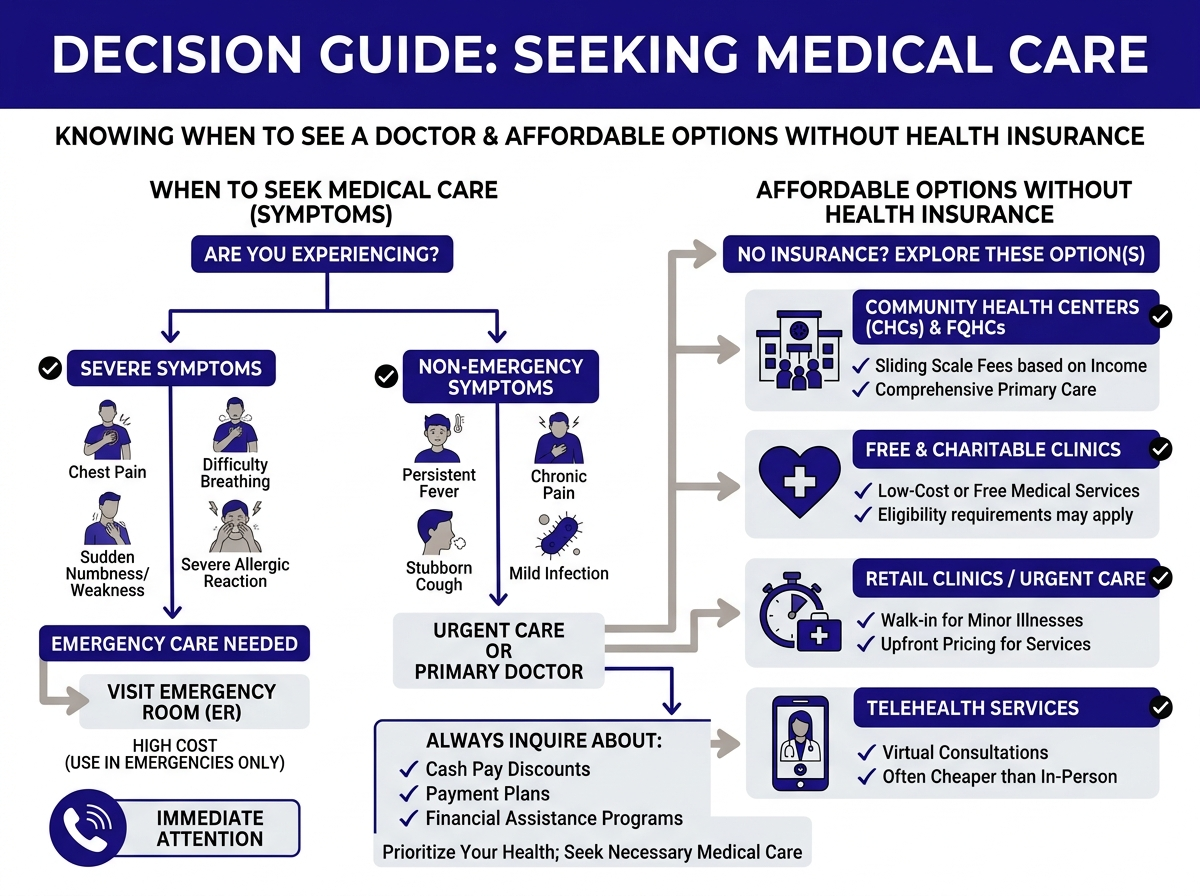
When to Go to Urgent Care vs. the ER Without Insurance
Choosing the wrong clinic costs you money and time. Therefore, this quick guide helps you decide.
Go to Urgent Care For:
- Sore throat, cough, cold, or flu symptoms
- Ear infections or sinus infections
- Urinary tract infections
- Minor cuts that may need stitches
- Sprains, strains, or minor fractures
- Rashes, bug bites, or minor allergic reactions
- Stomach pain, nausea, or diarrhea
- Back pain or muscle injuries
- Pink eye or eye irritation
- Physical exams or lab work
Go to the ER For:
- Chest pain or difficulty breathing
- Severe bleeding that will not stop
- Signs of stroke (facial drooping, arm weakness, speech difficulty)
- Head injuries with loss of consciousness
- High fever in infants under 3 months
- Severe allergic reactions (anaphylaxis)
- Broken bones with visible deformity
For every condition in the urgent care column, you save $500 or more by choosing a walk-in clinic over the ER. Especially without insurance, that difference hits your wallet directly.
No Insurance? Walk In Today for Affordable Same-Day Care
Searching for doctors near me no insurance does not have to end in frustration. In fact, affordable, same-day medical care exists at walk-in urgent care clinics like CityHealth. You pay a clear price, see a provider today, and leave with a treatment plan. Most importantly, there is no insurance paperwork, no weeks of waiting, and no surprise bills.
Walk In Today — No Insurance Needed
CityHealth Urgent Care · 201 Dolores Ave, San Leandro, CA 94577 · (510) 984-2489
Open 7 days a week. Walk ins welcome. Self-pay accepted.