

Knowing how to find a good doctor is harder than it sounds — and most advice on the topic is too vague to help. “Ask friends for referrals” and “check if they take your insurance” are true, but they are incomplete. However, this guide gives you the actual steps. First, you will learn how to find a good doctor in your area. Second, you will learn what red flags to watch for. In addition, you will learn how to check a doctor’s background and what to do when you need care before you have found the right fit.
Medically reviewed by Sean Parkin, PA, CEO & Founder — Urgent Care
How to Find a Good Doctor: Where to Start
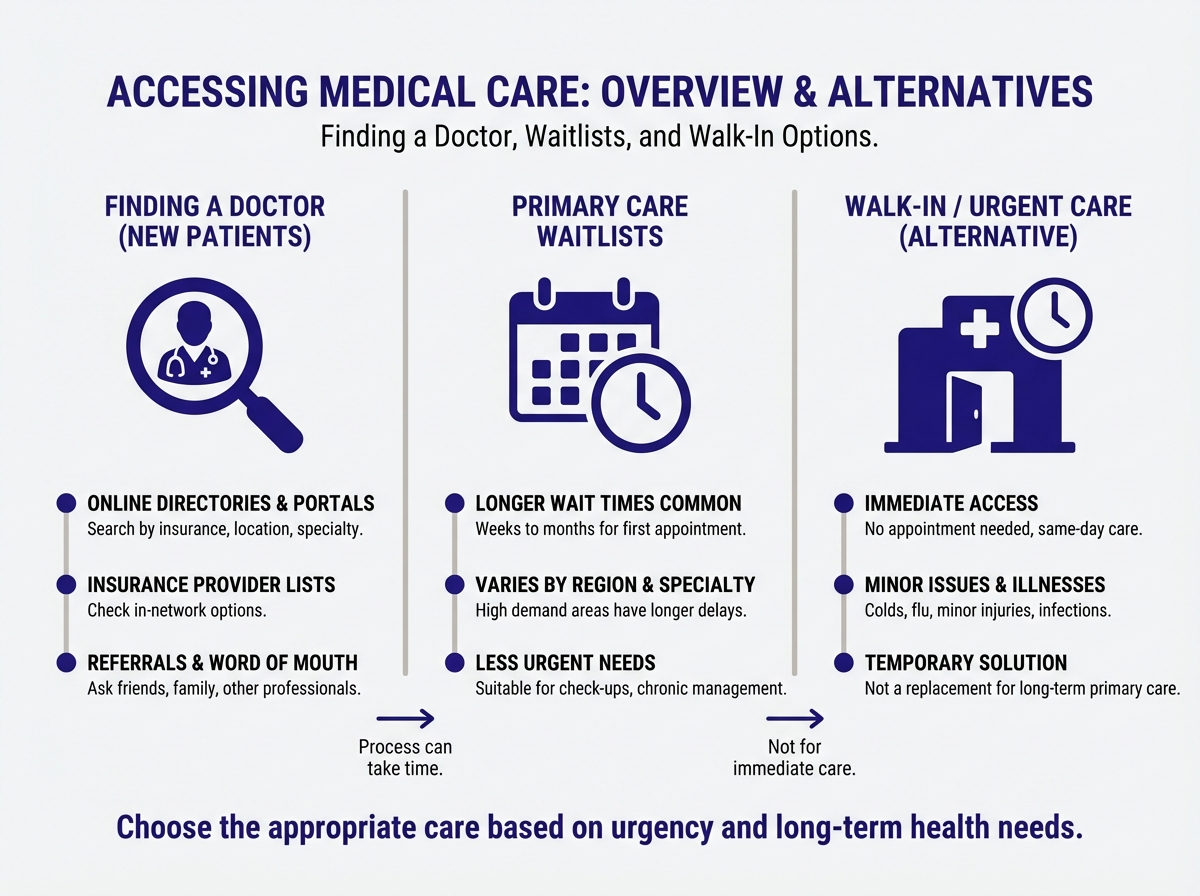
Before you can find a good doctor, you need to know what kind of doctor you need. For most adults, that means a primary care provider. Specifically, that could be a family medicine doctor, an internal medicine doctor, or a general practitioner. These doctors handle routine checkups, chronic disease management, and common illnesses. They also refer you to specialists when you need one.
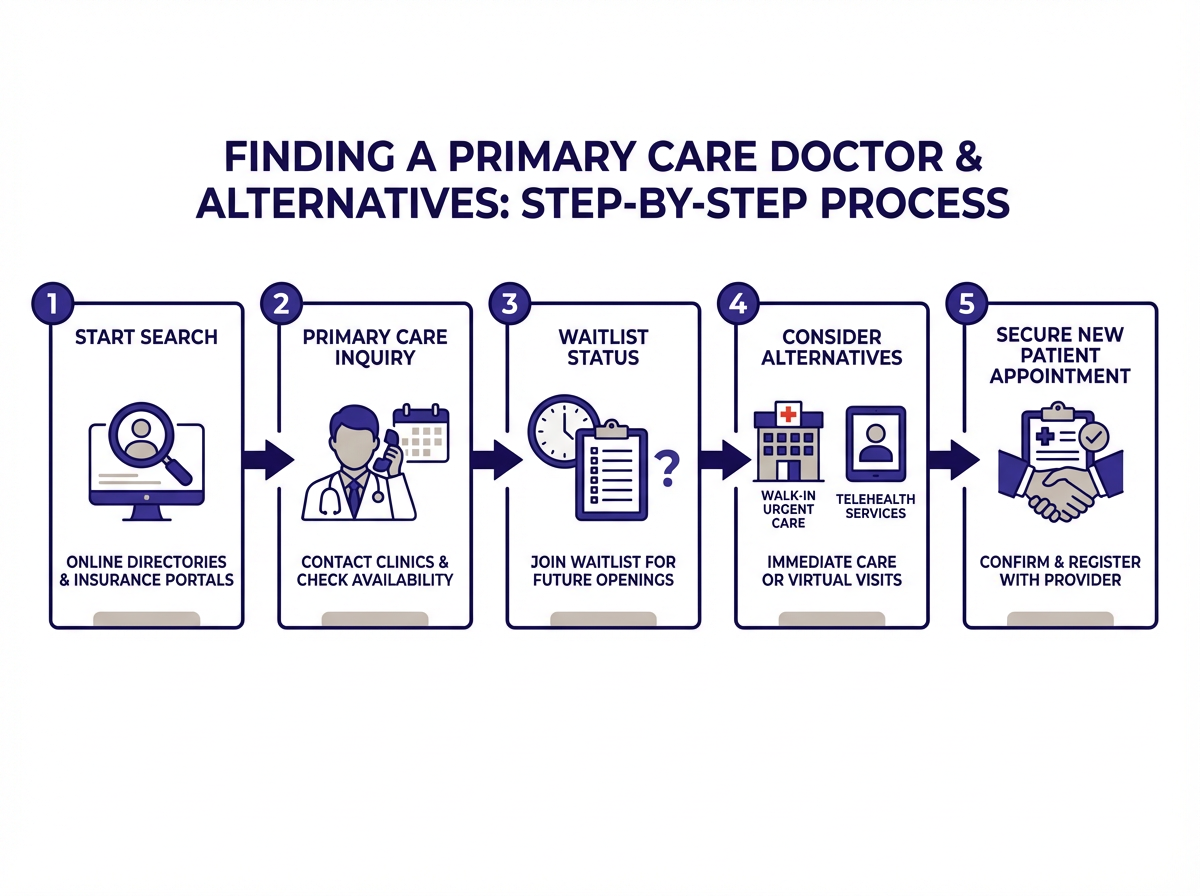
Once you know the type, use these starting points to build your list of candidates:
- Your insurance company’s provider directory: This is the most practical first step, because it filters for in-network providers right away. Go to your insurer’s website and search for primary care doctors in your zip code.
- Zocdoc or similar scheduling platforms: These tools show real-time availability. They also let you filter by insurance, specialty, and location. Moreover, they show whether a doctor is accepting new patients.
- Hospital or health system directories: Many large hospital systems have employed doctor networks. Searching a major hospital system’s website gives you doctors who are part of a coordinated care network.
- Personal referrals: Ask friends, coworkers, or family members — especially those with similar health needs as you. A referral from someone who has actually seen the doctor is more useful than an anonymous review.
However, don’t stop at building a list. The next step is evaluating who’s on it.
What to Look for in a Doctor
The best doctor for you is not the one with the most five-star reviews. Instead, you are looking for someone with the right training, communication style, and availability. Here is what actually matters:
Board certification
Board certification means a doctor has finished their residency training and passed a tough exam in their specialty. It is the baseline standard you should require. Because certification needs ongoing maintenance, it also shows that a doctor stays current in their field. We cover how to check this in the next section.
Communication and listening
A good doctor listens before they talk. They ask follow-up questions and explain their reasoning in plain language. They also make sure you don’t feel rushed. You will get a sense of this quickly — often in the first visit. For example, if you leave the office confused about your diagnosis or next steps, that is a warning sign.
Availability and accessibility
Can you get a sick appointment within a day or two? Does the practice have a patient portal for messaging? Is there an after-hours line? In fact, what happens when you are sick on a Saturday and the office is closed? These practical questions matter as much as clinical skill.
Cultural competency and language
Some patients speak a language other than English. Others have specific cultural health needs. For these patients, finding a doctor who speaks their language or understands their background is more than a preference — it improves health outcomes. Also, many insurance directories let you filter by language spoken.
Hospital affiliations
If you manage a chronic condition or have a family history of complex illness, hospital affiliations matter. Specifically, you want to know which hospital your doctor can admit you to — and whether that hospital is a good one. Check their affiliations when reviewing their profile.
How to Check If a Doctor Is Board Certified
Checking a doctor’s background takes about two minutes. It also gives you real confidence in your choice. Here is how to do it:
- For board certification: Go to the American Board of Medical Specialties (ABMS) verification tool. Enter the doctor’s name and check their board certification status. The ABMS oversees 24 specialty boards and is the authoritative source.
- For medical license: Every state has a medical board that publishes doctor license status and any disciplinary actions. Search “[your state] medical board doctor lookup” to find the right database. For example, in California that is the Medical Board of California’s online license check tool.
- For malpractice history: Some states include malpractice settlements in their public databases. The information varies by state, but it is worth checking. A single settlement does not automatically disqualify a doctor — context matters. However, a pattern of complaints is a genuine red flag.
In addition, the HHS and CMS databases contain public information about providers who take Medicare. This can help you confirm that a provider’s training is current and they are in good standing with federal programs.
How to Evaluate Doctor Reviews Without Getting Misled
Online reviews for doctors are useful, but they need some reading between the lines. Most patients who leave reviews are either very happy or very unhappy. As a result, the average star rating can be skewed in either direction. The satisfied middle rarely bothers to write a review.
Here is how to read doctor reviews more carefully:
- Read the text, not just the stars. Look for patterns across multiple reviews. For example, do several people say the doctor rushes? Do several people say they felt heard and well-informed? Specific, repeated themes are meaningful. Individual complaints often are not.
- Check multiple platforms. Healthgrades, Google, Zocdoc, and Yelp each have their own review populations. A doctor who looks great on one platform might have consistent complaints on another.
- Consider the complaint type. Reviews about wait times or front-desk staff tell you about the practice’s operations. On the other hand, reviews that say “the doctor didn’t listen” tell you something about the doctor specifically.
- Look at volume. A 4.8-star average from 6 reviews is less reliable than a 4.3-star average from 200 reviews. In fact, volume matters just as much as the rating itself.
Moreover, HIPAA prevents doctors from responding to reviews in detail. Therefore, a one-sided negative review may not show the full picture. On the other hand, a doctor who responds to negative reviews in a professional and open way is showing you something positive about their character.
Red Flags to Watch For
Some warning signs are worth taking seriously. Here is what to look for when evaluating a doctor:
- Dismissiveness: A doctor who waves off patient concerns without a proper look is not practicing good medicine. This is especially common with pain, mental health symptoms, and conditions that affect women or minority patients more often.
- Overprescribing or under-explaining: Any provider who writes prescriptions without explaining why — or what alternatives exist — is cutting corners in a way that affects your health.
- Impossible wait times for sick appointments: If a practice cannot see a sick patient within 24 to 48 hours, you will end up at urgent care or the ER anyway. That is not a dealbreaker, but it is worth knowing in advance.
- Unclear billing or surprise costs: Good practices are upfront about costs and billing. Therefore, consistent surprise bills or a refusal to give cost estimates before services is a red flag.
- Disciplinary history: Check the state medical board. Sanctions, license suspensions, or a clear pattern of malpractice settlements are serious concerns.
First, trust your instincts after a first visit. If something felt off, it is fine to find a different provider. You are not obligated to stay with a doctor who does not feel like a good fit.
Confirming Insurance Before You Go
Confirming insurance before your first visit saves you from unexpected bills. Insurance provider directories are not always current. Because of this, a doctor listed as in-network may have since left your plan. Call the doctor’s office directly and confirm two things: that they are currently in-network with your specific plan, and that they are accepting new patients.
Insurance networks are specific. For example, a provider may be in-network for your insurer’s HMO plan but out-of-network for the PPO. They may also be in-network at one location but not another. Always confirm the specific plan name, not just the insurance company name.
In addition, ask about co-pays and how the practice handles referrals if you have an HMO. Some HMO plans require you to get referrals through your primary care doctor before any specialist visit. Knowing this in advance prevents delays later.
What to Do While You Search for a Good Doctor
Finding the right doctor takes time — and meanwhile, you still need care. In many areas, new patient wait times of two to six weeks are common for primary care. You should not have to put off a health issue while you wait for an opening.
That is where CityHealth urgent care comes in. CityHealth is a walk-in clinic that sees patients the same day for most conditions a primary care doctor handles — no appointment, no waiting weeks, no referral needed. Specifically, CityHealth handles:
- Acute illnesses — coughs, sore throats, UTIs, fevers, flu, COVID
- Minor injuries — sprains, cuts, wound care
- Annual physicals and preventive screenings
- Lab work and testing, including bloodwork and rapid tests
- Chronic condition monitoring — blood pressure checks, medication refills
- STI testing and sexual health
Therefore, if you need to be seen today while you are still searching for a long-term primary care doctor, CityHealth gives you quality care right now. You can also use a same-day doctor appointment at CityHealth as a bridge until your new doctor is ready to see you.
In addition, if you have already found a doctor but they cannot fit you in for days, a walk-in doctor visit at CityHealth gets you the attention you need today. We accept most major insurance plans and offer clear self-pay pricing if you do not have coverage yet.
Looking for a doctor who is accepting new patients? See our guide on finding a doctor near you who is accepting new patients for more resources.
Frequently Asked Questions
How do I find a good doctor in my area?
Start with your insurance company’s provider directory to find in-network options. Then use platforms like Zocdoc or Healthgrades to check availability, read reviews, and confirm the practice is accepting new patients. Also, confirm board certification through the ABMS website, check the state medical board for license status, and call the office to verify current insurance coverage before your first visit.
What should I look for in a doctor?
Look for board certification in their specialty and a communication style that makes you feel heard. Also look for reasonable availability for sick appointments, clear billing practices, and no disciplinary history on the state medical board. Beyond training and background, the doctor’s ability to listen and explain is one of the most important factors for good health outcomes.
How do I check if a doctor is board certified?
Go to the American Board of Medical Specialties (ABMS) website at abms.org and use their free online check tool. Enter the doctor’s name and specialty to confirm their certification status. You can also check your state medical board’s website to verify their license is active and in good standing.
What if I need care while I’m still searching for a doctor?
Walk-in urgent care is a practical solution while you search for a primary care provider. CityHealth sees patients the same day for most common illnesses, injuries, physicals, and lab work — no appointment needed. It is a good option for immediate care needs and a useful bridge until your new doctor is ready to see you.