
Dehydration: ER or Urgent Care? When Same-Day Care Is Enough and When It Is Not
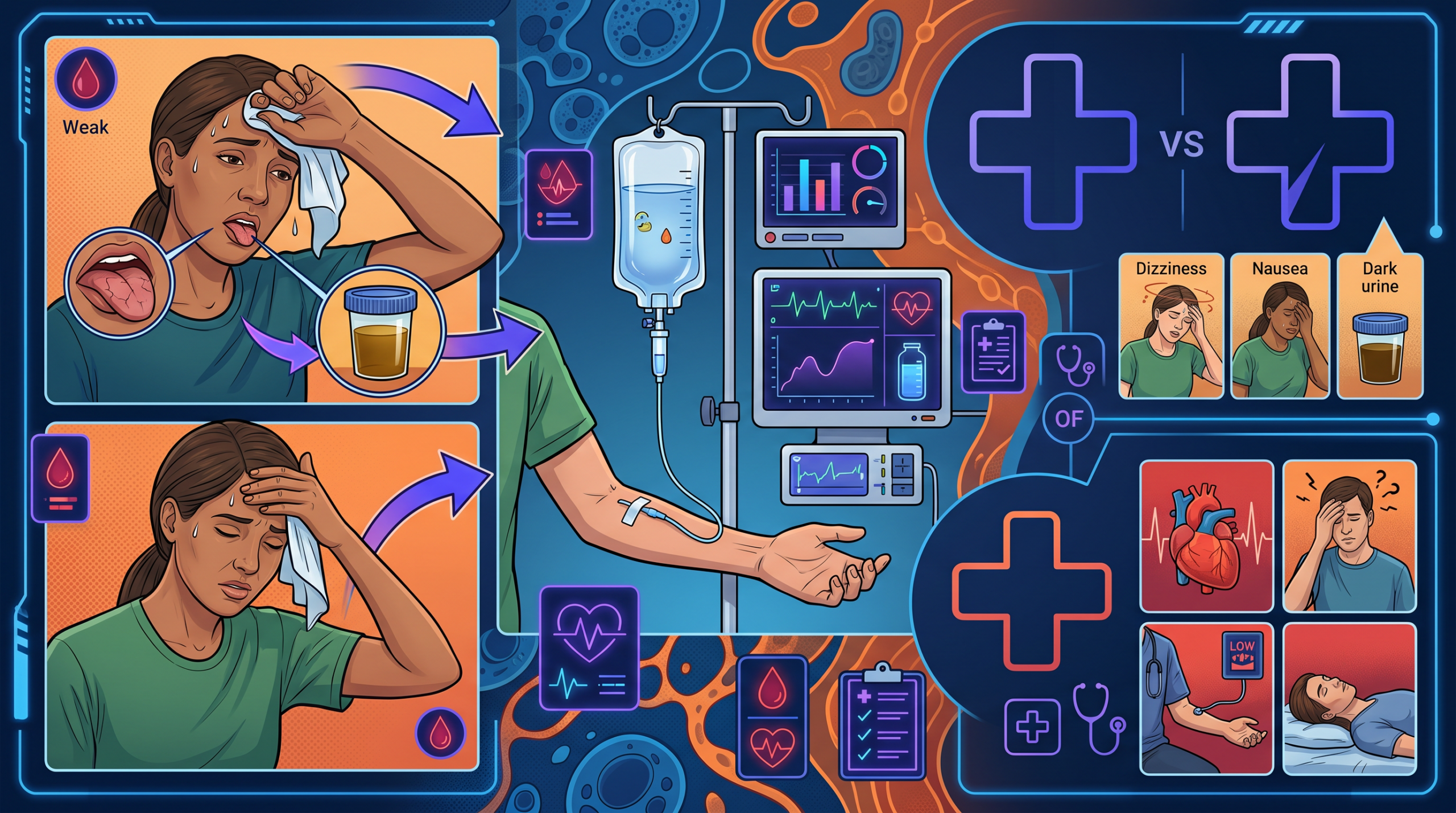
You have been vomiting since morning. Maybe you spent the afternoon in the heat and your head is pounding. Either way, you need fluids. The choice between dehydration ER or urgent care affects your wait time, your bill, and your level of care. So, this guide helps you decide fast.
Mild, Moderate, or Severe: The Degree Changes Everything
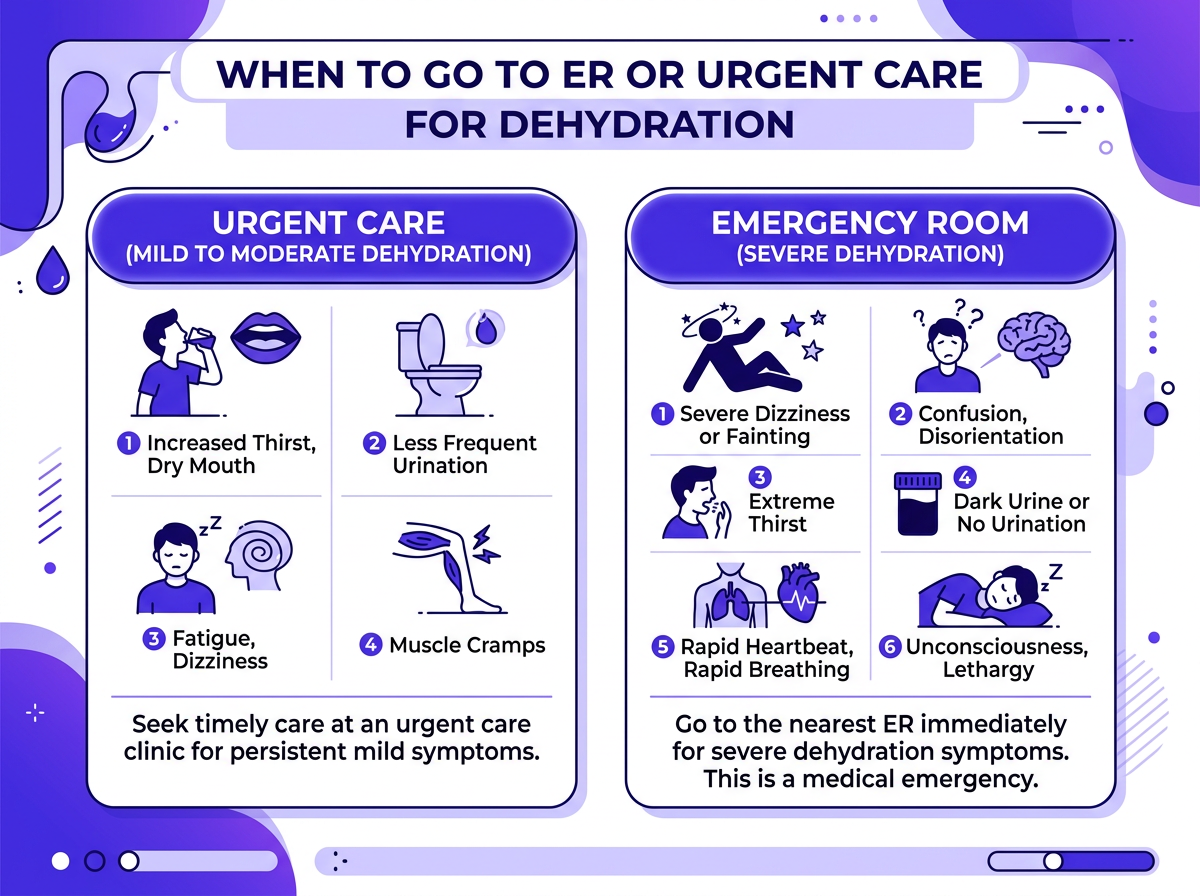
Dehydration exists on a spectrum. Your body loses water through sweat, vomiting, diarrhea, and heat. As a result, how much you have lost shapes the care you need.
Mild dehydration signs include:
- Thirst
- Darker yellow urine than normal
- Dry mouth or sticky saliva
- Slight fatigue
Moderate dehydration signs include:
- A headache that does not clear with water
- Dizziness or lightheadedness on standing
- Reduced urination
- Muscle cramps
- Nausea that makes drinking fluids hard
Severe dehydration signs include:
- Confusion or disorientation
- Rapid or weak heartbeat
- Sunken eyes
- No urination for 8 or more hours
- Skin that stays tented when pinched
- Fainting or unresponsiveness
According to the National Library of Medicine, severe dehydration is a medical emergency. In other words, do not wait for symptoms to worsen before you decide where to go.
Dehydration ER or Urgent Care: Signs That Point to Urgent Care
Most adults with dehydration do not need an emergency room. If you are alert, your heart rate feels normal, and you have urinated in the past few hours, urgent care can handle your case well.
Urgent care is the right fit if you have:
- Vomiting or diarrhea lasting less than 24 hours
- Heat exhaustion without loss of consciousness
- A headache and dizziness after sun or heat exposure
- Nausea that stops you from keeping fluids down by mouth
- A suspected electrolyte imbalance after hard exercise
- Mild to moderate dehydration in a child over 12 months who is still alert
Urgent care sits between a standard clinic and an ER in capability. As a result, it handles most moderate dehydration cases without long waits or high costs. The team can run a basic metabolic panel to check your sodium, potassium, and kidney function. They can also give IV fluids with electrolytes and monitor you until you are stable.
For more detail on that visit, read our guide on urgent care for dehydration.
Dehydration ER or Urgent Care: Signs That Require the ER
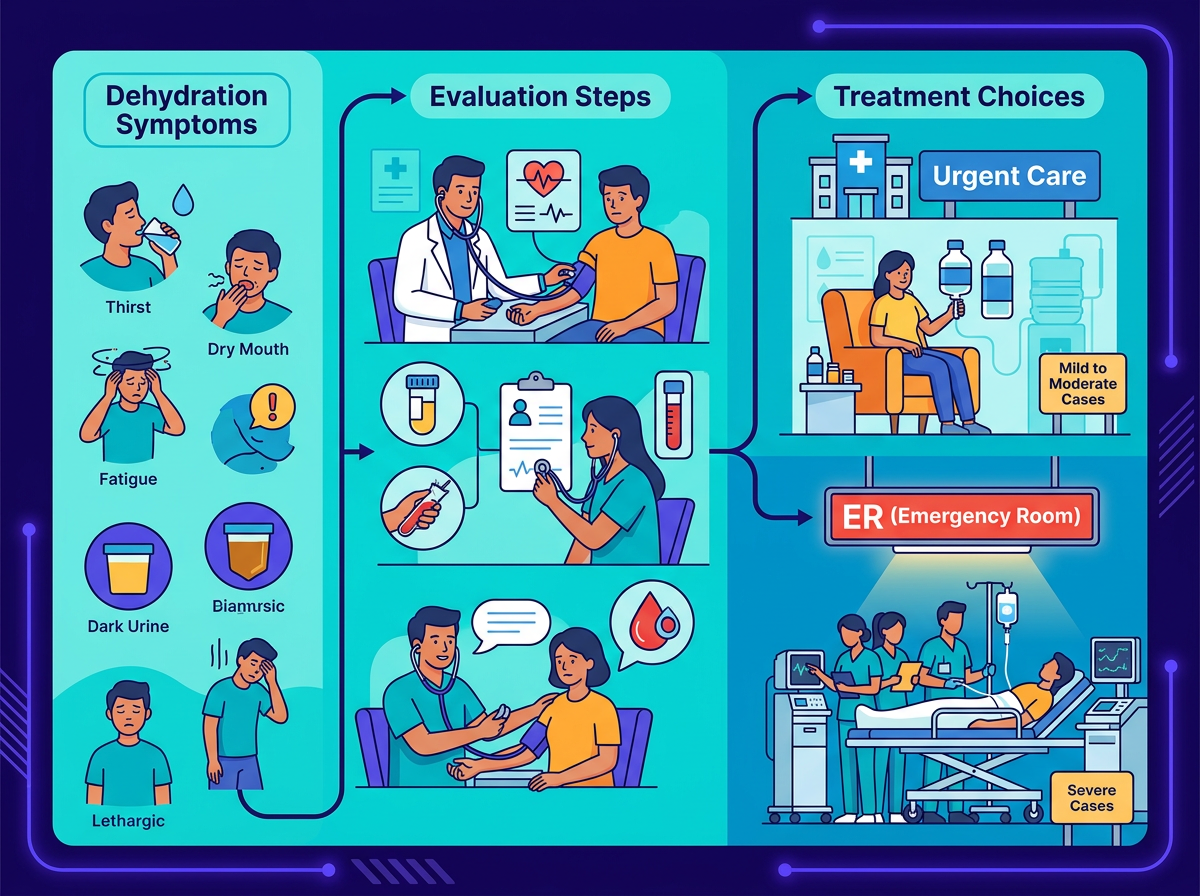
Some symptoms call for emergency care right away. In those cases, do not drive yourself. Instead, call 911 or have someone bring you to the nearest ER if you notice any of these:
- Confusion, altered mental status, or unresponsiveness
- Rapid or irregular heartbeat, or chest pain
- No urination for 8 or more hours
- Fever above 103 F (39.4 C)
- Bloody vomit or bloody stool
- Fainting or a seizure
- Signs of heatstroke: hot, dry skin with no sweating despite a high body temperature
These signs point to severe fluid loss or organ stress. In fact, urgent care does not carry the monitoring equipment or specialist backup that an ER provides for cases like these.
Also, certain health conditions raise the risk of serious complications. If someone has kidney disease, is on dialysis, or has uncontrolled diabetes, go to the ER. The same applies if someone is pregnant and cannot keep any fluid down. These conditions need closer monitoring than urgent care can offer.
For infants under 6 months, go directly to the ER. Also, any toddler with a sunken fontanelle, no tears when crying, or extreme limpness needs emergency care right away. Do not wait to see if they improve.
A Simple Three-Question Test
If you feel sick and need to decide fast, run through these three questions:
- Can you answer a simple question correctly right now? If not, go to the ER.
- Have you urinated at least once in the last 8 hours? If not, go to the ER.
- Is your heart racing at rest? If yes, go to the ER.
If you answered yes, yes, and no, urgent care is likely the right choice. Still, trust your gut. Above all, if something feels seriously wrong, choose the ER every time.
Feeling dehydrated? CityHealth San Leandro offers same-day urgent care with IV fluids and lab work.
Book an AppointmentSame-Day Dehydration Care at CityHealth San Leandro
CityHealth offers urgent care in San Leandro with same-day availability. On arrival for dehydration, the care team can:
- Check your vital signs and assess hydration status right away
- Order a basic metabolic panel or complete blood count to check electrolytes and kidney function
- Give IV fluids and electrolyte replacement
- Treat nausea, vomiting, or other underlying causes
- Monitor your response and clear you to go home once labs and symptoms improve
IV hydration bypasses your gut entirely. That matters most when nausea or vomiting makes it hard to keep oral fluids down. For more detail, see does urgent care do IV fluids and can urgent care give IV fluids.
Furthermore, because the San Leandro clinic handles labs and treatment in one visit, you avoid ER costs and long waits for a case that does not need them.
Preventing Dehydration Before You Need a Clinic
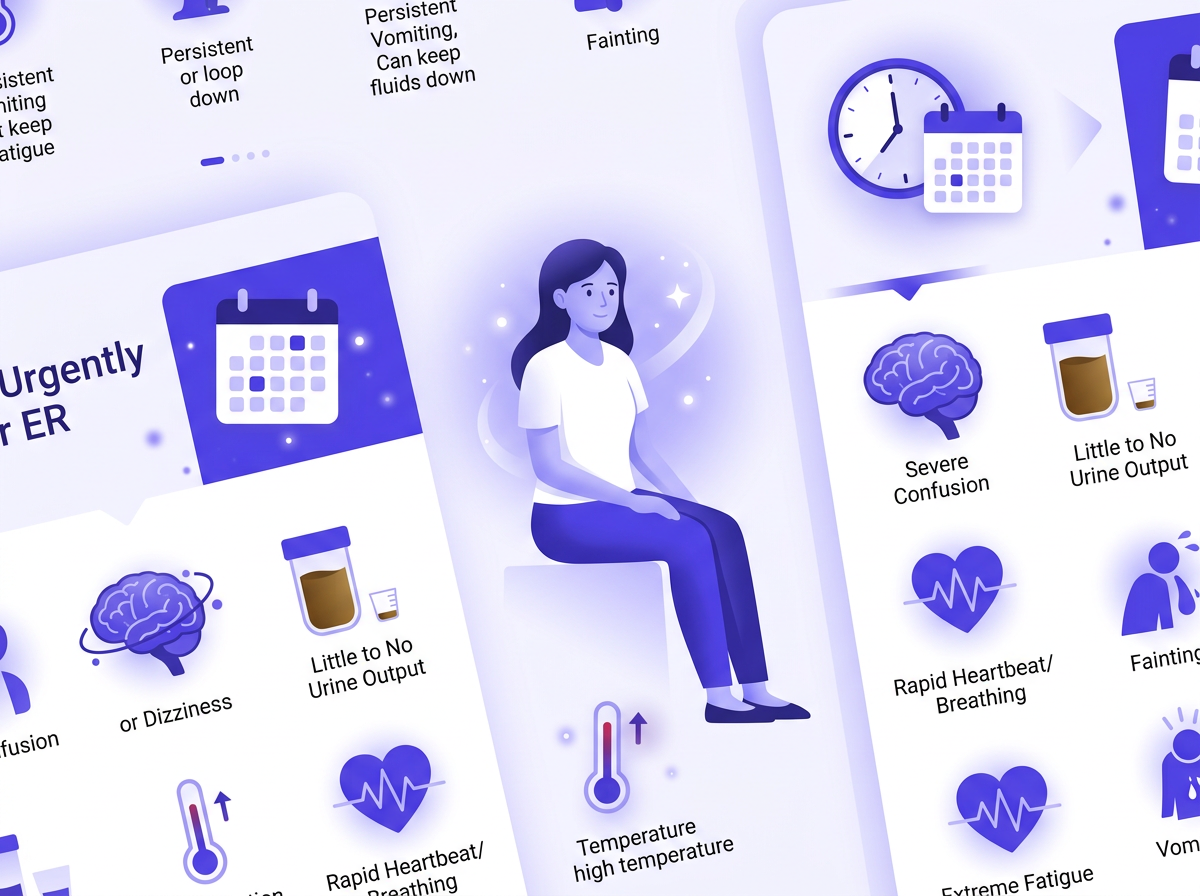
The best outcome skips the clinic entirely. Fortunately, dehydration is largely preventable with a few steady habits.
- Drink water throughout the day. Do not wait until you feel thirsty.
- During exercise or heat, replace electrolytes — not just plain water. Plain water alone can lower sodium levels.
- Start oral rehydration early if vomiting or diarrhea begins. Use an electrolyte solution and do not wait for symptoms to worsen.
- Check urine color as a daily guide. Pale yellow is good. Dark amber is a warning sign.
- Children and older adults lose fluids faster than healthy middle-aged adults. Check on them during heat waves.
- Alcohol and caffeine both raise fluid loss. Compensate when you use either.
However, prevention does not always work. Food poisoning, a stomach virus, a hot job site, or a hard workout can drain even a well-hydrated person. In those cases, knowing where to go saves time and keeps you safe.
Frequently Asked Questions
Can urgent care give IV fluids for dehydration?
Yes. Most urgent care clinics, including CityHealth in San Leandro, can give IV fluids and electrolytes. First, the care team checks your labs to set the right type and volume of fluid. In general, IV treatment at urgent care takes one to two hours, depending on your response and results.
Do I need IV fluids, or will drinking water work?
Drinking water works well for mild dehydration. However, if you cannot hold down fluids, IV fluids are the right call. Also, frequent vomiting, dizziness on standing, or a sharp drop in urine output all point the same way. A clinician will confirm with a metabolic panel. In short, IV fluids solve the problem when your stomach cannot cooperate.
Is dehydration always a medical emergency?
No. Mild and moderate dehydration are not emergencies and do not need an ER visit. However, severe dehydration with confusion, rapid heartbeat, or no urination for 8 or more hours is a true emergency. The difference matters because ER care brings higher costs and longer waits. So, using urgent care for the right cases gets you treated faster and for less.
Can children get IV fluids at urgent care for dehydration?
Yes, for older children with moderate dehydration who are still alert and responsive. However, for infants under 6 months, or any child with sunken eyes, no tears when crying, a sunken soft spot, or extreme limpness, go to the ER instead. Urgent care handles many pediatric dehydration cases well. Still, severe pediatric cases need emergency resources and specialist support.
If you are in San Leandro and dealing with dehydration that needs same-day care, CityHealth urgent care can see you today. Book an appointment online to get evaluated by a provider who can run your labs and start treatment right away.