

Does Urgent Care Do IV Fluids? What to Know About Hydration Treatment
Does urgent care do IV fluids? Yes. Many urgent care centers administer IV fluids for moderate dehydration. You do not need to wait four hours in an emergency room to get hydration treatment. If you have been vomiting all day and cannot keep water down, urgent care handles this faster and at a much lower cost.
Medically reviewed by Sean Parkin, PA — CEO & Founder, CityHealth Urgent Care
Here is what you need to know. When urgent care IV fluids are appropriate. What the process looks like. What it costs. And when to go to the ER instead.
Does Urgent Care Do IV Fluids: The Short Answer
Yes. IV fluid administration is a standard service at most full-service urgent care clinics. However, not every location has IV capability. So calling ahead before you walk in makes sense if you are specifically coming for hydration treatment. CityHealth offers IV fluids at our Oakland and San Leandro locations — walk-in, same day.
Because urgent care handles non-life-threatening conditions, IV fluids at urgent care are appropriate for moderate dehydration. If you have severe dehydration with serious symptoms like confusion or chest pain, the ER is the right place. More on that below.
Symptoms That Suggest You Need IV Fluids
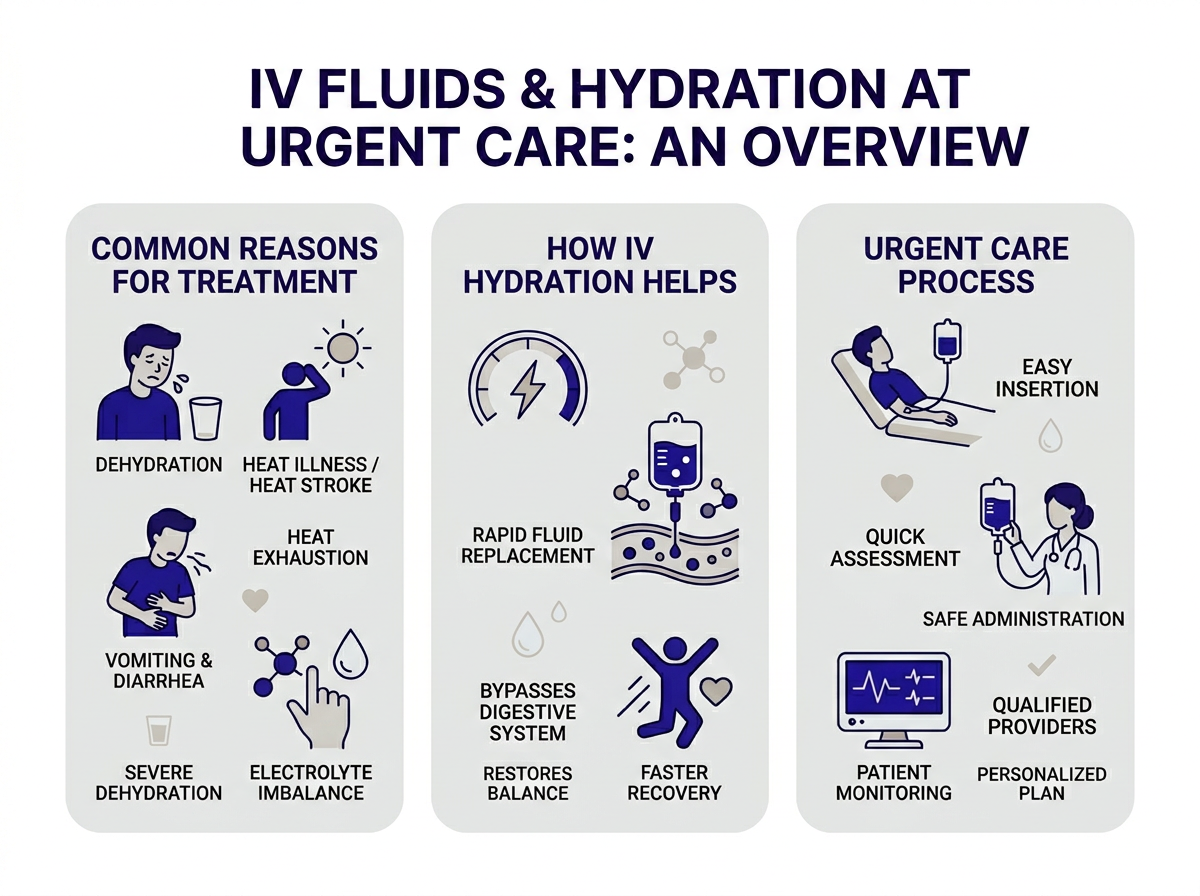
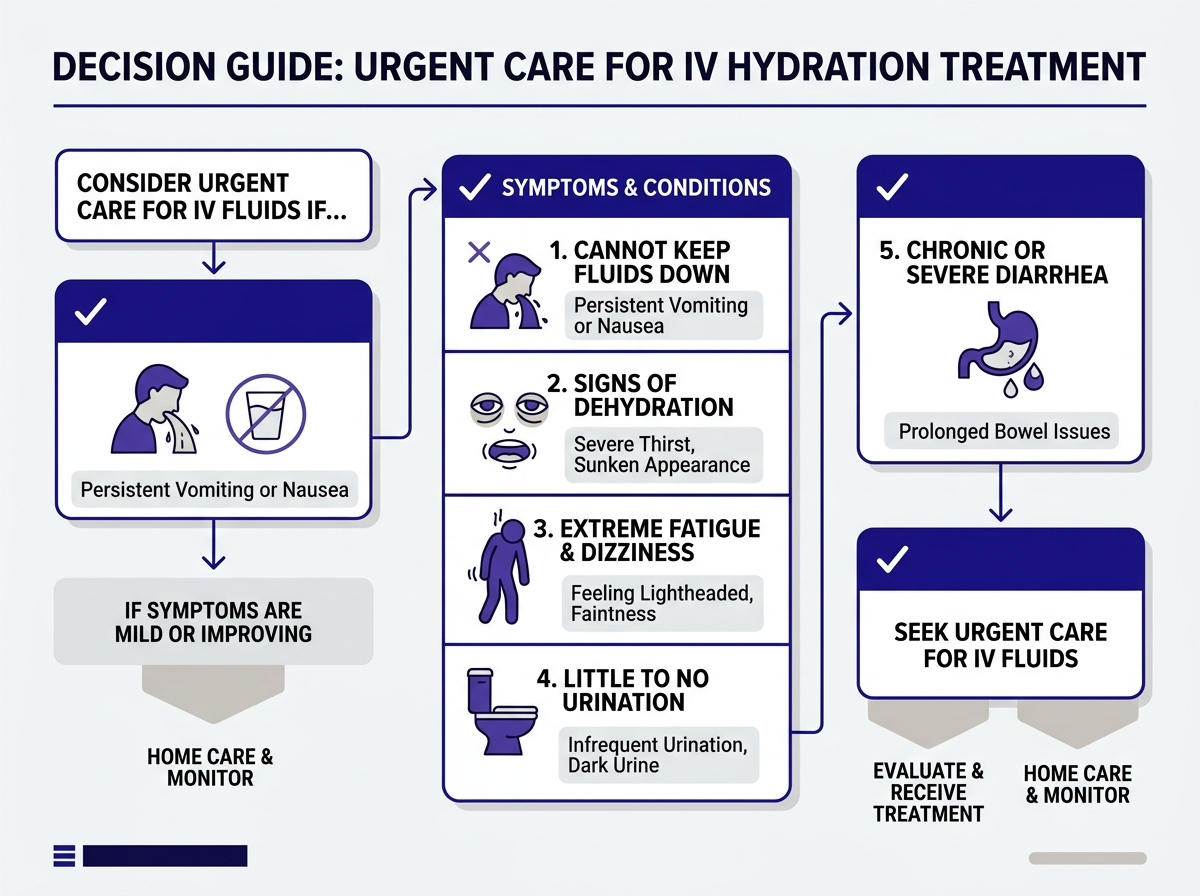
IV fluids replace what your body cannot absorb orally. You need them when dehydration is severe enough that drinking water or electrolyte drinks is not working. These symptoms suggest IV hydration may be needed:
- Persistent vomiting — cannot keep liquids down for more than a few hours
- Severe diarrhea — losing fluids faster than you can replace them
- Extreme fatigue or weakness — difficulty standing or moving normally
- Dizziness or lightheadedness when standing up
- Dry mouth and no urination for eight or more hours
- Dark, concentrated urine — a classic dehydration sign
- Heat exhaustion after prolonged sun or heat exposure
Mild dehydration usually resolves with oral fluids at home. However, when you cannot keep anything down, or your symptoms are not improving despite drinking, urgent care IV fluids are the right next step.
What Type of IV Fluids Does Urgent Care Use
The most common IV solutions at urgent care include:
- Normal saline (0.9% NaCl) — standard replacement for most dehydration cases
- Lactated Ringer’s solution — replaces sodium, potassium, calcium, and chloride; used for more significant fluid loss
- Dextrose solutions — adds sugar for patients who are hypoglycemic or have not eaten
In addition, providers often add anti-nausea medicine (like Zofran) or extra salts to the IV bag. Because the exact fluid depends on your exam, the provider checks your vitals before starting. They assess how dehydrated you are and then choose the right solution.
What Happens During the Visit
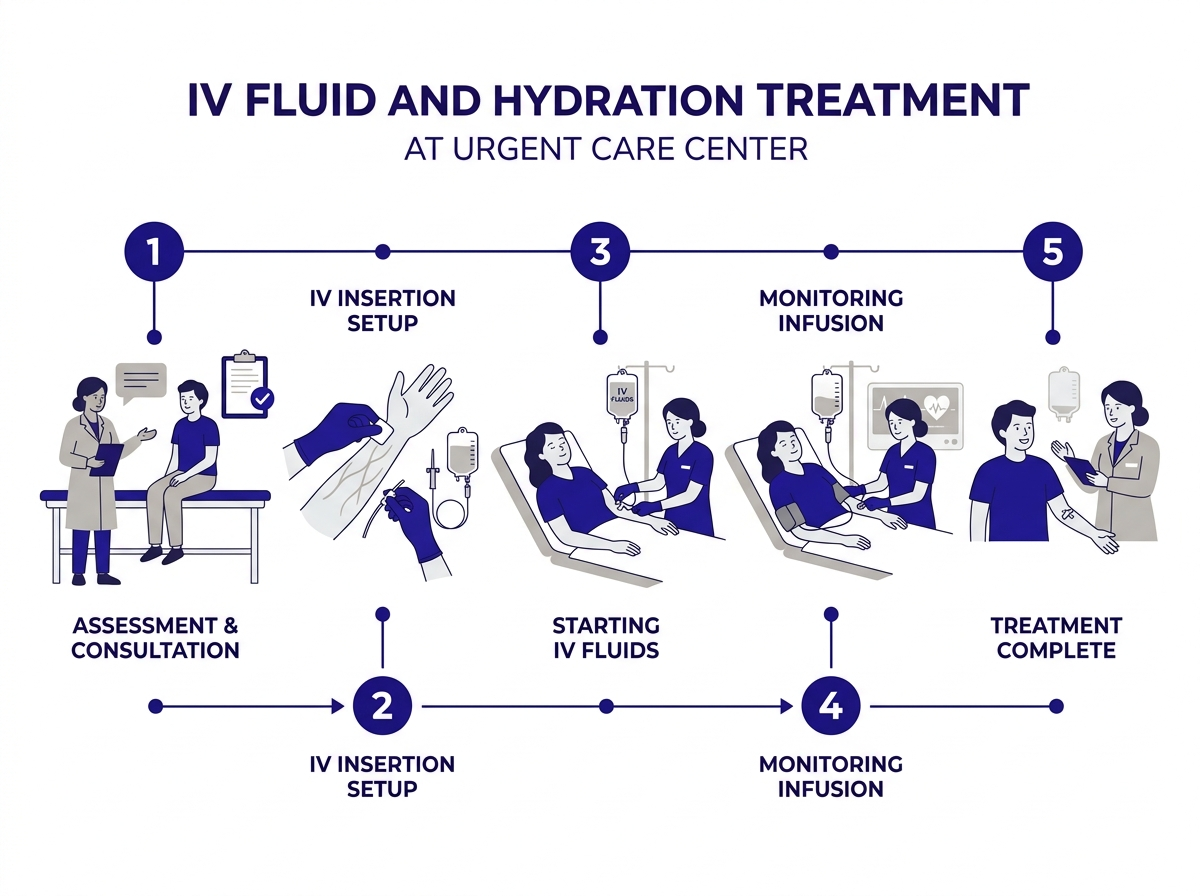
Getting IV fluids at urgent care is straightforward. First, check in and tell the front desk you are dehydrated. The provider then evaluates your vitals and assesses your condition. After that, a medical assistant places a small IV catheter in your forearm or hand. One liter of IV fluid typically infuses over 30–60 minutes. Finally, the provider re-evaluates after the fluids. Some patients need a second bag. Most feel significantly better within an hour.
The total visit, including the infusion, usually takes 1–2 hours. Compare that to a 4–6 hour ER wait for the same result.
IV Fluids vs. Oral Rehydration: Which Do You Need
Oral rehydration works well for mild dehydration. You drink fluids, your body absorbs them, and you recover over a few hours. However, the problem is vomiting. If you cannot keep anything down, drinking is pointless. IV fluids bypass the gut entirely and deliver hydration directly into your bloodstream. Because the effect is immediate, you feel better faster.
Try oral rehydration first if you can sip fluids without vomiting, your symptoms are mild, or you have been sick less than 24 hours and are improving. Come in for IV fluids, however, if you have been vomiting for four or more hours, you cannot keep anything down, or oral fluids are not helping. When in doubt, call us — we will tell you honestly whether you need to come in.
Does Urgent Care IV Treatment Cost Less Than the ER
Much less. An ER visit for dehydration usually costs $1,500–$3,000 or more before insurance. However, urgent care treats the same thing for $150–$400. That depends on your plan and location, but the gap is large.
If you are uninsured, urgent care IV fluids are still far more affordable than an ER bill. Ask about self-pay rates when you call ahead. Because insurance coverage for urgent care IV treatment works like any urgent care visit, your standard copay or coinsurance typically applies.
When to Go to the ER Instead
Urgent care handles moderate dehydration well. However, some situations require emergency care. Go to the ER — or call 911 — if you have:
- Chest pain or difficulty breathing alongside dehydration symptoms
- Confusion or altered consciousness — a serious red flag
- Fainting or loss of consciousness
- Severe, uncontrolled vomiting that urgent care cannot manage
- Signs of sepsis — high fever, chills, rapid heart rate, and confusion together
- Dehydration in a newborn or infant — babies dehydrate faster and need closer monitoring
- Known kidney disease or heart failure — IV fluid management in these patients requires hospital-level monitoring
The National Institute of Diabetes and Digestive and Kidney Diseases lists extreme thirst, very dark urine, and confusion as signs of serious dehydration. If you have these, get care right away.
Can Urgent Care Give IV Fluids for Other Conditions
Yes. Dehydration is the most common reason. However, providers may also give IV fluids for severe flu or respiratory illness with poor oral intake, food poisoning when vomiting is prolonged, or heat exhaustion from outdoor exposure. In all cases, a provider evaluates you first. Because IV fluids are a clinical treatment, they’re ordered based on your actual condition — not on request alone.
Frequently Asked Questions
Can children get IV fluids at urgent care?
Yes, for moderate dehydration in older children. However, newborns and very young infants who are dehydrated should go to the ER, because they require more intensive monitoring.
How do I know if I’m dehydrated enough for IV fluids?
If you can still drink small amounts without vomiting, try oral rehydration first. However, if you have been unable to keep fluids down for several hours and feel very weak, come in. We assess dehydration level at the visit and give you a straight answer.
Does urgent care do IV fluids for hangovers?
Some clinics do. Because hangovers cause dehydration, IV fluids can speed recovery. Ask when you call ahead — availability varies by location and by individual provider judgment.
Get IV Fluids at CityHealth Today
If you are dehydrated and cannot bounce back on your own, walk in. CityHealth provides IV fluid treatment at our urgent care locations in Oakland and San Leandro — no appointment needed. Because we also treat the underlying cause, you leave with a full treatment plan, not just a bag of saline. If the dehydration is from a stomach bug or food poisoning, we treat that too.
Open seven days a week in Oakland and San Leandro. Walk in today — no appointment needed.