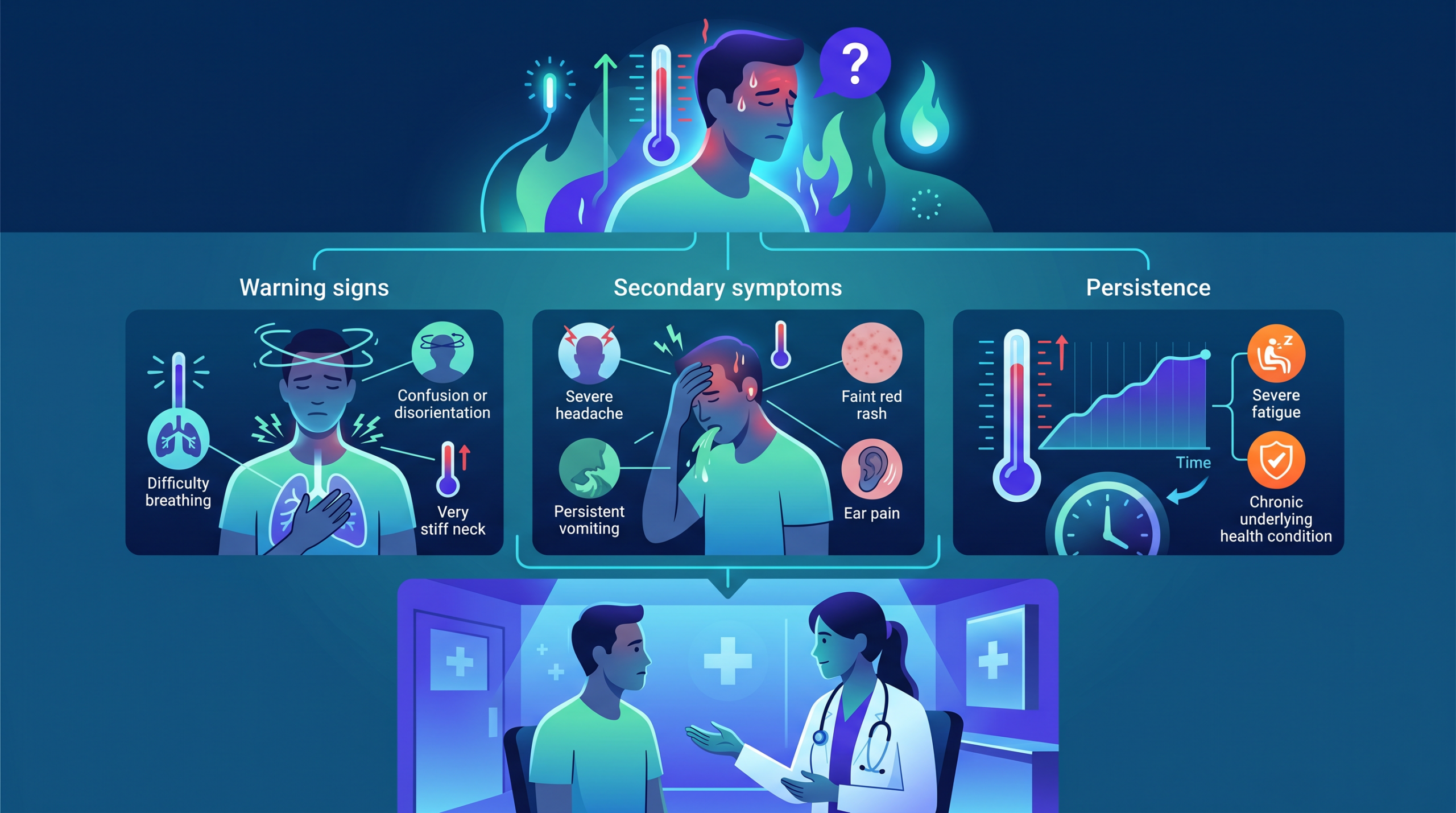

When to Go to Urgent Care for Fever in Adults: Red Flags and Same-Day Care
Quick answer: Knowing when to go to urgent care for fever as an adult starts with the thermometer. Go if your fever hits 103°F or higher, lasts more than three days, or comes with a severe sore throat, ear pain, painful urination, or a rash. CityHealth in San Leandro can see you the same day. However, go straight to the ER if your fever tops 104°F and you also have confusion, a stiff neck, or trouble breathing.
A fever is a sign your immune system is working. Most fevers in healthy adults clear up without a clinic visit. Still, knowing when to go to urgent care for a fever as an adult — rather than waiting at home or heading to the ER — can save time and keep you safe. This guide gives you clear temperature thresholds and the warning signs that change the right call.
What Counts as a Fever in Adults
Normal adult body temperature is about 98.6°F. However, it varies by person, time of day, and how you measure it. According to Mayo Clinic, a temperature of 100.4°F (38°C) or higher counts as a fever in adults.
Here is how providers group fever by severity:
- Low-grade fever: 99°F to 100.3°F
- Fever: 100.4°F and above
- High fever: 103°F and above
- Dangerous fever: 104°F and above
The number matters. But it is not the whole picture. For example, a 101°F fever with chest pain and confusion is far more serious than a 103°F fever with mild body aches. So always look at what comes with the temperature, not just the reading itself.
Also, how you measure affects accuracy. Oral thermometers are the standard for adults. Forehead strips are less reliable. Instead, use an oral or ear canal thermometer for the most accurate result.
When to Go to Urgent Care for Fever as an Adult
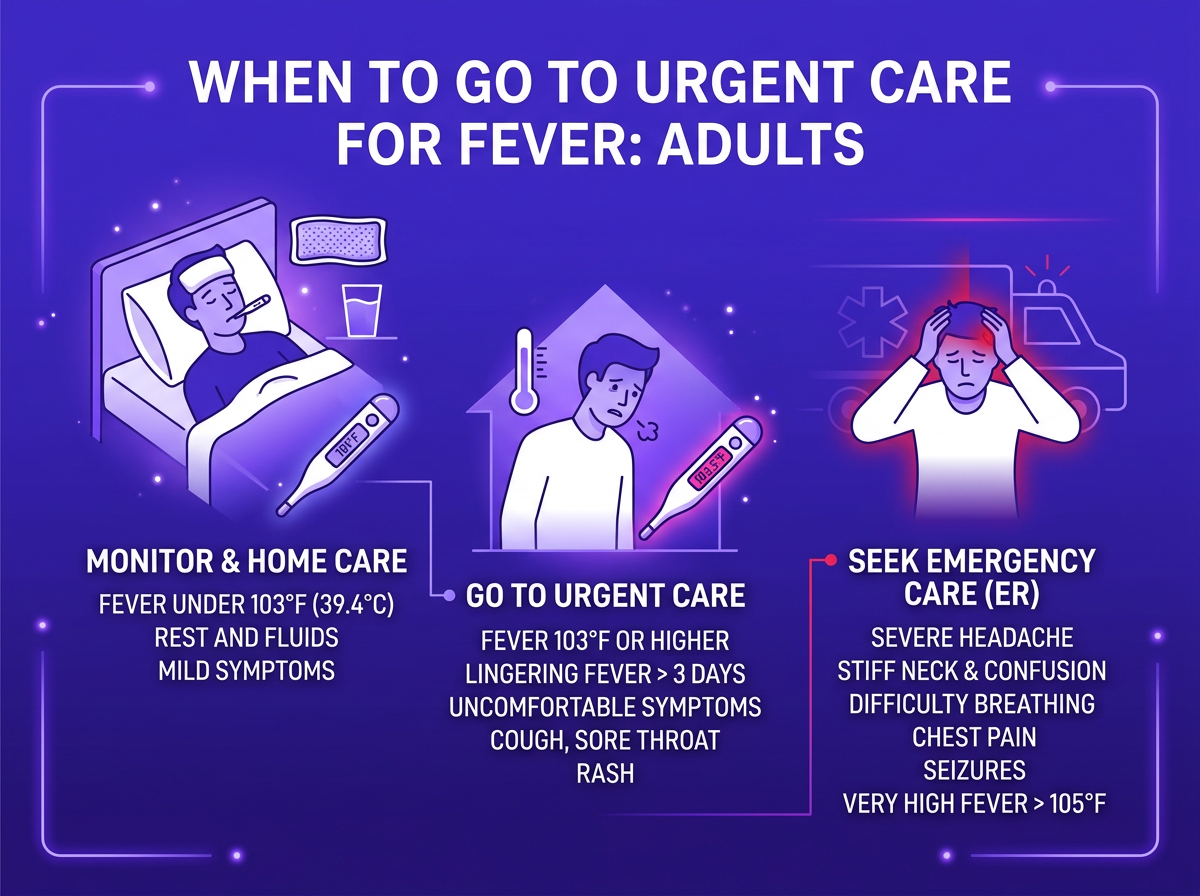
Urgent care is the right setting when your fever needs same-day evaluation but you do not have emergency-level symptoms. So, when should an adult go to urgent care for a fever? The situations below give you a clear answer.
Temperature thresholds
- 103°F or higher, without the ER-level red flags listed below
- Any fever lasting more than three days in a row
- A fever that clears up and then comes back within 24 hours
Symptoms that come with the fever
- Severe sore throat, especially with white patches or swollen glands
- Ear pain or drainage from the ear
- Facial pressure and thick sinus discharge
- Painful or frequent urination — often a sign of a UTI
- Productive cough with yellow or green mucus
- Significant body aches and chills that suggest flu or COVID-19
- A new rash that appeared with the fever and is not spreading fast
Situations that add urgency
- You returned from international travel in the past few weeks
- You had a procedure, surgery, or injury in the past two weeks
- Your fever is not dropping after acetaminophen or ibuprofen
- You have diabetes, kidney disease, heart disease, or another chronic condition
Bacterial infections do not clear on their own. For example, untreated strep can spread to other areas. Also, an undiagnosed UTI can progress to a kidney infection. Therefore, getting tested at urgent care is faster and less expensive than waiting for symptoms to worsen.
For more on what to expect at a visit, see CityHealth’s urgent care for fever page.
What Urgent Care Does for Adult Fever
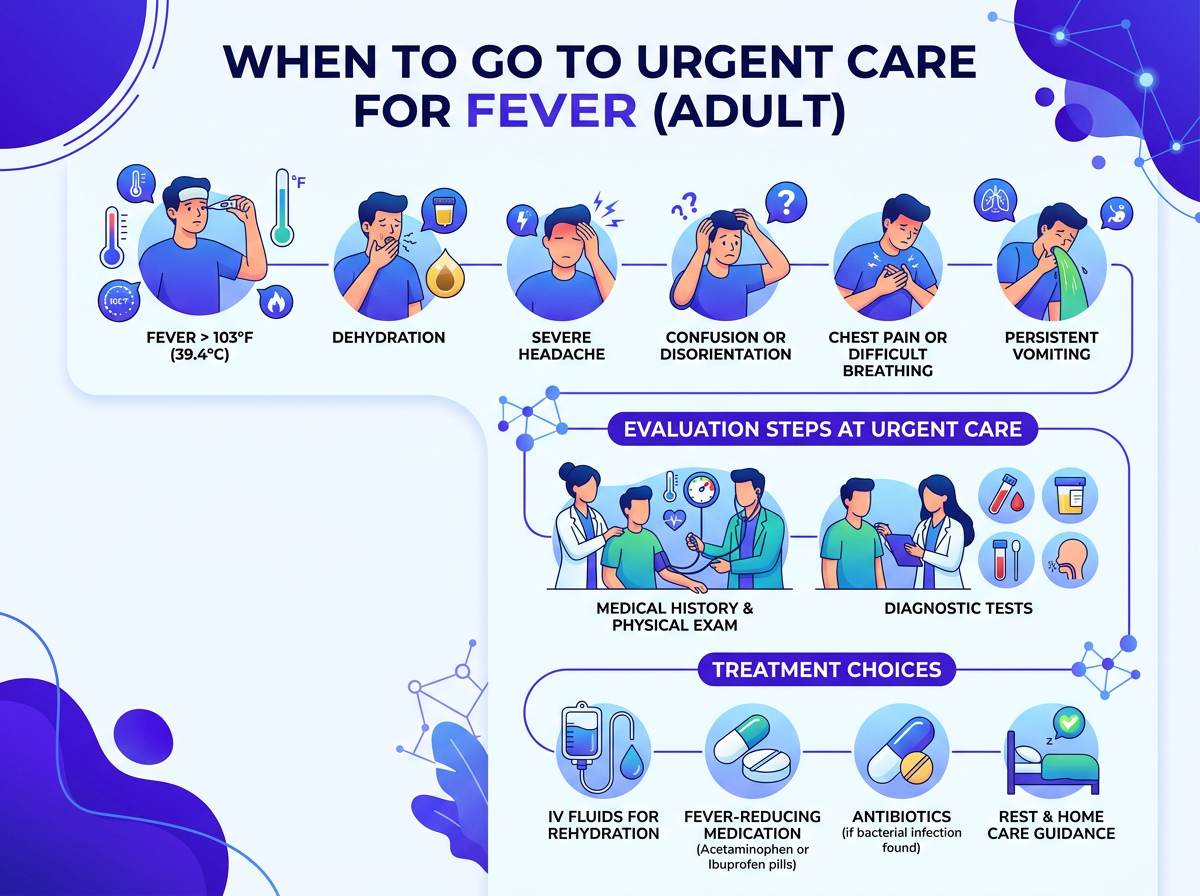
Many people want to know what urgent care actually does for a fever before deciding to go. Here is what a visit looks like at CityHealth urgent care in San Leandro.
Vitals and history
First, the provider checks your temperature, heart rate, blood pressure, and oxygen level. Then they ask how long you have had the fever, what other symptoms you have, and whether you have had recent travel or illness exposure.
Rapid testing
Next, depending on your symptoms, you may be tested for one or more of the following:
- Flu A and B
- COVID-19
- Strep throat
- Urinary tract infection (urinalysis)
In addition, some urgent care locations have on-site X-ray when pneumonia is a concern.
Treatment
If tests confirm a bacterial infection, the provider can write a prescription before you leave. For flu, antivirals like oseltamivir (Tamiflu) are an option if you come in early. For viral fevers, you get clear home-care guidance and specific warning signs to watch for.
Referrals
If your results point to something beyond urgent care, the provider will guide you to the next right step. That might be the emergency room, a specialist, or follow-up imaging.
Need same-day fever care in San Leandro?
CityHealth urgent care in San Leandro evaluates fever the same day. Walk in or book online to cut your wait time.
Book an AppointmentWhen to Go to the Emergency Room Instead
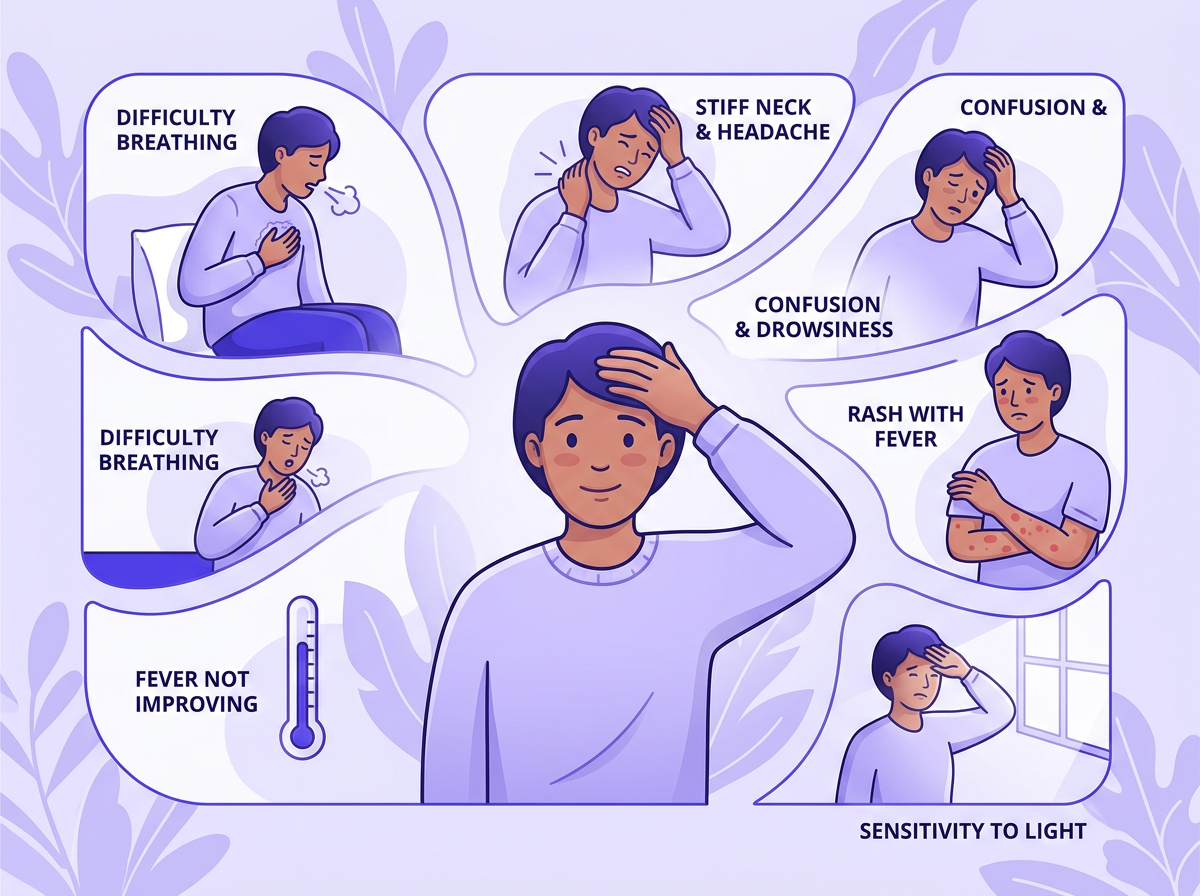
Some fever symptoms go beyond what urgent care can handle safely. Go to the ER or call 911 if you have a fever with any of the following:
- Temperature at or above 104°F that does not drop after fever reducers
- Stiff neck or a sudden, severe headache — possible signs of meningitis
- Confusion, trouble staying awake, or behavior that is not normal for you
- Trouble breathing or chest pain
- A rash that looks like spreading bruises or tiny red or purple dots under the skin
- Severe abdominal pain
- Seizure
- You are immunocompromised, in cancer treatment, or taking immunosuppressant drugs
In fact, these symptoms can point to sepsis, meningitis, or severe pneumonia. Because these conditions need emergency-level care and close monitoring, urgent care is not the right place for them.
However, if you are unsure whether your symptoms are serious enough for the ER, going to urgent care is still better than staying home. The provider can assess you and send you to the ER if the situation calls for it.
Also, if a child in your household has a fever, the thresholds are different from those for adults. See our guide on child fever and when to go to the doctor for age-specific guidance.
Fevers You Can Manage at Home
Not every fever requires a clinic visit. In fact, a healthy adult with a fever below 103°F and no other concerning symptoms can often recover at home. Still, understanding when to go to urgent care for a fever as an adult means knowing when home care is no longer enough.
These steps help your body fight back:
- Rest. Your body heals faster when you slow down and stop pushing through a full day.
- Fluids. Fever increases fluid loss. Water, broth, and electrolyte drinks all help prevent dehydration.
- Fever reducers. Acetaminophen or ibuprofen lower your temperature and ease discomfort. Follow the dosing label and do not combine both without reading the guidelines.
- Monitoring. Check your temperature every few hours. Note any new symptoms that appear.
Still, home care has clear limits. If your fever does not improve after three days, get evaluated. Even a mild-seeming fever can mean a bacterial infection that clears quickly with antibiotics.
Also, if you have a chronic condition like diabetes, kidney disease, or heart disease, do not wait the full three days. Fevers can escalate faster in people with underlying conditions. So getting checked sooner is always the safer choice.
Frequently Asked Questions
What temperature is too high for an adult to manage at home?
A fever of 103°F or higher is a clear signal to see a provider the same day. At 104°F or above, go to the ER, especially if the fever does not drop after acetaminophen or ibuprofen. Below 103°F, a healthy adult with no other worrying symptoms can often manage with rest and fluids while watching closely for changes.
Will urgent care prescribe antibiotics for a fever?
Yes — if tests confirm a bacterial source. For example, a positive strep test or a UTI diagnosis usually results in a same-visit prescription. However, antibiotics do not work against viruses. So providers will not prescribe them for a fever caused by a cold, flu, or COVID-19.
How long is too long to have a fever as an adult?
A fever lasting more than three days warrants an urgent care visit, even if the temperature stays below 103°F. Prolonged fever can point to a bacterial infection — like a sinus infection or early pneumonia — that needs treatment. However, if serious symptoms develop before three days pass, do not wait.
Can I go to CityHealth urgent care in San Leandro for a fever without an appointment?
Yes. CityHealth urgent care in San Leandro offers same-day fever care with or without an appointment. You can walk in or book online in advance. Booking ahead cuts your wait time and gets you into a room faster.
If you have a fever and want to be seen today, visit the CityHealth urgent care page to see what we treat. Or go straight to book an appointment online and get in the queue now.