When to Call Pediatrician: A Practical Guide for Parents
Every parent has been there. Your child is sick, it’s late, and you’re not sure what to do. Should you call tonight? Wait until morning? Head to urgent care? Knowing when to call pediatrician offices — and when to walk in instead — saves time and gets your child the right care faster. This guide gives you clear rules so you’re not guessing at 2am.
Medically reviewed by Susana Quezada, NP — Nurse Practitioner, CityHealth Urgent Care

When to Call Pediatrician During Office Hours
For non-urgent situations that still need attention, call your child’s doctor during regular hours. For example, call if:
- Fever lasting more than 2 to 3 days — even a mild, persistent fever deserves a call
- Symptoms not improving after 5 to 7 days of a typical cold
- Ear pain — one of the most common reasons children need antibiotics
- Mild rash without fever — most childhood rashes are harmless, but worth a look
- Persistent cough — especially one lasting more than 2 weeks
- Your child seems much sicker than you’d expect for a routine illness
- Behavioral changes — unusual fussiness, too much sleeping, or not eating
However, if your pediatrician can’t see your child for days, don’t wait. Walk-in urgent care handles all of these. No appointment is needed.
When to Call Pediatrician After Hours
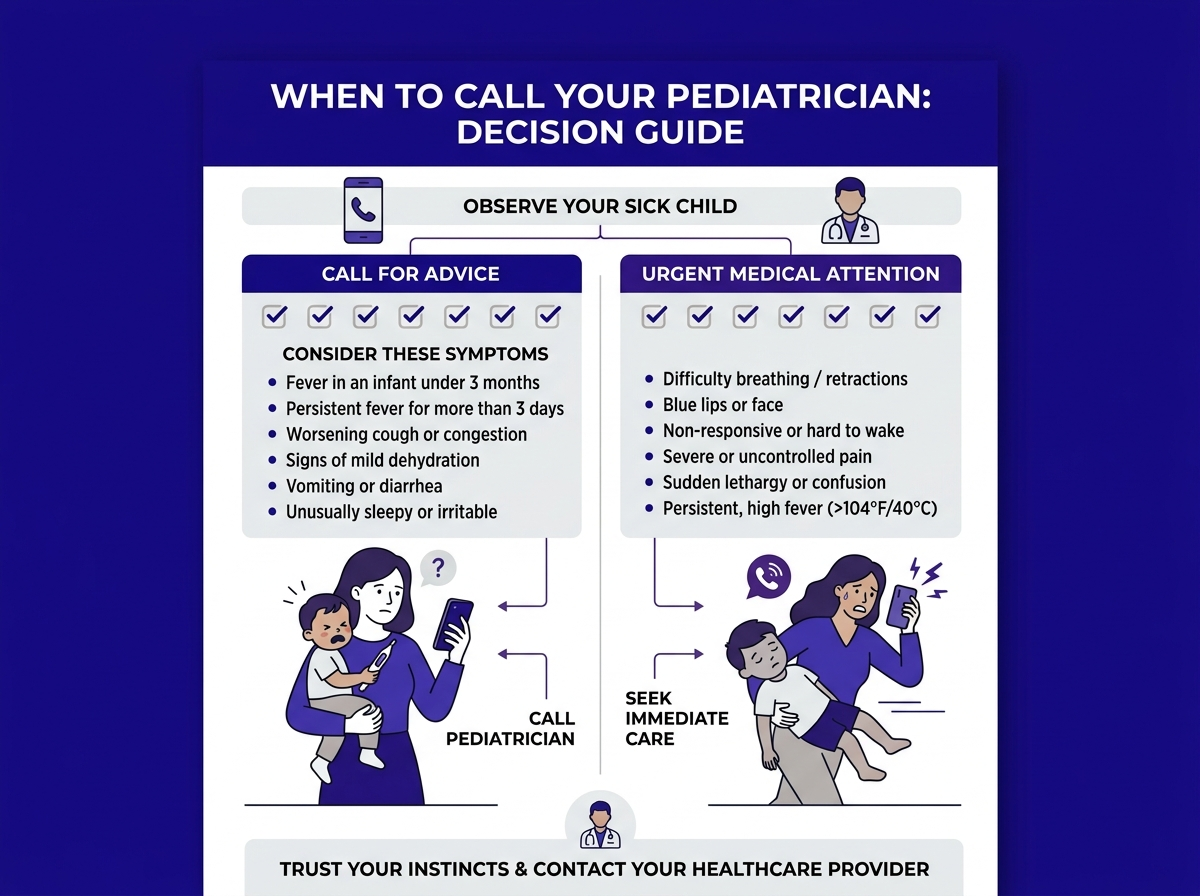
Most offices have an after-hours nurse line. Because serious illness doesn’t wait for business hours, call right away — even at night — if your child has:
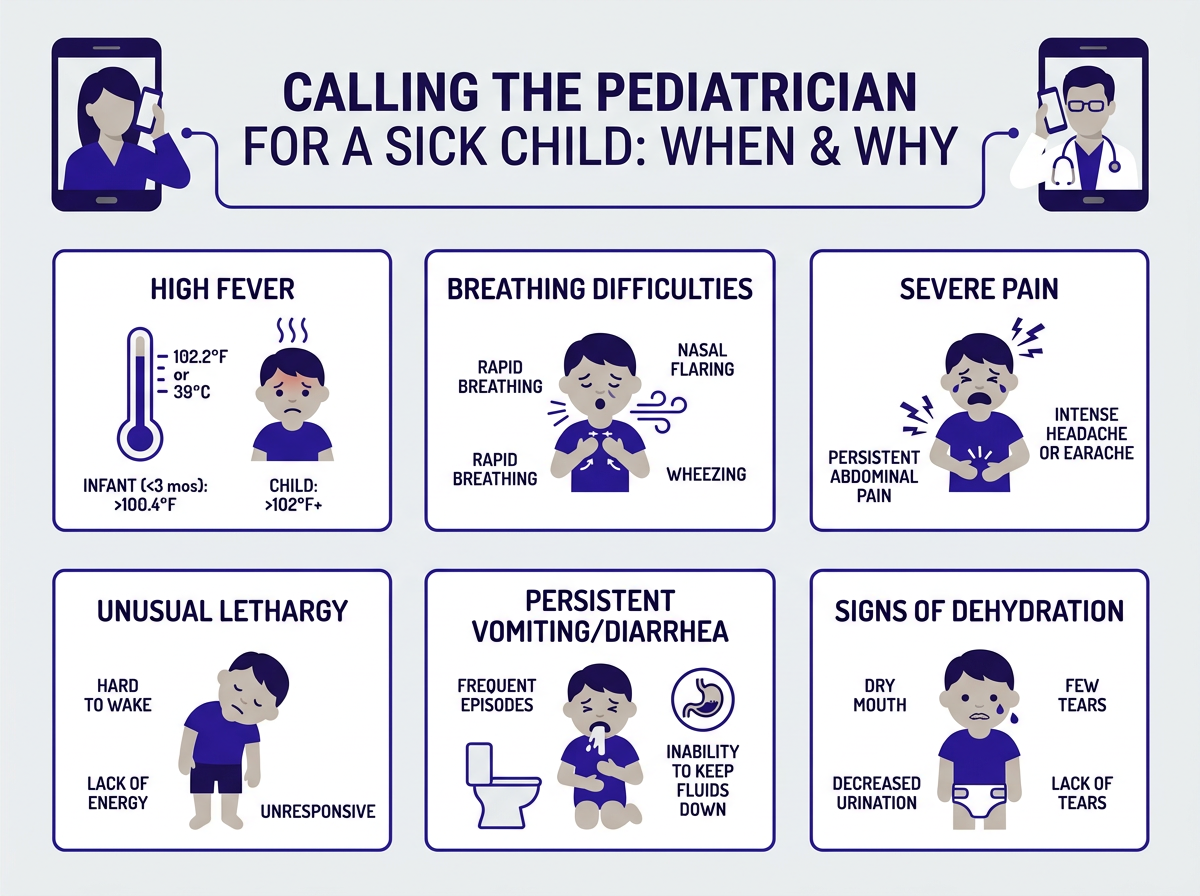
- Fever in a newborn under 3 months — any temp of 100.4°F or higher is an emergency for babies under 12 weeks
- Fever in infants 3 to 6 months — call if temp hits 101°F or higher
- High fever in older children — 104°F or above, or a fever that won’t respond to medicine
- A febrile seizure — any seizure triggered by fever, even a brief one
- Signs of dehydration — dry mouth, no tears when crying, fewer wet diapers, sunken eyes
- Ear pain at night — children in significant ear pain can’t wait until morning
- Worsening sore throat — especially if your child was recently exposed to strep
In addition, if your gut tells you something is seriously wrong, don’t wait for a callback. Go directly to urgent care or the ER.
When to Go to Urgent Care Instead of Calling
Some situations need same-day in-person care. For these, calling first wastes time. So go directly to urgent care if your child has:
- Suspected ear infection — a painful ear needs a diagnosis and often antibiotics today
- Strep throat symptoms — sudden sore throat, fever, no cough — get a rapid strep test
- Mild to moderate asthma flare-up — wheezing that isn’t responding to a rescue inhaler
- Skin infection or wound — redness spreading around a cut, bite, or scrape
- Hand, foot, and mouth disease signs — blisters on hands or feet plus mouth sores
- Vomiting or diarrhea for more than 24 hours — especially with signs of dehydration
- Minor injury with swelling — limping, or not using an arm or leg normally
- Pink eye symptoms — discharge, redness, or crusted eyelids in the morning
At CityHealth Urgent Care in San Leandro, we see children of all ages for these concerns. We offer same-day rapid strep and flu tests. No appointment needed — walk in or book online.
When to Go Straight to the ER
Some symptoms are true emergencies. Therefore, skip urgent care and go directly to the ER if your child has:
- Difficulty breathing — flared nostrils, skin pulling in at the ribs, blue lips or fingertips
- Unresponsiveness — hard to wake, limp, not making eye contact
- Severe allergic reaction — hives plus swelling of the face, lips, or throat
- Seizure lasting more than 5 minutes — or a second seizure in the same day
- Head injury with vomiting or loss of consciousness
- Signs of meningitis — stiff neck, extreme light sensitivity, severe headache with high fever
- Suspected poisoning or swallowed object
These situations need emergency resources that go beyond urgent care. So don’t wait — go now. Additionally, call 911 if your child can’t be moved safely.
Fever Guidelines by Age: When to Call Pediatrician
Fever is one of the top reasons parents call the doctor. However, the right response depends on your child’s age. Here’s a clear age-based guide, based on guidelines from the American Academy of Pediatrics:
- Under 3 months: Any fever ≥ 100.4°F — call or go to the ER immediately
- 3 to 6 months: Fever ≥ 101°F — call right away, even after hours
- 6 months to 2 years: Fever ≥ 102°F for more than 1 day — call during or after hours
- 2 years and older: Fever ≥ 104°F, or any fever lasting more than 3 days — call or walk in
- Any age: Fever with a rash, stiff neck, or trouble breathing — seek care now
For older children with a mild fever who are playful and drinking fluids, watchful waiting is usually fine. However, if the fever climbs or your child looks much sicker than expected, don’t wait to call.
What to Have Ready Before You Call
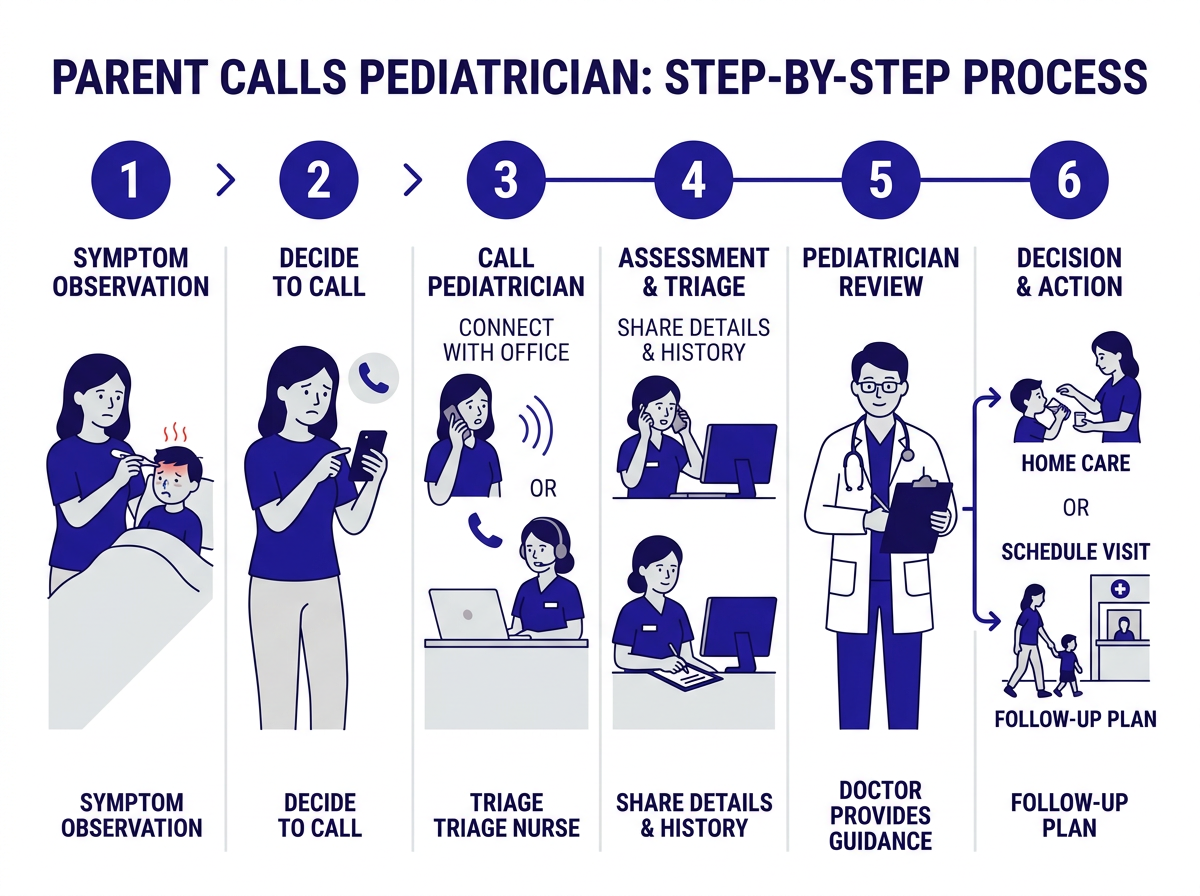
When you call, the nurse will ask specific questions. Therefore, having this information ready helps them triage your child faster:
- Your child’s age and weight
- Current temperature and when you took it
- How long symptoms have been going on
- Medications and doses given so far
- Other symptoms — rash, vomiting, unusual behavior, not eating
- Recent exposures — sick siblings, daycare illness, recent travel
When Your Pediatrician Isn’t Available
If your pediatrician doesn’t have same-day openings, you shouldn’t have to wait days for your child to be seen. CityHealth Urgent Care in San Leandro provides pediatric sick visits for children of all ages. We handle the same issues your pediatrician handles on a sick day — ear infections, strep, rashes, pink eye, and breathing checks. Furthermore, we’re open same-day with no appointment required.
For more on what to watch for when your child is sick, see our guide on when to take your child to urgent care. Walk in today or book a same-day visit online.
Frequently Asked Questions
When should I call the pediatrician for a cough?
Call if a cough has lasted more than 2 weeks, is getting worse, comes with wheezing, or is paired with a fever. However, a brief cough with a cold that clears in 7 to 10 days usually doesn’t need a call.
When should I call the pediatrician for a newborn?
For any fever ≥ 100.4°F in a baby under 3 months, call immediately. Also call for sudden behavior changes, refusal to eat, an unusual cry, or any symptom that worries you. Newborns can get sick very fast. So when in doubt, call.
Should I call the pediatrician or just go to urgent care?
If your child needs to be seen today and your pediatrician doesn’t have same-day availability, go to urgent care. It’s faster. Urgent care handles most pediatric sick visits the same way a pediatrician would on a sick day. Therefore, you don’t have to wait days just to be seen.
How do I know if my child can wait it out?
A good rule: if your child is drinking fluids, has some energy, and their fever responds to ibuprofen or acetaminophen, watching for 24 to 48 hours is usually okay. But if they’re refusing to drink, are very hard to console, or the fever isn’t going down with medication — seek care that day.