Hand Foot Mouth Disease Contagious Period: How Long and What Parents Must Know
Your child has blisters on their hands and feet and sores in their mouth. The pediatrician confirms it: hand, foot, and mouth disease. Your first question is probably about the hand foot mouth disease contagious period — and how long you need to keep them home. HFMD spreads very easily, and the contagious window is longer than most parents expect. In fact, the virus can continue to shed for weeks after all visible symptoms are gone.
Medically reviewed by Susana Quezada, NP — Nurse Practitioner, CityHealth Urgent Care

How Long Is Hand Foot Mouth Disease Contagious?
According to the CDC, hand foot mouth disease (HFMD) is most contagious during the first week of illness. However, the virus can remain in the body and spread for weeks after symptoms resolve.
Here’s the full contagion timeline:
- Before symptoms appear: You or your child can spread the virus before any blisters or sores show up. This is called the presymptomatic period.
- During symptoms (days 1–5): This is the most contagious window. Fluid from blisters, saliva, nasal secretions, and stool all carry the virus.
- After symptoms resolve: The virus can shed in stool for several weeks — sometimes up to 4 to 8 weeks — after all visible symptoms are gone.
Because of this prolonged shedding period, good hygiene continues to matter even after your child looks and feels better.
How Does Hand Foot Mouth Disease Spread?
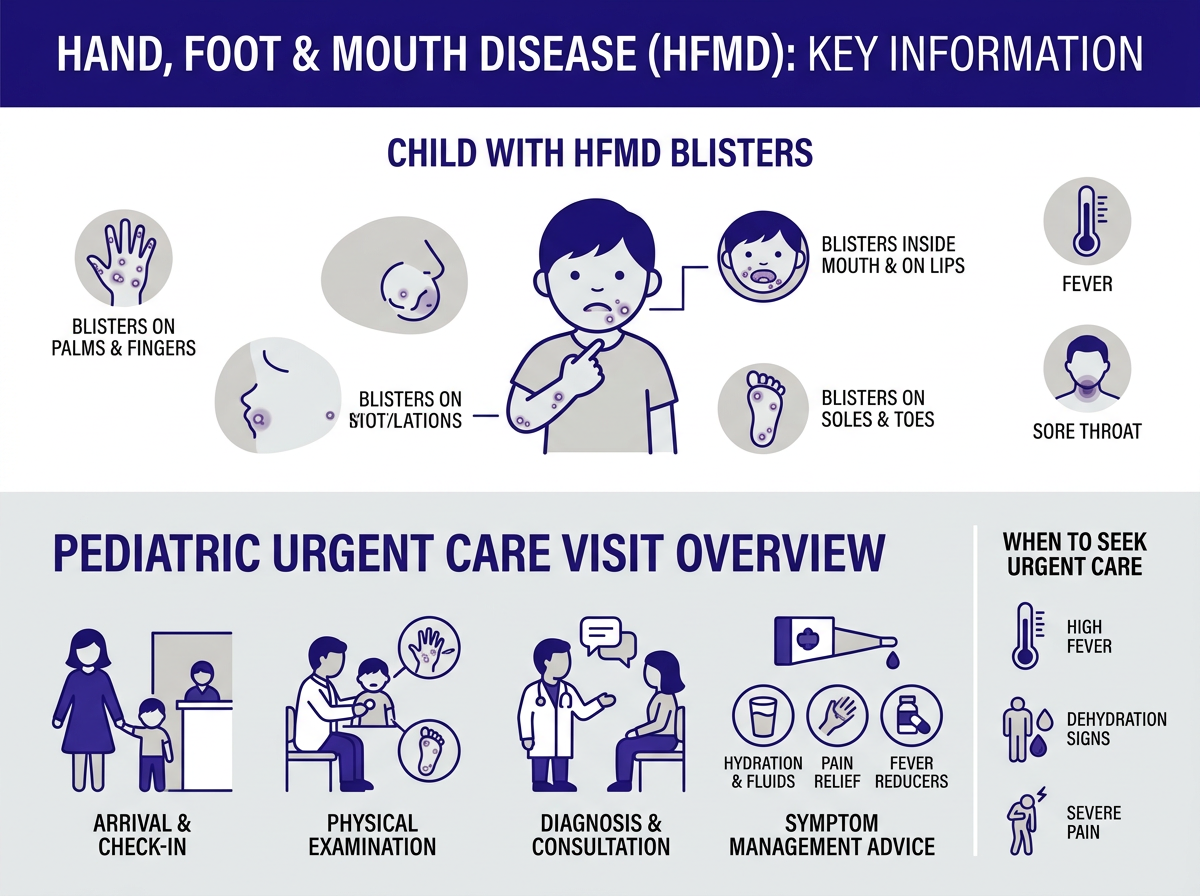
HFMD spreads easily through several routes:
- Direct contact — touching blister fluid from an infected person
- Saliva and respiratory droplets — coughing, sneezing, or talking in close proximity
- Fecal-oral route — contact with infected stool, often through inadequate handwashing after diaper changes
- Contaminated surfaces — touching doorknobs, toys, or other objects that have the virus on them
Young children are especially at risk because they put their hands in their mouths, share toys, and spend lots of time in close contact at daycare and school. Furthermore, they may not wash their hands reliably. As a result, HFMD spreads fast in group childcare settings.
Can Adults Get Hand Foot Mouth Disease?
Yes. Adults can get HFMD, though it’s far more common in children under 5. Adults who get it often have milder symptoms or none at all. However, they can still spread the virus to others. For this reason, adults who care for sick children should wash their hands frequently and avoid contact with blister fluid or saliva.
Because adults can carry and spread HFMD without obvious symptoms, the virus can move through families even when only one child shows signs of illness.
When Can Your Child Go Back to School or Daycare?
Most schools and daycares recommend keeping your child home until:
- The fever is gone (without fever-reducing medication)
- All blisters are dried and crusted over (no longer oozing fluid)
- Your child feels well enough to participate in normal activities
In most cases, this means keeping your child home for the full first week of illness. After blisters crust over, the risk of spreading hand foot mouth disease through direct skin contact drops significantly. However, because the virus continues to shed in stool, thorough handwashing matters for weeks after your child returns to school.
Check with your specific daycare or school — policies vary. Some require a note from a healthcare provider before readmission. In addition, some schools have stricter rules for infants and toddlers.
How Long Do Hand Foot Mouth Symptoms Last?
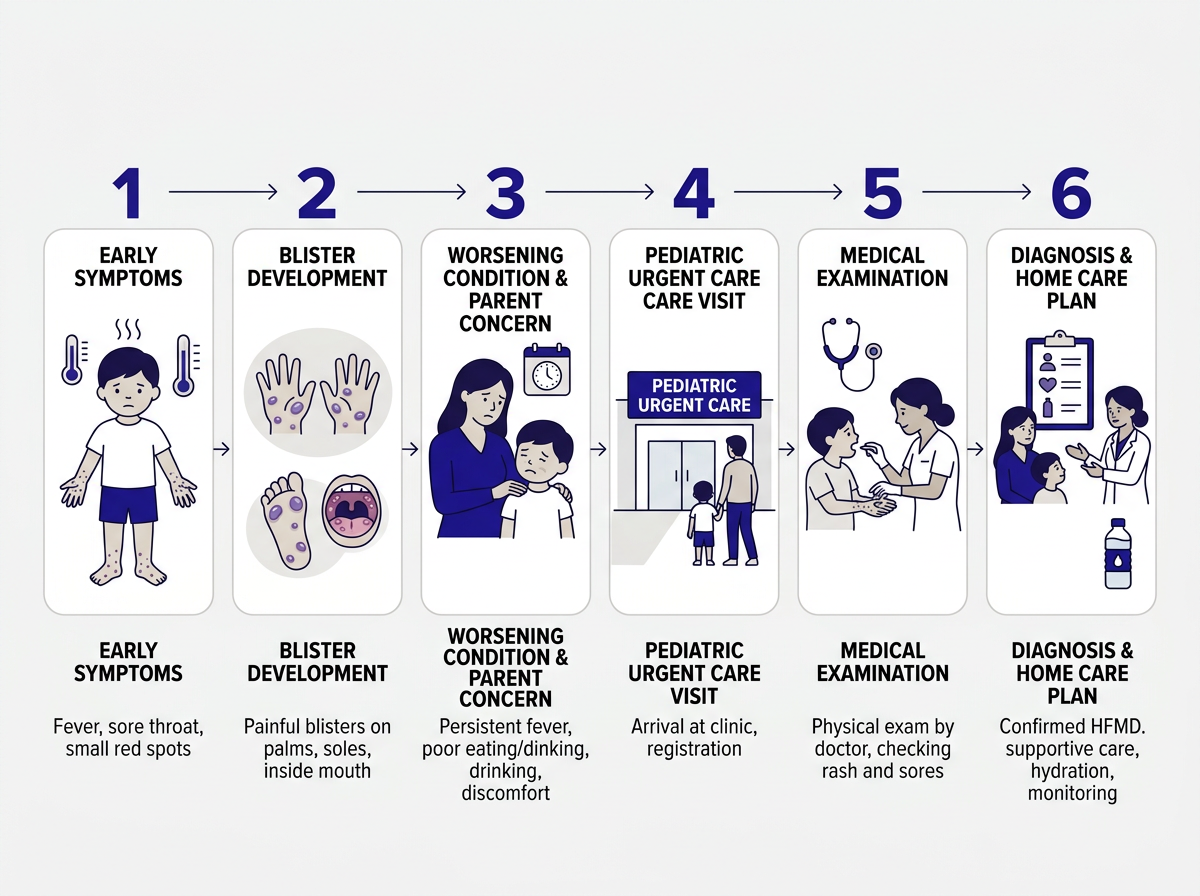
HFMD symptoms typically follow this timeline. However, the order can vary slightly from child to child:
- Days 1–2: Fever (often 101–104°F), sore throat, runny nose, irritability
- Days 2–3: Painful sores appear inside the mouth (gums, tongue, cheeks)
- Days 3–4: Blisters appear on the hands and feet, sometimes the buttocks
- Days 5–7: Blisters begin to dry and crust over. Fever resolves.
- Days 7–10: Most visible symptoms are gone. However, the child may still feel tired.
The mouth sores are usually the most painful part. Because they make eating and drinking difficult, dehydration is the main complication to watch for in young children. Therefore, keeping your child hydrated is the top priority during the acute phase.
Signs That Need Urgent Care Attention
Most cases of HFMD are mild and resolve on their own. However, bring your child to urgent care if you notice:
- Signs of dehydration — fewer wet diapers, dry mouth, no tears when crying, sunken eyes
- Refusing to drink for more than 12 hours — especially important in infants and toddlers
- Fever above 104°F or a fever that returns after going away
- Severe headache or stiff neck — rare, but these may indicate a complication
- Unusual drowsiness or difficulty waking
- Fingernail or toenail loss — this occasionally happens weeks after HFMD and is harmless, but worth checking
At CityHealth Urgent Care in San Leandro, we see children as well as adults for HFMD evaluation and supportive care. No appointment needed — walk in.
How to Prevent Spreading Hand Foot Mouth Disease
There’s no vaccine for HFMD. However, these steps can significantly reduce the spread of hand foot mouth disease in your household and community:
- Wash hands frequently — especially after diaper changes, using the toilet, and before eating
- Disinfect surfaces — doorknobs, toys, and high-touch surfaces with a household cleaner
- Avoid sharing — utensils, cups, toothbrushes, and towels
- Keep sick children home — until blisters have crusted and fever is gone
- Handle diapers carefully — the virus sheds in stool for weeks, so thorough handwashing after every diaper change is critical
Because HFMD can spread from stool for weeks, handwashing remains the most important prevention step long after your child looks healthy.
Is Hand Foot Mouth Disease the Same as Foot-and-Mouth Disease in Animals?
No. Hand, foot, and mouth disease in humans is caused by human enteroviruses (most often Coxsackievirus A16). Foot-and-mouth disease in livestock is caused by a completely different virus. The two have nothing to do with each other. You cannot get HFMD from animals, and animals cannot get HFMD from you.

Walk In to CityHealth for Same-Day Pediatric Evaluation
If your child has blisters and you’re not sure what you’re dealing with, walk in to CityHealth Urgent Care in San Leandro. We can confirm the diagnosis, assess for dehydration, and give you clear guidance on when your child can safely return to school.
For more on what to watch for in sick kids, see our guide on when to take your child to urgent care. We’re open same-day with no appointment required. Or book a visit online.
Frequently Asked Questions
Is hand foot mouth contagious before the rash appears?
Yes. The virus is present and spreading before visible symptoms appear. This is why HFMD spreads so easily in daycare and school settings — children expose others before anyone knows they’re sick.
How long should I keep my child home with hand foot mouth?
Keep your child home until all blisters are crusted over and fever has been gone for at least 24 hours. In most cases, that’s about 5 to 7 days. However, continue practicing careful handwashing for several more weeks because the virus continues to shed in stool.
Can you get hand foot mouth twice?
Yes. HFMD is caused by several different viruses (most commonly Coxsackievirus strains). Getting infected with one strain doesn’t provide immunity to others. As a result, some children get HFMD more than once.
Does hand foot mouth require antibiotics?
No. HFMD is a viral infection, so antibiotics don’t help. Treatment is supportive — managing fever, ensuring hydration, and using over-the-counter pain relief for mouth sores. Most cases resolve on their own within 7 to 10 days.