
Quick Answer
If you have stitches on a finger in your future, the window to get the best repair is within a few hours of the injury. CityHealth Urgent Care in San Leandro evaluates and closes finger lacerations 7 days a week at 201 Dolores Ave, no appointment needed. Most cuts can be numbed, sutured, and bandaged in under an hour.
You cut your finger and now you’re staring at it, trying to decide whether this is a bandage situation or a stitches situation. That hesitation costs people more than they realize. Wait too long and the wound edges start to swell and separate, making closure harder and infection risk higher. Here’s how to read what you’re looking at and what to do about it.
When Stitches on a Finger Are Actually Necessary
Not every cut needs sutures. But finger lacerations are tricky because tendons, nerves, and joints are packed into a small space, and damage there can affect how your hand works for months. The general rule: when in doubt, get it checked.
These are the signs a finger cut likely needs stitches:
- The cut is longer than half an inch. Shorter cuts with clean edges sometimes close fine on their own. Once you’re past that threshold, sutures almost always give better results.
- The wound is gaping. If the edges pull apart and don’t stay together naturally, a bandage alone won’t hold it closed while it heals.
- You can see yellow tissue or white material inside. That’s fat or tendon. That’s deep. You need stitches.
- Bleeding won’t stop after 10 to 15 minutes of steady direct pressure. This signals either a deeper vessel or a cut that won’t close without help.
- The cut is over a knuckle or joint. These areas flex constantly. Wounds over joints pull open with every movement, and they need a secure closure to heal correctly.
- The edges are jagged or irregular. Clean cuts from a knife are one thing. Tears from broken glass, graters, or power tools leave ragged edges that heal poorly without proper alignment.
- The injury came from a bite, rusty metal, or heavily contaminated surface. These carry a higher infection and tetanus risk and need professional evaluation regardless of size.
If your last tetanus shot was more than five years ago and the wound is dirty, mention that when you arrive. The provider will assess whether a booster is needed. The Mayo Clinic recommends seeking care for any deep puncture wound or cut that won’t stop bleeding.
What the Stitches Process Looks Like at Urgent Care
A lot of people avoid urgent care for lacerations because they assume it will be painful or take forever. Neither is true for a straightforward finger cut. Here is what actually happens when you walk into CityHealth Urgent Care in San Leandro with a finger laceration.
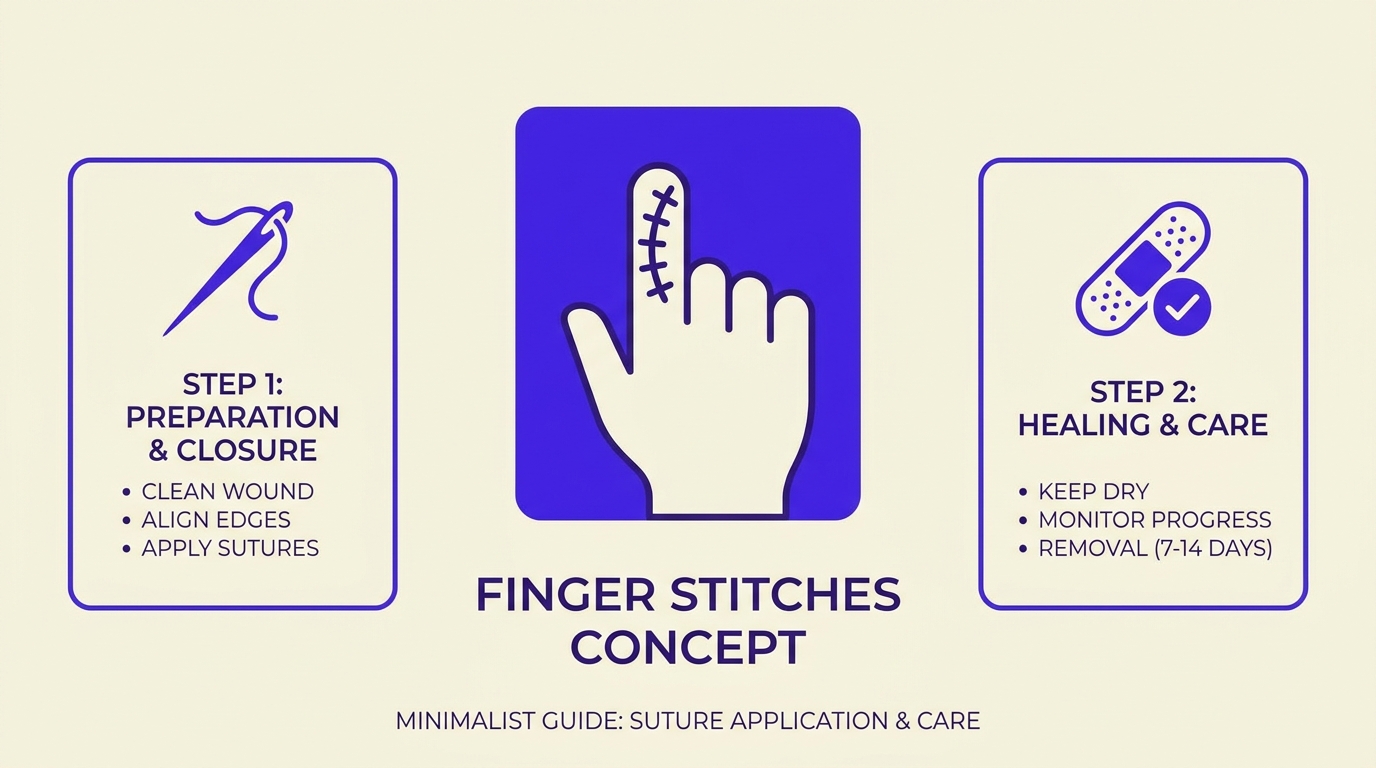
Step 1: Cleaning and Irrigation
Before anything else, the wound gets thoroughly flushed with sterile saline. This removes debris and bacteria. It stings briefly, but it is one of the most important steps for preventing infection. Skipping proper irrigation is one of the main reasons wounds get infected at home.
Step 2: Local Anesthetic
A small injection of lidocaine numbs the area around the cut. Within about two minutes, you should feel nothing more than light pressure. The injection itself is the sharpest part of the whole process and it passes quickly. After that, you watch what’s happening but do not feel it.
Step 3: Closure
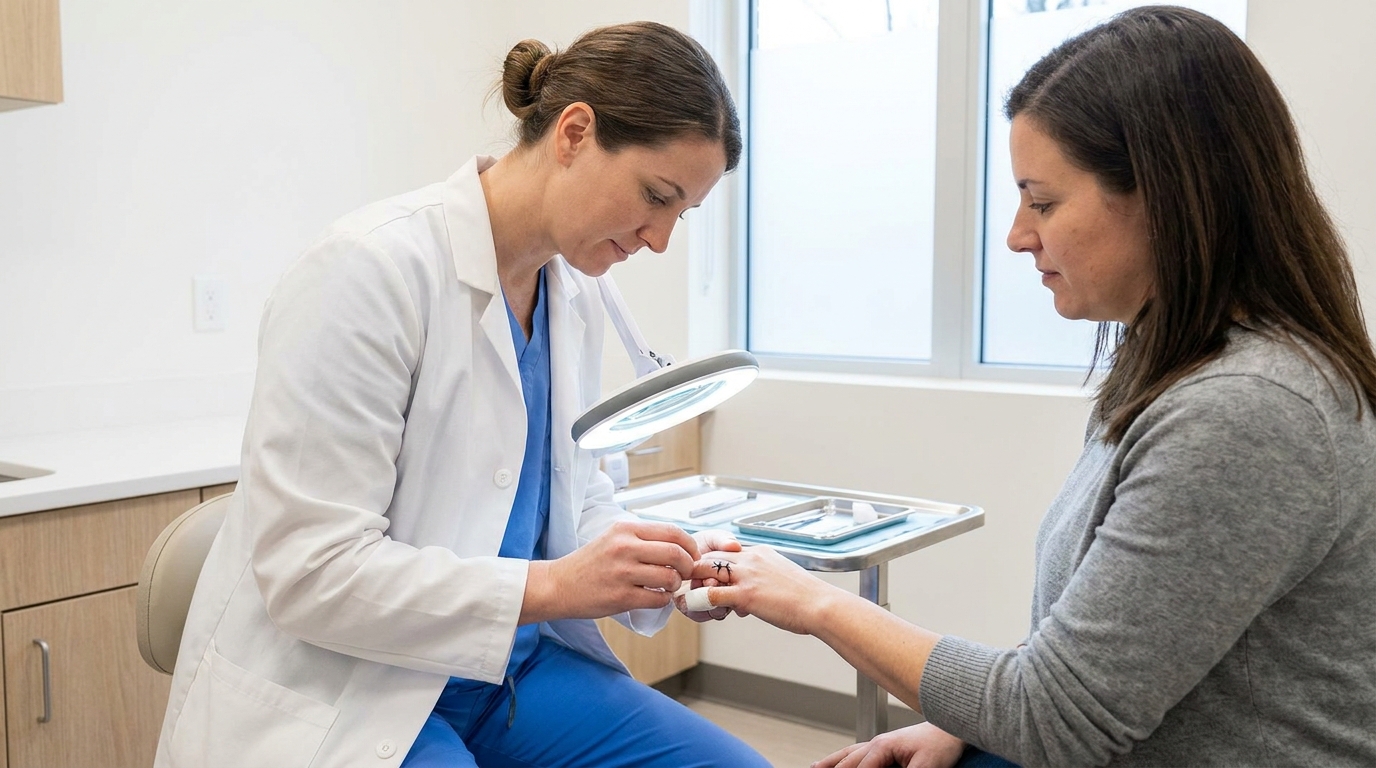
Depending on the wound, the provider uses sutures, staples, or adhesive strips to bring the edges together. Most finger lacerations get 3 to 6 sutures. The provider aligns the edges precisely, which matters for both function and how the scar looks. This takes 10 to 20 minutes for most cuts.
Step 4: Dressing and Aftercare Instructions
The wound gets covered with a non-stick dressing and you leave with specific instructions for keeping it clean, dry, and protected. You will also be told when to come back for suture removal, which is typically 7 to 10 days for finger wounds.
How to Care for Stitches on a Finger at Home
What you do after leaving the clinic matters as much as the sutures themselves. Finger wounds are high-risk for moisture and contamination because hands touch everything.
- Keep it dry for the first 24 to 48 hours. Moisture softens the sutures and the tissue around them, which weakens the closure. Use a waterproof finger cover or glove when washing your hands or showering.
- Change the dressing once daily or any time it gets wet or dirty. Clean gently with soap and water, pat dry, apply a thin layer of antibiotic ointment if directed, and cover with a fresh bandage.
- Watch for infection. Some redness and swelling right around the wound in the first two days is normal. Infection looks different: redness that spreads beyond the wound edges, warmth, increasing pain after day two, pus, red streaks moving up the finger, or fever. Any of these means go back in.
- Protect the area from impact. A splint or buddy tape may be recommended if the cut is over a joint. Follow that guidance. A reopened wound usually needs to be re-evaluated.
- Return for suture removal on schedule. Leaving stitches in too long causes additional scarring. Removing them too early risks reopening. Finger sutures typically come out at 7 to 10 days.
Do not pick at the stitches. It seems obvious, but one pulled suture can undo a clean closure. Leave them alone until a provider removes them.

When a Wound Can Skip Stitches Entirely
Some cuts close well without sutures. A superficial cut under half an inch with clean, straight edges that stay together naturally can often be closed with steri-strips or butterfly closures. These work by pulling the skin edges together and holding them in place while the tissue heals underneath.
The caveat: even cuts that seem minor deserve a look if they are over a joint, caused by something dirty, or in a location where proper tension matters. An urgent care provider can tell you in five minutes whether a wound needs sutures or strips. That five minutes is worth it.
Finger tip injuries with partial or complete tissue loss are a different category. These may need specialized wound care or referral. If part of the fingertip was amputated, bring the tissue if possible, keep it wrapped in moist gauze in a sealed bag, and head to urgent care or the ER immediately depending on severity.
Finger Cut That Needs to Be Closed? Walk In Today.
CityHealth San Leandro handles lacerations 7 days a week. No appointment. No long wait. Walk in and we will take care of it.
WALK IN FOR EVALUATION →Or call (510) 984-2489
Frequently Asked Questions
How do I know if a cut on my finger needs stitches?
A finger cut likely needs stitches if it is longer than half an inch, the edges gape and won’t stay together, bleeding continues after 10 to 15 minutes of direct pressure, or you can see yellow fat or white tissue inside the wound. Cuts over knuckles or caused by bites and contaminated objects should also be evaluated even if they look small, because depth and contamination matter as much as size.
Can urgent care do stitches on fingers?
Yes. Urgent care centers like CityHealth in San Leandro routinely handle finger lacerations with sutures, steri-strips, or skin staples depending on the wound. Walk-in wound care is one of the most common reasons people visit urgent care, and most straightforward finger cuts are closed and dressed within an hour of arrival.
How long do stitches on a finger stay in?
Finger stitches typically stay in for 7 to 10 days. Joints and high-tension areas may need them a day or two longer. Your provider will tell you the exact timeline when you are discharged. Removing them too early risks reopening the wound, and leaving them too long increases scarring, so return on the schedule you are given.
What happens if I need stitches but don’t get them?
A wound that needed stitches but did not get them will typically heal more slowly, leave a wider and more noticeable scar, and carry a higher risk of infection. In some cases, particularly over joints, it can heal in a way that limits range of motion. After about 6 to 8 hours, the wound edges begin to swell and close properly becomes significantly harder, so earlier is always better.
How much does it cost to get stitches at urgent care without insurance?
At CityHealth in San Leandro, self-pay urgent care visits start at $145. Laceration repair may be priced as a procedure on top of the visit depending on complexity. CityHealth accepts most major insurance plans including Medi-Cal and Alameda Alliance. Call (510) 984-2489 ahead of your visit if you have questions about coverage or cost.
Bottom Line
Stitches on a finger are straightforward when you get them early. The injury window is short, the repair is fast, and the difference between a clean scar and a complicated one often comes down to whether you went in within the first few hours. If you are reading this with a towel on your hand trying to decide, stop deciding and go.
CityHealth Urgent Care at 201 Dolores Ave in San Leandro is open 7 days a week, including weekends, with no appointment needed. Walk in, get evaluated, and leave with the wound properly closed and a clear plan for healing. See what our urgent care services include or book ahead at care.cityhealth.com/book-appointment if you prefer to reserve your spot.