Urgent Care for Panic Attack: What to Expect and When to Go
Your heart is hammering. You cannot catch your breath. Your chest feels tight, and for a moment you are convinced something is seriously wrong. If you are seeking urgent care for panic attack symptoms, that is a reasonable call. Urgent care can evaluate you quickly, rule out cardiac causes, and help you through the episode safely.
Medically reviewed by Sean Parkin, PA — CEO & Founder, Urgent Care Specialist
Can You Go to Urgent Care for Panic Attack Symptoms?
Yes. Urgent care is well-equipped to evaluate a panic attack, particularly when you are experiencing it for the first time. Also, if the symptoms are severe enough that you need reassurance your heart and lungs are okay, urgent care is the right call.
The reason most people hesitate is that panic attack symptoms overlap almost perfectly with cardiac symptoms. In fact, racing heart, chest tightness, shortness of breath, dizziness, and tingling in the hands are the same symptoms that appear in a heart attack. However, urgent care providers are trained to rule out cardiac causes quickly. Because that ruling-out often happens in under an hour, it is enough to break the panic cycle for most people.
At CityHealth Urgent Care, providers can run an EKG, check your vital signs, and do basic labs on the spot. So that is the fastest way to confirm your heart is fine. For most people, that confirmation is what finally lets them breathe again.
Panic Attack vs. Heart Attack: Telling the Difference
This distinction matters because the two conditions require different care. In the middle of an episode, they feel nearly identical. Here is what separates them:
- Panic attacks peak fast, then fade. Symptoms usually hit their worst point within 10 minutes and subside within 20-30 minutes. Heart attacks typically do not follow that pattern.
- Panic attack chest pain is often sharp and localized. Specifically, cardiac chest pain tends to radiate down the arm, up to the jaw, or through to the back.
- Breathing helps a panic attack. Slow, deliberate breaths can reduce panic symptoms. However, they do not help cardiac symptoms.
- Context matters. Panic attacks often follow a stressful event or period of anxiety. That said, do not use context alone as a reason to dismiss symptoms without being checked.
Go to the ER if you have chest pain radiating to your arm or jaw, if you lose consciousness, if your symptoms do not improve after 30 minutes, or if you have a history of heart disease. When in doubt, call 911. Urgent care is the right call for most panic attacks. However, it is not the right setting for suspected cardiac events.
What Happens When You Walk In for Urgent Care for Panic Attack
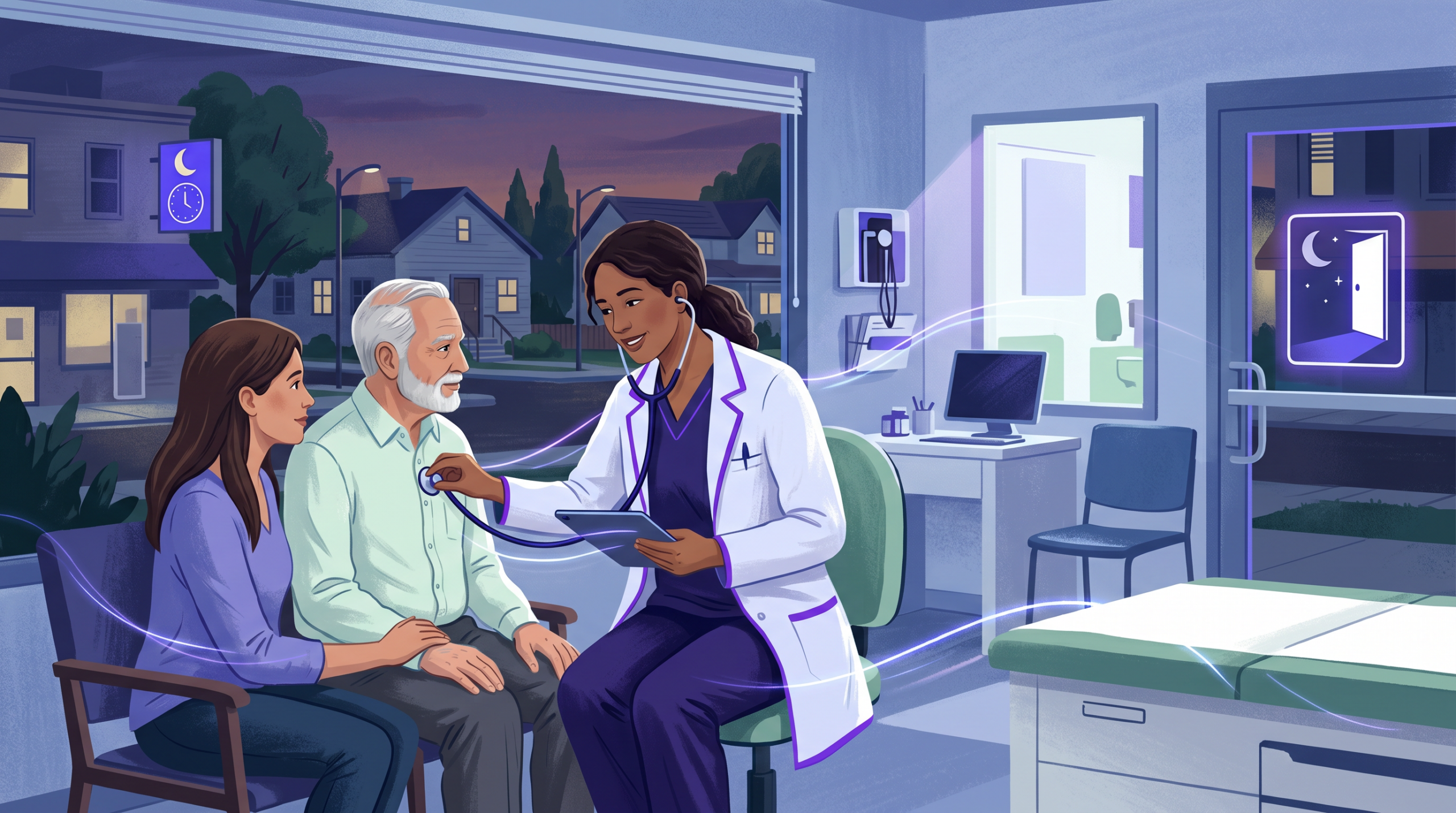
You do not need to explain much at the front desk. Tell them you are having a panic attack or severe anxiety symptoms. You will be triaged quickly, and the clinical team will move through a standard evaluation:
- First, vital signs. Blood pressure, heart rate, oxygen saturation. These numbers tell the provider a great deal in the first 60 seconds.
- Second, an EKG. A 12-lead EKG rules out arrhythmia and cardiac involvement. Results come back in minutes.
- Third, symptom history. How long has this been happening? Is this your first episode? Also, have there been recent stressors, caffeine, stimulants, or medication changes?
- Finally, a physical exam. Listening to your heart and lungs, checking for anything that might explain the symptoms beyond anxiety.
The whole evaluation usually takes 30-45 minutes. For most patients, the process itself is the most therapeutic part. Essentially, having someone take the symptoms seriously and confirm that your heart is fine breaks the anxiety loop. Indeed, many people feel markedly calmer before the visit even ends.
What Medication Can Urgent Care Give You?
If you are in acute distress, the provider may offer medication. Specifically, options typically include:
- Short-acting benzodiazepines. Medications like lorazepam work fast to reduce acute anxiety. These are typically given as a one-time dose in the clinic. Notably, urgent care is not the right setting for ongoing benzodiazepine prescriptions.
- Beta-blockers. Propranolol can slow a racing heart and reduce the physical symptoms that feed the panic cycle. Some providers use it for acute situational anxiety.
- Supportive care. Guided breathing techniques, a quiet space, and having a provider talk through what is happening can be effective on their own.
Importantly, urgent care will not prescribe ongoing psychiatric medication or serve as your primary mental health provider. The goal is to get you through the acute episode safely and point you toward appropriate follow-up care. So think of urgent care as the stabilizer, not the long-term solution.
After the Visit: Follow-Up Care for Panic Disorder
A panic attack that lands you in urgent care is your body signaling that something needs attention. The urgent care visit stabilizes you. However, the underlying anxiety requires more than a one-time EKG to address. That said, the visit gives you a foundation to build from.
Ask for a referral to a mental health provider before you leave. Options include:
- Primary care or your urgent care provider for initial evaluation and possibly a short-term medication plan
- A therapist specializing in CBT (Cognitive Behavioral Therapy), the evidence-based first-line treatment for panic disorder
- A psychiatrist if medication management is part of your plan
According to the National Institute of Mental Health, panic disorder is highly treatable. Most people who engage in therapy, medication, or both see significant improvement within weeks. So the urgent care visit is the first step, not the last.
How Much Does Urgent Care Cost for a Panic Attack?
Urgent care for a panic attack is significantly cheaper than an ER visit for the same symptoms. A typical urgent care visit runs $150-$300 without insurance. Moreover, most insurance plans cover urgent care at a lower cost-sharing tier than the emergency room.
The EKG adds a small additional cost. Still, it is far less than an ER workup, which can run $1,000-$3,000 for a cardiac rule-out. If cost is a concern, let the front desk know. CityHealth accepts most major insurance plans, including Medi-Cal, Alameda Alliance, and Blue Shield. No appointment is needed.
When a Panic Attack Needs the ER Instead
Urgent care is the right call for the majority of panic attacks. But go directly to the ER or call 911 if any of these apply:
- Chest pain radiates to your arm, jaw, or back
- You faint or nearly lose consciousness
- Symptoms last longer than 30-45 minutes without improvement
- You have a known cardiac condition or significant risk factors for heart disease
- A sudden severe headache accompanies the symptoms
If you are unsure whether what you are experiencing is a panic attack or something more serious, err on the side of getting evaluated. The cost of ruling something out is far lower than the cost of ignoring it.
Frequently Asked Questions
Can urgent care prescribe anxiety medication?
Urgent care can provide acute medications for an active episode, including short-acting benzodiazepines. However, for ongoing anxiety medication management, you will need a primary care provider or psychiatrist. Urgent care can bridge the gap and refer you appropriately.
How long does a panic attack last?
Most panic attacks peak within 10 minutes and resolve within 20-30 minutes. If symptoms persist beyond that, getting evaluated rules out other causes and helps you feel safer.
Will going to urgent care for anxiety go on my record?
Medical records are private and protected by HIPAA. Specifically, visiting urgent care for anxiety does not affect your employment or insurance in the way many people fear. Also, your records are shared only with providers involved in your care or with your explicit consent.
Can I go to urgent care instead of the ER for a panic attack?
In most cases, yes. Urgent care can run the same basic cardiac workup at a fraction of the ER cost. The exception is if you have symptoms suggesting an actual cardiac or neurological emergency.
Walk In Today for Urgent Care for Panic Attack
If you are dealing with panic attacks or anxiety that is getting worse, you do not need to wait weeks for a doctor’s appointment. CityHealth Urgent Care is open seven days a week, no appointment needed. So walk in, get evaluated, and leave with a clear picture of what is happening and a plan for what comes next.
For more on what we treat, see our full guide: What Can Urgent Care Treat? Also, if your symptoms include chest pain, see our guide to urgent care for chest pain.