
Quick Answer
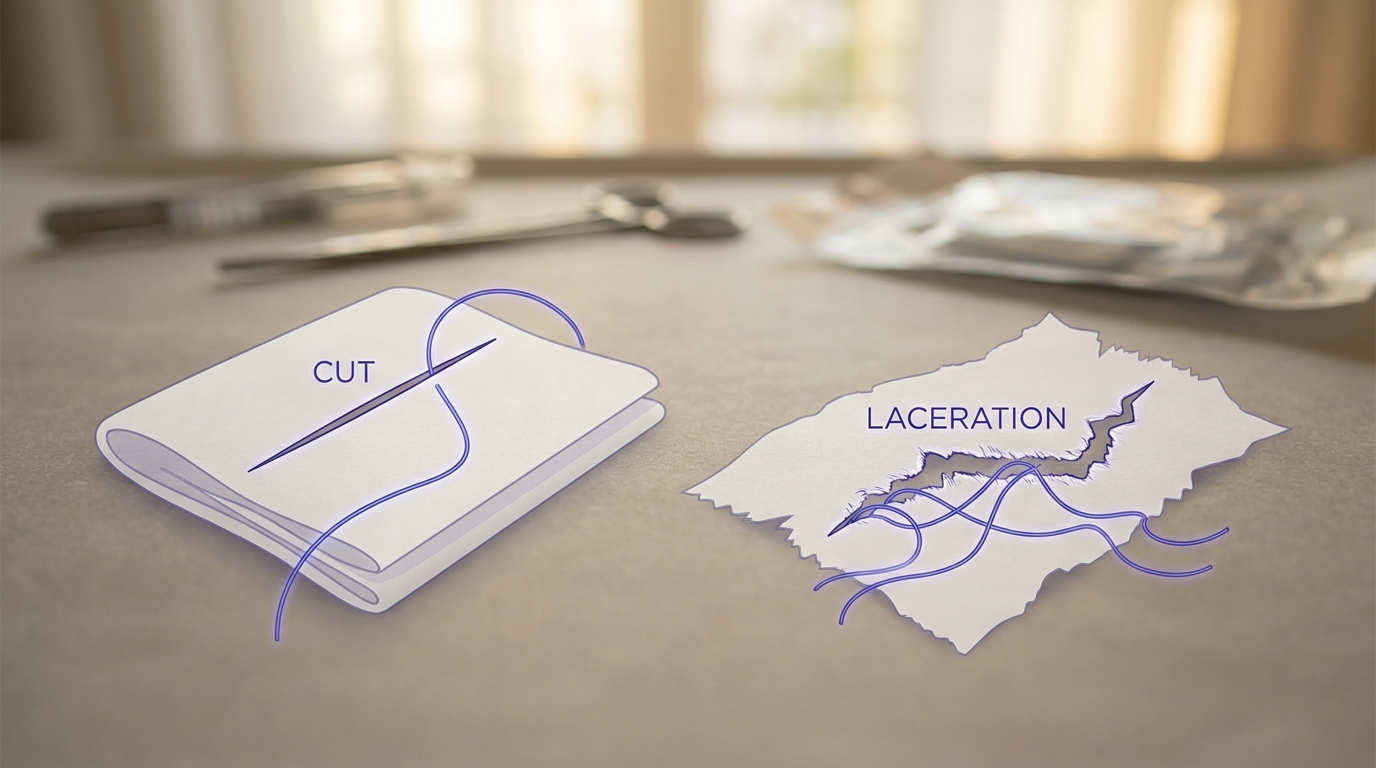
A cut is a clean, straight wound made by a sharp edge, while a laceration is a jagged, torn wound with irregular edges that often gapes open. Both can need medical care, but lacerations are more likely to require stitches, staples, or professional closure. CityHealth Urgent Care in San Leandro treats lacerations and cuts with no appointment needed, 7 days a week at 201 Dolores Ave.
You reach into a bag, catch a branch wrong, or slip with a knife. You look down and your skin is open. Before you grab a bandage and move on, it’s worth knowing whether you have a cut or a laceration because the laceration vs cut distinction directly affects whether you need stitches, how infection-prone the wound is, and how well it heals.
What Is the Difference Between a Laceration and a Cut?
In everyday language, people use these words interchangeably. In a clinical setting, they describe two different types of wounds.
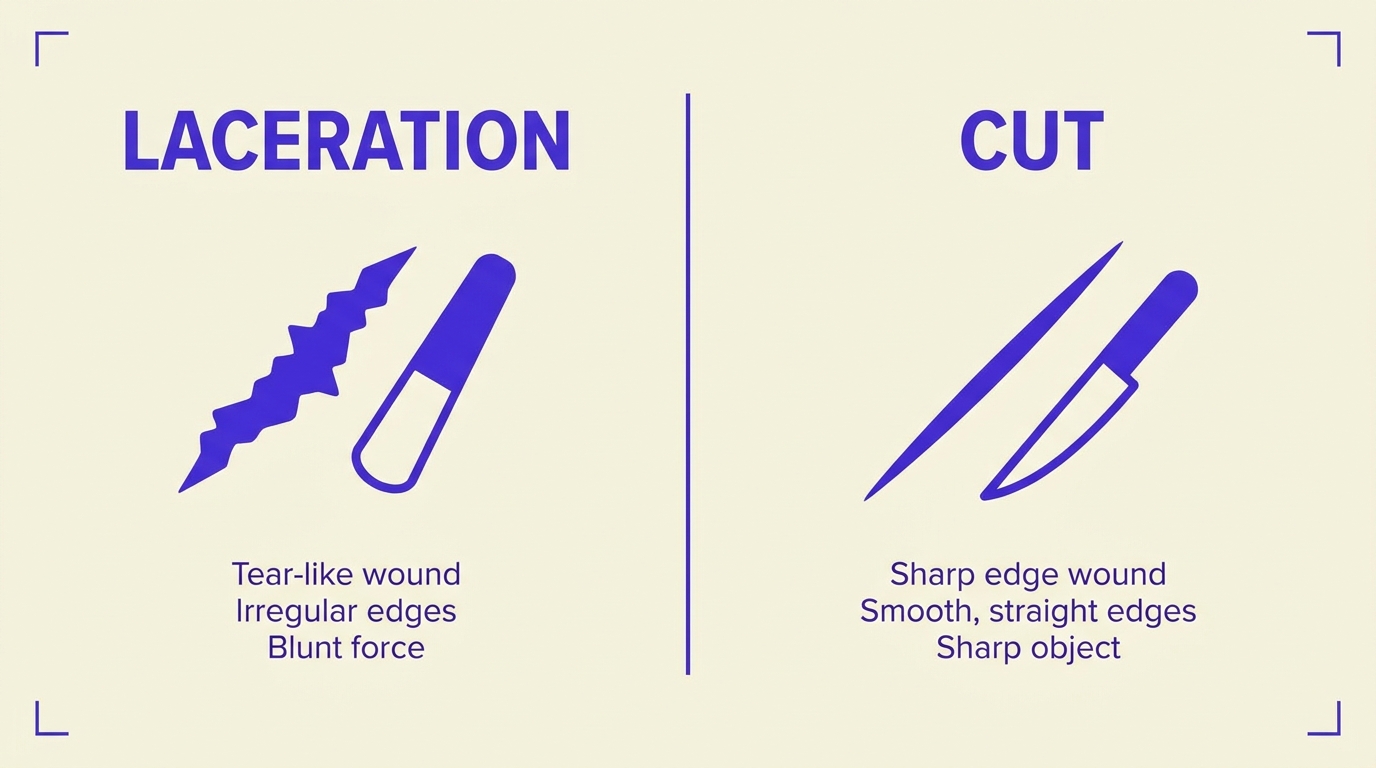
A cut is a clean, smooth-edged wound caused by a sharp object slicing through the skin. Think knife blades, glass shards, or even a piece of paper. The edges tend to be even and close together. Cuts bleed quickly but often stop faster because the tissue is not torn.
A laceration is a wound where the skin is torn rather than sliced. The edges are jagged, irregular, and may pull apart. Lacerations are common after falls on rough pavement, impacts with blunt objects, animal bites, or contact with machinery. Because the tissue is ripped, lacerations often involve deeper damage and are harder for the body to close on its own.
Both break the skin and both carry infection risk. But lacerations are more likely to:
- Have tissue damage beneath the surface, including muscle or fat
- Require stitches, staples, or wound closure strips to heal properly
- Develop wider, more noticeable scars if left unclosed
- Take longer to heal and stay vulnerable to infection during recovery
Depth matters just as much as the type. A shallow cut a quarter-inch long may heal cleanly with a bandage. A deep laceration that keeps pulling open needs a provider to look at it.
When Does a Laceration or Cut Need Medical Care?
Not every wound requires a clinic visit. But some signs are clear indicators that home first aid is not enough.
Go get it evaluated if:
- The wound is deeper than a quarter inch
- Bleeding does not slow after 10 to 15 minutes of firm, direct pressure
- The wound edges pull apart or will not stay closed
- You can see yellow fat tissue, white tissue, or bone
- The wound is on your face, hand, or near a joint
- The injury came from something dirty, rusty, or an animal bite
- Your last tetanus booster was more than 5 years ago
- You notice spreading redness, warmth, swelling, or discharge after a day or two
Signs the wound may be manageable at home:
- Bleeding stopped with brief, gentle pressure
- The wound is superficial and the edges sit naturally together
- The wound is less than half an inch long with no debris inside
When you are not sure, walk in. A provider can look at the wound in under a minute and tell you whether it needs closure. That’s a much better outcome than leaving a laceration open that needed stitches.
The Tetanus Factor
Any wound that breaks the skin can introduce tetanus bacteria, particularly wounds from rusty metal, soil, or animal contact. If you cannot recall your last booster, or it has been more than 5 years, you should get one. CityHealth San Leandro carries tetanus vaccines and can administer them during your visit.
When to Go to the ER Instead
Some wounds require the emergency room, not urgent care. Call 911 or go directly to the nearest ER if bleeding is spurting and cannot be controlled, if the wound involves a major vessel, or if there is any sign of severe trauma, loss of consciousness, or suspected internal injury.

What Happens If You Leave a Laceration Untreated?
Skipping care on a wound that needs it is a gamble. Your skin is the body’s primary barrier against bacteria. When that barrier is open and a laceration stays unclosed, infection can develop within 24 to 48 hours.
Infection is the most common complication. Signs include increasing pain after the first day, redness spreading beyond the wound edges, warmth, swelling, and discharge. Left untreated, a localized wound infection can progress to cellulitis or abscess, both of which require more aggressive treatment.
Scarring is the second major consequence. Lacerations that heal open tend to form wider, thicker scars than wounds that were properly closed with sutures. This matters especially for wounds on the face, forearms, or hands where appearance and function both count.
Delayed healing is the third problem. An open wound stays vulnerable. Every additional day it remains unsealed is another opportunity for bacterial contamination or mechanical re-injury.
The Mayo Clinic recommends cleaning a wound thoroughly, applying direct pressure, and seeking care for any wound that is deep, jagged, or will not stop bleeding. That guidance applies equally whether you have a cut or a laceration.

How CityHealth Treats Lacerations and Cuts in San Leandro
CityHealth Urgent Care at 201 Dolores Ave, San Leandro, CA 94577 handles laceration and cut treatment seven days a week with no appointment required. Walk in and a provider will evaluate your wound, typically within a short wait.
A standard laceration visit includes:
- Wound assessment to determine depth, check for nerve or tendon involvement, and identify any debris inside the wound
- Thorough cleaning to reduce bacterial load before closure
- Closure recommendation based on wound type, location, and depth. Options include sutures, staples, adhesive strips, or skin glue. Local anesthetic is used when needed so the process is comfortable
- Aftercare instructions covering wound cleaning, signs of infection to watch for, and when to return for suture removal, usually 5 to 14 days depending on the body location
Most major insurance is accepted at CityHealth, including Medi-Cal and Alameda Alliance. Self-pay urgent care visits start at $145.
CityHealth San Leandro hours:
- Monday: 10am to 7pm
- Tuesday through Friday: 9am to 7pm
- Saturday and Sunday: 9am to 5pm
Both locations are closed on US federal holidays.
Not Sure If Your Wound Needs Stitches? Walk In and Find Out.
CityHealth San Leandro has walk-in urgent care 7 days a week. A provider can evaluate your laceration or cut, close it if needed, and get you on your way.
WALK IN FOR EVALUATION →Or call (510) 984-2489
Frequently Asked Questions
Is a laceration worse than a cut?
Not always, but lacerations are generally more complex injuries. Because a laceration tears the tissue rather than slicing it cleanly, the edges are irregular, harder to close, and more prone to infection and scarring. A very deep cut can be just as serious depending on location and what structures it reaches.
Do I need stitches for a laceration?
It depends on the size, depth, and location. Lacerations wider than half an inch, deeper than a quarter inch, or located near joints, the face, or the hands usually need stitches or another form of closure. A provider can examine the wound and make that call, often in just a few minutes.
Can I close a laceration at home?
Small, shallow lacerations where the edges naturally come together and bleeding has stopped can sometimes be managed at home with butterfly closure strips and antibiotic ointment. Anything deeper, gaping, or located on the face or hands should be seen by a provider. When in doubt, walk in rather than guess.
How long after a cut or laceration can it still be stitched?
Most wounds can be safely closed within 6 to 8 hours of the injury. Beyond about 12 hours, the risk of trapping bacteria inside increases and a provider may opt to leave the wound open while treating with antibiotics. The sooner you seek care, the more closure options are available.
Does CityHealth San Leandro treat lacerations without an appointment?
Yes. CityHealth Urgent Care at 201 Dolores Ave in San Leandro is a walk-in clinic open 7 days a week. No appointment is needed for laceration evaluation and wound closure. You can also book online at care.cityhealth.com if you prefer to reserve your spot ahead of time.
Bottom Line
The laceration vs cut question comes down to how the skin was broken. A sharp, clean slice is a cut. A torn, jagged wound is a laceration. Both can need medical care, but lacerations are more likely to require stitches and carry a higher risk of complications if left untreated. The key warning signs are a wound that gapes open, bleeds persistently, involves a sensitive area, or came from something contaminated.
If you are in the East Bay and need your wound evaluated today, CityHealth Urgent Care in San Leandro is open 7 days a week with no appointment required. Walk in, get the wound assessed, and leave with a clear plan. That is the fastest way to know whether what you have is a cut you can handle at home or a laceration that needs proper closure.