
Quick Answer
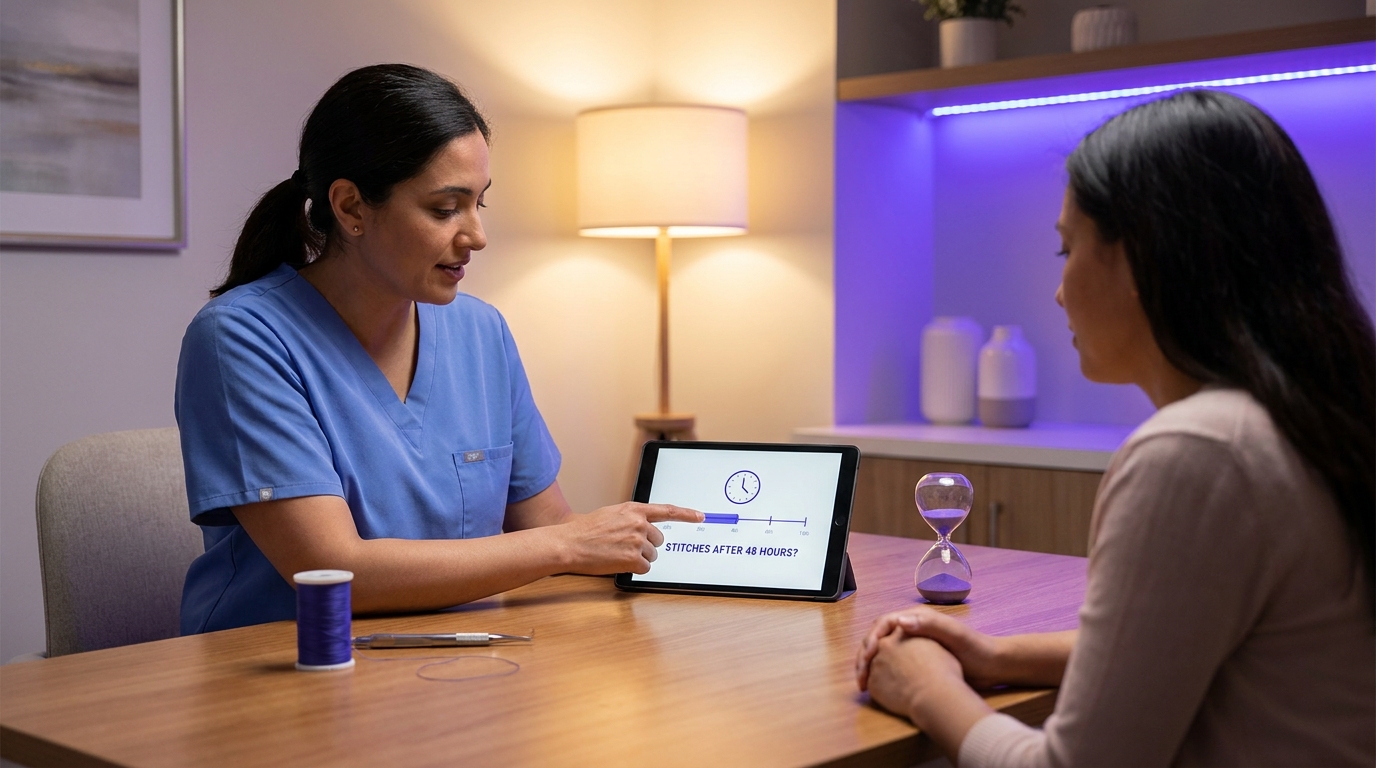
After 48 hours, traditional sutures are usually off the table because closing the wound can trap bacteria and cause infection. That said, you should still be seen. CityHealth Urgent Care in San Leandro can assess late-presenting wounds and choose the right closure method for your specific situation, whether that’s wound tape, staples, or monitored open healing.
If you’re Googling “can you get stitches after 48 hours,” you probably cut yourself a day or two ago and kept hoping it would close on its own. It hasn’t. Now you’re wondering if you waited too long. The short answer is that the window for traditional stitches is mostly closed by 48 hours, but that does not mean you’re out of options. What you do right now still matters.
The 48-Hour Rule: What Actually Happens to a Wound Over Time
A fresh cut is clean inside, relatively speaking. Bacteria are present on skin, but they haven’t had time to multiply in the wound tissue. That window, roughly 6 to 12 hours, is when sutures work best. Closing the wound quickly holds the edges together, reduces scarring, and prevents infection from taking hold.
By 12 to 24 hours, bacterial counts in the wound start rising. The tissue begins its own repair process, laying down early scar tissue. Stitching at this stage is still possible for certain wounds, particularly on the face and scalp where blood supply is rich enough to fight off infection. But risk is climbing.
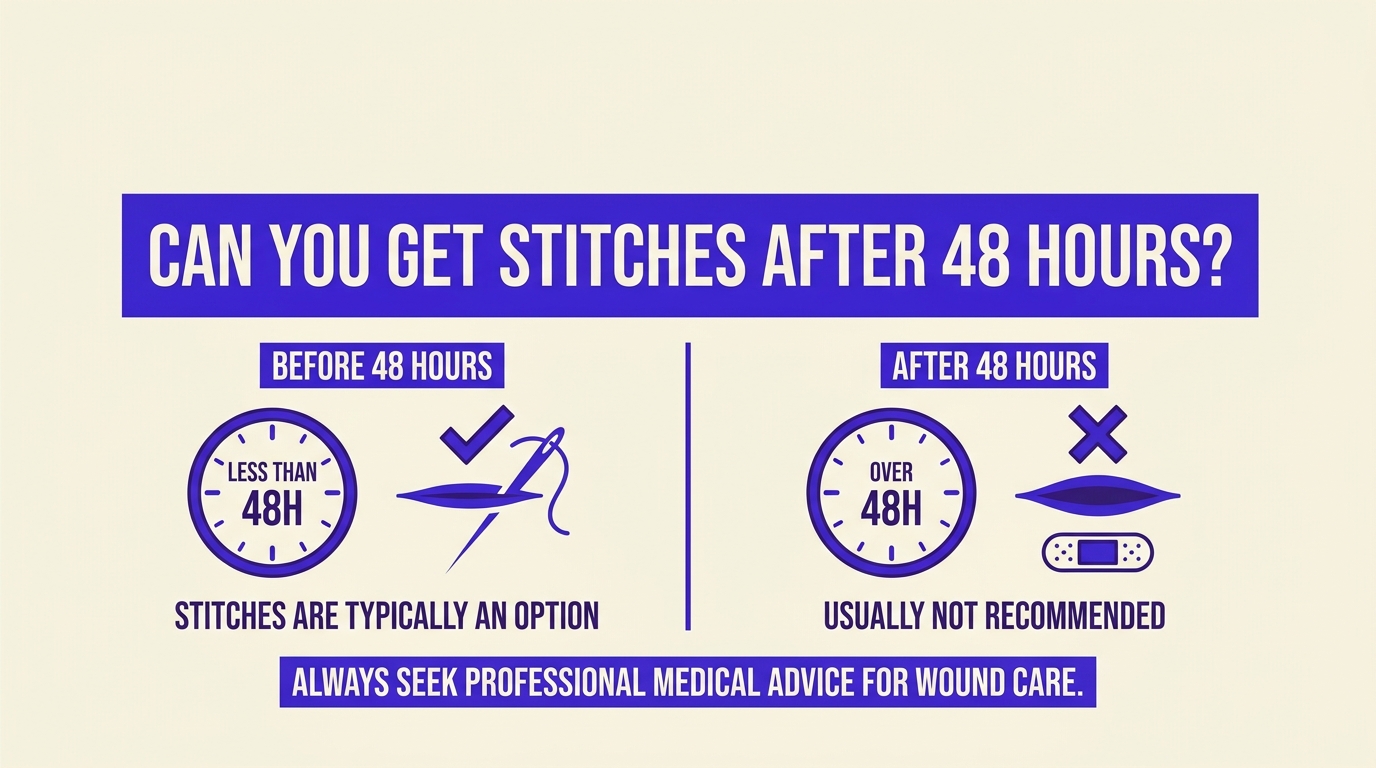
By 48 hours, most wounds are in a different category. Closing them with sutures now can seal bacteria inside, turning a manageable laceration into a serious infection. This is why emergency physicians and urgent care providers generally follow what’s called the “golden period” for primary wound closure. After that window, the calculus changes.
According to Mayo Clinic’s wound care guidance, any cut that is deep, won’t stop bleeding, or shows signs of contamination needs professional evaluation regardless of how much time has passed.
Can You Get Stitches After 48 Hours? What Actually Determines the Answer
There is no hard universal cutoff that applies to every wound on every person. Whether stitches are appropriate after 48 hours depends on several factors, and a provider needs to look at the wound in person to make that call.
Factors that may allow closure even after 48 hours
- Location on the face or scalp. These areas have significantly better blood flow, which helps fight infection. Facial lacerations are sometimes closed up to 24 hours after injury and occasionally beyond.
- The wound is clean and dry. A cut from a clean kitchen knife on someone with no immune issues is lower risk than a bite wound or a puncture from rusty metal.
- No signs of infection yet. If you’re not seeing redness spreading outward, swelling, warmth, pus, or fever, the wound may still be manageable.
- Wound edges are still approximating. If the skin can still be pulled together without tension, some providers may consider alternatives to traditional sutures.
Situations that rule out primary closure after 48 hours
- Visible redness, swelling, or discharge indicating active infection
- Puncture wounds, animal bites, or heavily contaminated injuries
- Wounds that already smell or look necrotic
- Deep wounds involving fascia, tendon, or bone
Even if traditional stitches are no longer appropriate, that does not mean a provider has nothing to offer. There are other wound closure and management strategies that an urgent care clinic can provide.
What Are the Alternatives When Stitches Are No Longer an Option
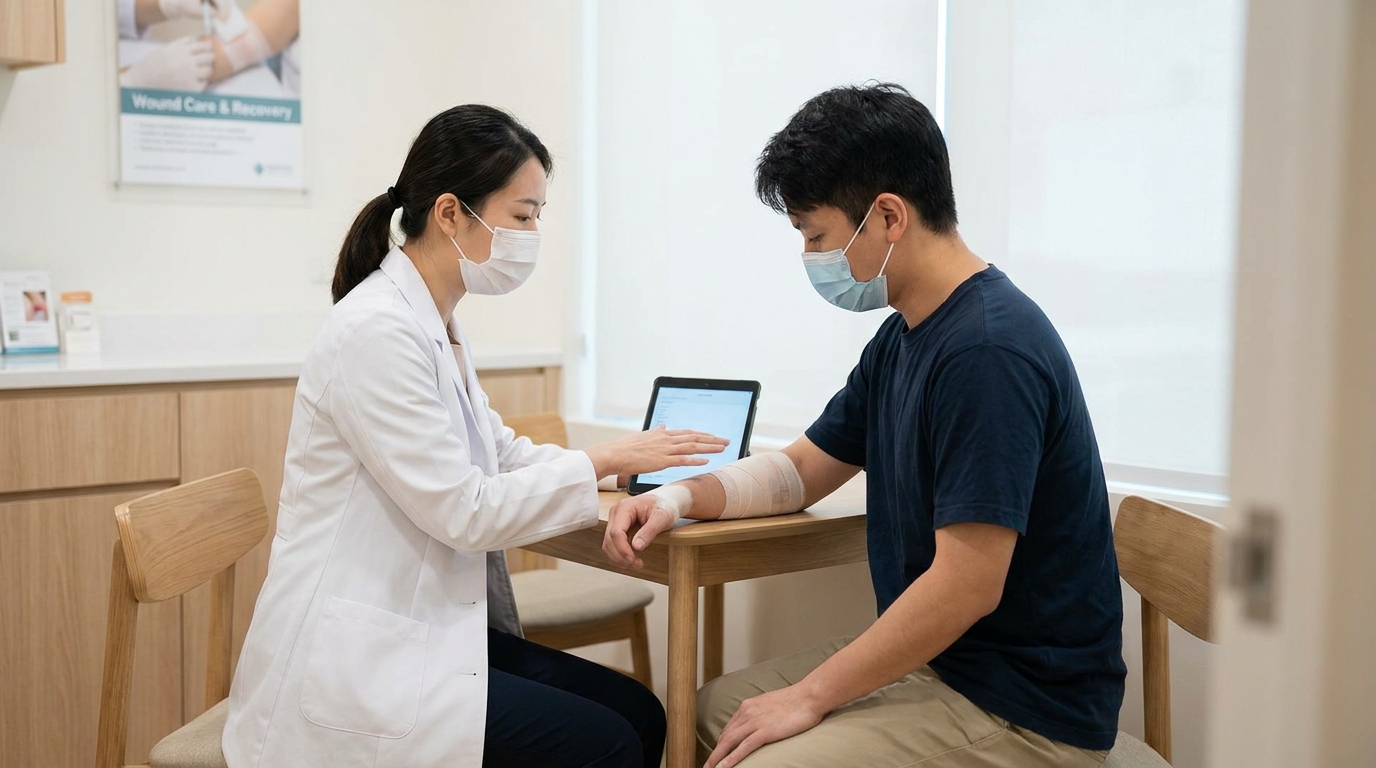
Urgent care providers deal with late-presenting wounds regularly. If your 48-hour-old cut cannot be sutured, here is what might be done instead:
Wound closure strips (Steri-Strips). For shallow lacerations with edges that sit close together, adhesive closure strips can hold the wound while it heals. They are not as strong as sutures but avoid the infection risk of sealing the wound.
Tissue adhesive (skin glue). Medical-grade adhesives like Dermabond can close some wounds without puncturing the skin. They work best on smaller, cleaner cuts that are not under tension.
Delayed primary closure. In some cases, a provider will clean and pack the wound, let it heal open for a few days to clear bacterial burden, and then close it around day 4 or 5. This is more involved but can produce a better outcome than leaving a wound fully open.
Secondary intention healing. For some wounds, particularly small ones, the provider may decide the best path is careful wound care with the wound left open to granulate and close on its own. You will get instructions on how to clean and dress it at home.
A tetanus booster may also be part of the visit if your immunization history is not current. Urgent care can handle that too.
What to Expect at CityHealth Urgent Care San Leandro
If you walk into CityHealth Urgent Care in San Leandro with a wound that’s been open for a day or two, here is what happens. A provider examines the injury, assesses depth and contamination, checks for signs of early infection, and determines which closure method is appropriate. You are not going to be turned away because it has been 48 hours.
CityHealth at 201 Dolores Ave, San Leandro, CA 94577 is open seven days a week with no appointment needed. Walk-in hours are Monday 10am to 7pm and Tuesday through Friday 9am to 7pm. Weekends run 9am to 5pm. Most major insurance is accepted, including Medi-Cal and Alameda Alliance. Self-pay urgent care visits start at $145.
If you are not sure whether the wound warrants a visit, err toward coming in. A provider can at minimum clean the wound properly, rule out infection, and give you a clear care plan going forward. That is worth more than waiting another day and hoping.
Signs You Need to Go In Right Now, Not Tomorrow
Some situations go beyond a timing question. These symptoms mean the wound needs same-day evaluation regardless of the clock:
- Red streaks extending from the wound. This is a sign of spreading infection or lymphangitis and requires prompt treatment.
- Fever above 100.4°F. Your body is fighting something systemic.
- The wound won’t stop bleeding even with direct pressure applied for 10 minutes.
- Numbness or inability to move a nearby joint or finger. Nerve or tendon involvement needs evaluation.
- The wound is deep enough that you can see yellow fat, white tendon, or bone. That is always an urgent situation.
- The injury came from an animal bite, human bite, or heavily contaminated source. These need antibiotics and wound care regardless of timing.
Walk In Even If It’s Been a Day
CityHealth San Leandro sees walk-in wound patients 7 days a week. No appointment needed. We’ll assess the wound and tell you exactly what it needs.
WALK IN OR BOOK NOW →Or call (510) 984-2489
Frequently Asked Questions
Can you get stitches after 48 hours?
In most cases, traditional sutures are not recommended after 48 hours because closing the wound at that point can trap bacteria and cause infection. However, some wounds on the face or scalp may still be candidates for closure beyond that window, and there are other treatment options available such as wound tape, skin glue, or delayed primary closure. A provider needs to evaluate the wound in person to make that determination.
What is the golden period for stitches?
The golden period for wound closure is generally 6 to 12 hours after the injury occurs. During this window, bacterial counts in the wound are low enough that suturing is safe and effective. Some wounds with excellent blood supply, particularly on the face, can be closed up to 24 hours after injury with acceptable results.
What happens if a cut goes untreated for too long?
A wound left open for more than 48 to 72 hours without treatment has an elevated risk of infection, slower healing, and increased scarring. Infections that go untreated can spread to surrounding tissue and, in rare cases, become systemic. Even if formal closure is no longer possible, professional wound cleaning, assessment, and a proper care plan significantly reduce those risks.
Will urgent care see me for a wound older than 48 hours?
Yes. Urgent care providers regularly evaluate wounds that are a day or two old. While the treatment approach may differ from what would happen with a fresh laceration, there is still a lot a provider can do. CityHealth Urgent Care in San Leandro accepts walk-in wound patients seven days a week at 201 Dolores Ave.
Do I need a tetanus shot for a cut after 48 hours?
Tetanus risk is based on the type of wound and your vaccination history, not on how much time has passed since the injury. If your last tetanus booster was more than 5 years ago and the wound was contaminated, or more than 10 years ago for a clean wound, a booster is recommended. CityHealth Urgent Care can provide tetanus boosters as part of your wound visit.
Bottom Line
Waiting 48 hours does not mean your wound is beyond help. It means the playbook changes. Traditional stitches are usually off the table, but there are real alternatives, and getting the wound properly evaluated and cleaned is still one of the most important things you can do for healing and infection prevention. The worst outcome is continuing to wait.
CityHealth Urgent Care in San Leandro is open seven days a week for walk-in wound care visits. No appointment needed. You can also book online or call (510) 984-2489 if you want to check wait times before you head in. Come in, get it looked at, and stop wondering.